
Planting
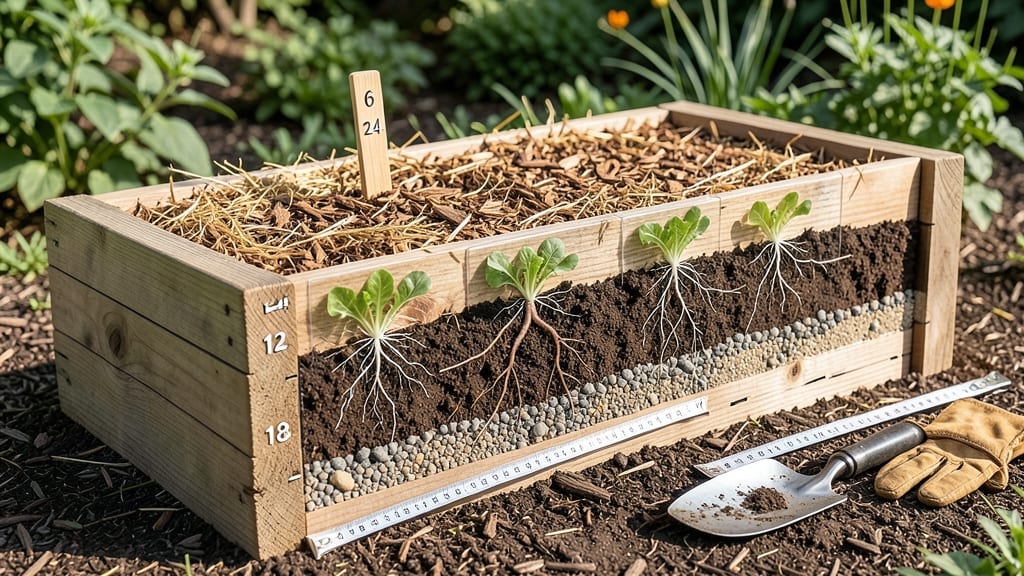
How deep to make raised garden beds is a key question for any gardener—getting it right ensures your plants grow strong with enough root space and drainage, ideally 6 to 12 inches for most vegetables and herbs.
Struggling to decide how deep your raised garden beds should be? The right depth isn’t just about aesthetics—it directly impacts root growth, drainage, and plant health, making it a critical factor for a thriving garden.
Too shallow, and your carrots or potatoes won’t develop fully. Too deep, and you’re wasting space, money, and effort. Below, I’ll break down the exact measurements you need based on what you’re growing, plus tips to adjust for drainage and soil quality.
You’ll also learn how to fix common mistakes—like beds that waterlog or leave roots cramped—without tearing everything out. Let’s get your 🌱 raised garden bed built just right!
Optimal raised garden bed depth for different plant types: root space requirements
When building raised garden beds, depth matters more than you might think. Too shallow, and your carrots or potatoes will struggle to develop properly. Too deep, and you’re wasting space, money, and resources.
The ideal depth depends entirely on what you’re growing—shallow-rooted herbs don’t need the same space as deep-rooted vegetables like asparagus or corn. Let’s break down the exact measurements you need for each plant type to ensure healthy roots, proper drainage, and maximum yield.
Most gardeners start with a 6-inch minimum depth, which works for small herbs and leafy greens. However, if you’re planting root vegetables or perennials, you’ll need to go much deeper—sometimes up to 18 inches or more.
The key is understanding how far your plants’ roots will grow and planning accordingly. For example, radishes only need 4-6 inches, while tomatoes thrive with 12-18 inches of soil. Let’s dive into the specifics so you can design your raised beds for success.
🌱 Pro Tip: If you’re unsure about your plants’ root depth, check seed packets or plant tags—they often list recommended soil depth. For heirloom or less common varieties, a quick online search will save you from guesswork.
| Plant Type | Root Depth | Recommended Bed Depth | Examples |
|---|---|---|---|
| Shallow-Rooted Herbs | 4-6 inches | 6-8 inches | Basil, parsley, chives, thyme |
| Leafy Greens | 6-12 inches | 8-12 inches | Lettuce, spinach, kale, arugula |
| Root Vegetables | 8-18 inches | 12-18 inches | Carrots, beets, radishes, potatoes |
| Fruiting Plants | 12-24 inches | 16-24 inches | Tomatoes, peppers, cucumbers, squash |
| Perennials & Shrubs | 18-36 inches | 24-36 inches | Asparagus, rhubarb, berry bushes |
| Small Trees & Vines | 36+ inches | 36+ inches (or in-ground) | Dwarf fruit trees, grapevines |
For shallow-rooted plants like herbs and lettuce, a 6-8 inch depth is perfect. These plants focus their energy on leaf and stem growth, so deep soil isn’t necessary. In fact, too much depth can lead to excess moisture and root rot.
I’ve seen gardeners overbuild beds for these plants, only to struggle with waterlogging. Stick to the recommended depth, and you’ll avoid this common pitfall.
When it comes to root vegetables like carrots and beets, depth becomes critical. These crops need enough space to grow their edible taproots without becoming stunted or forked. A 12-inch depth is the minimum, but if you’re growing long varieties like Danvers carrots, aim
How to adjust raised bed depth for drainage and soil quality
Adjusting your raised bed depth for better drainage and soil quality can transform a struggling garden into a productive one. Many gardeners overlook how climate and soil type influence depth needs—especially in areas with heavy clay or frequent rain.
The key is balancing root space with water management to prevent issues like root rot or nutrient loss.
For example, in wet climates, adding a gravel drainage layer at the bottom can save your plants from waterlogging, while in dry regions, deeper beds help retain moisture. Below, I’ll walk you through practical adjustments, including layering techniques that maximize efficiency without breaking the bank.
- 1 Add a 2-4 inch gravel layer at the bottom for poor drainage. This prevents water from pooling while allowing roots to access moisture.
- 2 Use 6-12 inches of compost on top of the gravel for nutrient-rich soil. This mimics natural soil layers and improves aeration.
- 3 Extend depth to 18 inches for deep-rooted plants like potatoes or asparagus. Split the bed into two layers if retrofitting.
- 4 Install a French drain along the perimeter for extreme waterlogging. Use perforated pipes surrounded by gravel for long-term solutions.
- 5 Test soil pH before adjusting depth. Amend with lime or sulfur to match plant needs, especially in compacted or alkaline soils.
If your existing raised bed isn’t draining well, don’t panic—you can often fix it without rebuilding. Start by removing the top layer of soil and adding a 4-inch layer of coarse sand or perlite before replacing the soil.
This simple tweak can drastically improve water flow while keeping nutrients in place.
For clay-heavy soils, consider building a raised bed on legs (elevated beds) to allow airflow underneath. This method also makes harvesting easier and reduces soil compaction over time. Pair it with a mulch layer of straw or wood chips to retain moisture and suppress weeds.
Remember, depth adjustments aren’t just about drainage—they’re about creating a self-sustaining ecosystem. By layering materials thoughtfully, you’ll give your plants the perfect balance of air, water, and nutrients they crave. Start small, monitor your plants, and adjust as needed—your garden will thank you with bountiful harvests! 🌱