
Blooming
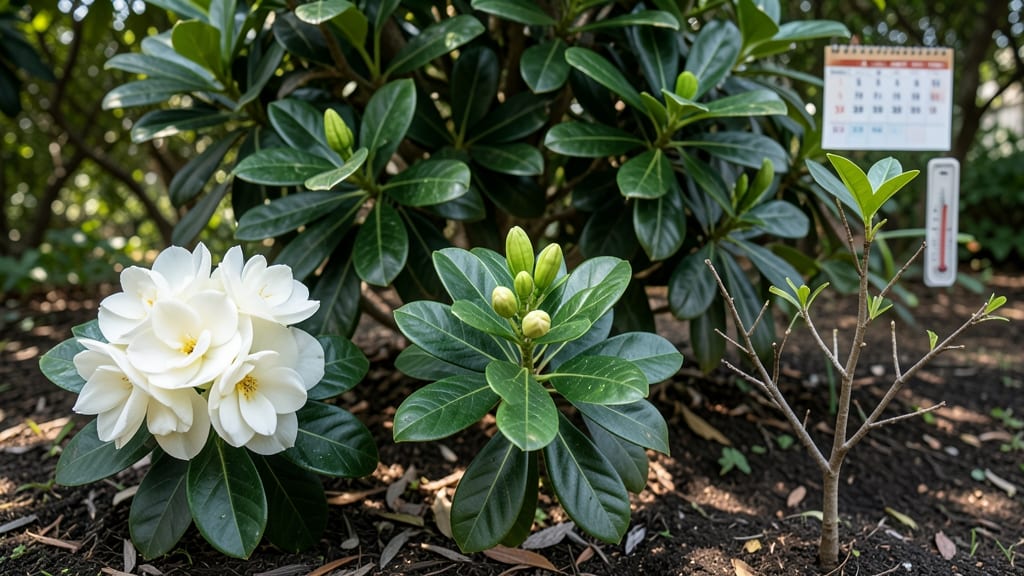
Gardenias don't bloom all year—they follow seasonal cycles, typically flowering from spring through summer, with blooming patterns that vary by region. While warm climates can extend their flowering periods, they still need dormancy to stay healthy and rebloom effectively.
Gardenias are sensitive to daylight changes, which trigger their blooming cycles. 🌸 In cooler regions, they often produce their most vibrant flowers during the warmer months, while tropical areas might see year-round blooming—but even there, they need occasional rest periods.
The key to encouraging longer blooming seasons lies in proper care: consistent moisture, balanced fertilization, and strategic pruning after each bloom cycle helps maintain their health and productivity.
What many gardeners don't realize is that forcing continuous blooming without dormancy can actually weaken the plant over time. I've seen gardenias in containers thrive in Florida's mild winters, but they still need a few weeks of cooler temperatures to reset their growth cycle.
The secret is finding that balance between encouraging blooms and giving the plant the rest it needs to perform at its best.
💡 In This Article
- Gardenia Blooming Seasons by Climate Zone
- Pruning and Care Tips to Maximize Gardenia Blooms
Gardenia blooming seasons by climate zone
Gardenias are highly sensitive to temperature shifts, with their blooming cycles directly tied to daylight hours and seasonal temperature fluctuations. In USDA zones 8-11 (tropical and subtropical regions), gardenias often bloom year-round or with minimal breaks, thanks to consistent warmth.
For example, in Florida, gardenias may produce flowers in every season, though they typically peak in spring and summer when temperatures hover around 75-85°F. The key trigger here is the absence of frost—gardenias can't tolerate temperatures below 30°F, which is why they thrive in these warmer zones.
In USDA zones 7 and below, gardenias enter a natural dormancy period during winter months when temperatures drop below 50°F.
This dormancy is essential for their health—the plant conserves energy, allowing it to produce stronger blooms when conditions improve. 🌿 In these regions, gardenias typically bloom from late spring through early fall, with the most abundant flowers appearing when daytime temperatures reach 65-75°F and nights stay above 55°F.
The contrast between warm days and cooler nights actually stimulates bud formation, creating that classic gardenia fragrance.
What's fascinating is how gardenias in cooler microclimates (like protected garden spots in zone 6) can sometimes bloom sporadically even in winter if daytime temperatures stay mild. I've observed gardenias in coastal California gardens producing occasional blooms in winter when ocean breezes moderate temperatures.
However, these blooms are usually smaller and less abundant than their spring/summer counterparts. The plant is essentially "cheating" the system by taking advantage of localized warmth, but it still needs that seasonal reset to maintain vigor.
Light exposure also plays a crucial role in regional blooming patterns. Gardenias require bright, indirect light—direct sun can scorch their delicate leaves, while too little light reduces flowering.
In northern climates, gardeners often grow them in containers and move them to sunny patios during summer months, then bring them indoors before the first frost. This controlled environment helps extend the blooming season by 2-3 months compared to outdoor planting in colder zones.
One common misconception is that gardenias in tropical climates bloom continuously without rest. While they may appear to flower year-round, they actually go through shorter, less noticeable dormancy periods when rainfall increases or humidity spikes. These micro-dormancies help prevent the plant from becoming overburdened by constant blooming.
Think of it like a marathon runner needing short rest stops—without them, the plant would eventually exhaust its energy reserves and stop flowering altogether.
For gardeners in transitional zones (like zone 7b), the secret to extended blooming is creating artificial dormancy conditions. This can be as simple as moving potted gardenias to a cooler garage or basement for 4-6 weeks when nighttime temperatures drop below 50°F.
This mimics natural winter conditions and often results in a second, more robust bloom cycle when the plant returns to warmer conditions. The timing is critical—too short a rest period won't reset the plant's cycle, while too long can delay spring blooming.