
Tools
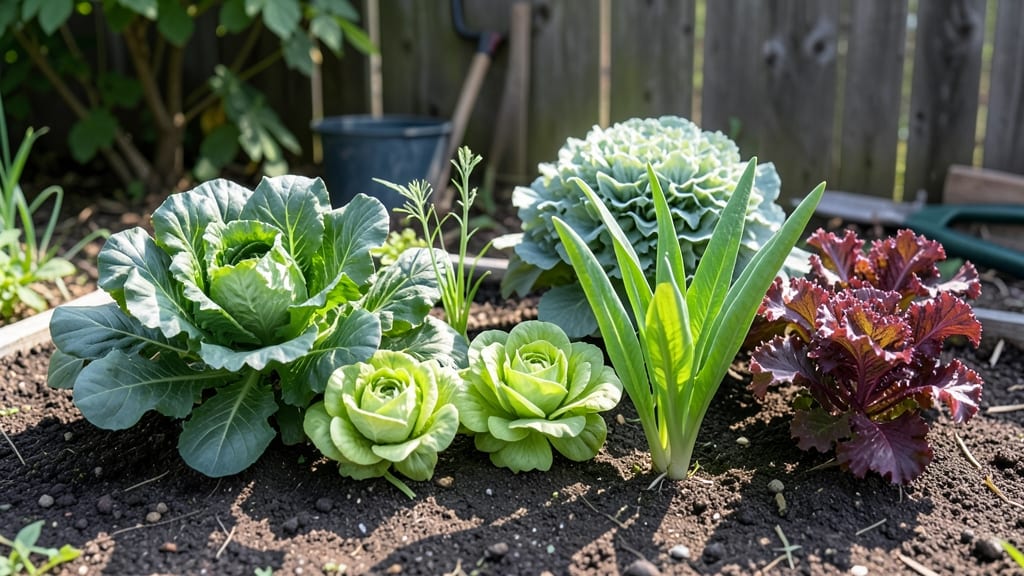
Garden lettuce types vary widely in growth speed, with quick-harvest options like butterhead (30-50 days) and leaf lettuce (30-40 days) perfect for fast salads, while romaine (60-70 days) and iceberg (70-80 days) mature slower but deliver crisp, sturdy leaves for heartier dishes.
Choosing the right garden lettuce type depends on your timeline and how you plan to use it. 🌱 Fast-growing varieties like loose-leaf and butterhead thrive in cooler weather and can be harvested in as little as 30 days, making them ideal for succession planting throughout the season.
These tender leaves work best in fresh salads or as garnishes, where their delicate flavor shines. On the other hand, romaine and iceberg develop more robust structures that hold up better when cooked or stacked in layered dishes like Caesar salads or sandwiches.
What's fascinating is how temperature affects growth speed. Leaf lettuces bolt quickly in heat, while head-forming types like romaine actually prefer cooler conditions to develop their signature crispness.
I've found that planting leaf lettuces in early spring or late summer gives the best balance of speed and flavor, while romaine does best when started indoors and transplanted after the last frost.
💡 In This Article
- How Lettuce Growth Speed Varies by Type
- Best Uses for Fast vs Slow-Growing Lettuce Varieties
How lettuce growth speed varies by type
The growth speed of garden lettuce depends on its genetic structure and environmental conditions. Leaf lettuces like loose-leaf varieties mature quickly (30-40 days) because they focus energy on producing multiple tender leaves rather than forming a compact head.
This rapid growth is due to their shallow root systems and ability to photosynthesize efficiently in cooler temperatures (50-65°F). In contrast, head-forming types like romaine and iceberg take 60-80 days because they allocate resources to developing dense, layered structures that require more time to tighten and crisp up.
Temperature sensitivity plays a critical role in growth speed. Leaf lettuces bolt (go to seed) within 10-14 days when exposed to temperatures above 75°F, while head varieties like romaine are more heat-tolerant but still prefer cooler conditions (60-70°F) for optimal development.
The science behind this involves vernalization—a process where cooler temperatures trigger flowering in some varieties, while others remain vegetative. For example, butterhead lettuce (30-50 days) thrives in spring and fall, while iceberg requires consistent cool nights to develop its signature crunch.
Light requirements also impact growth speed. Leaf lettuces perform well in partial shade, which slows bolting and extends harvest windows, while head varieties need full sun (6+ hours daily) to develop properly.
I've noticed that romaine grown in 12-14 hours of daylight (like late spring) matures faster than in shorter days of early spring. Soil conditions matter too—well-draining, nitrogen-rich soil with a pH of 6.0-7.0 helps all varieties grow faster, but head lettuces need consistent moisture to prevent bitter flavors.
Here's what's actually happening at the cellular level: Leaf lettuces have faster cell division rates in their meristematic tissues (growth zones), allowing them to produce new leaves quickly. Head varieties, however, invest energy in forming vascular bundles that create their compact structure.
This is why romaine leaves are thicker and more fibrous—they're essentially "reinforced" for structural integrity. 🌱 The trade-off is that this reinforcement takes time, which is why they mature slower.
Consider these key factors when choosing varieties for your garden:
- Climate: Leaf lettuces excel in cool seasons (spring/fall), while heat-tolerant varieties like romaine can handle summer if given afternoon shade
- Harvest method: Leaf types support cut-and-come-again harvesting, while head varieties need whole-head removal
- Soil prep: Amend with compost for faster growth—leaf lettuces respond well to balanced fertilizers, while head types need higher nitrogen early in growth
The most critical factor for speed is planting timing. Leaf lettuces can be sown every 2-3 weeks for continuous harvests, while head varieties benefit from staggered plantings to avoid bolting. I've found that successive planting in spring and fall gives the best balance of speed and flavor across all types.