
Tools
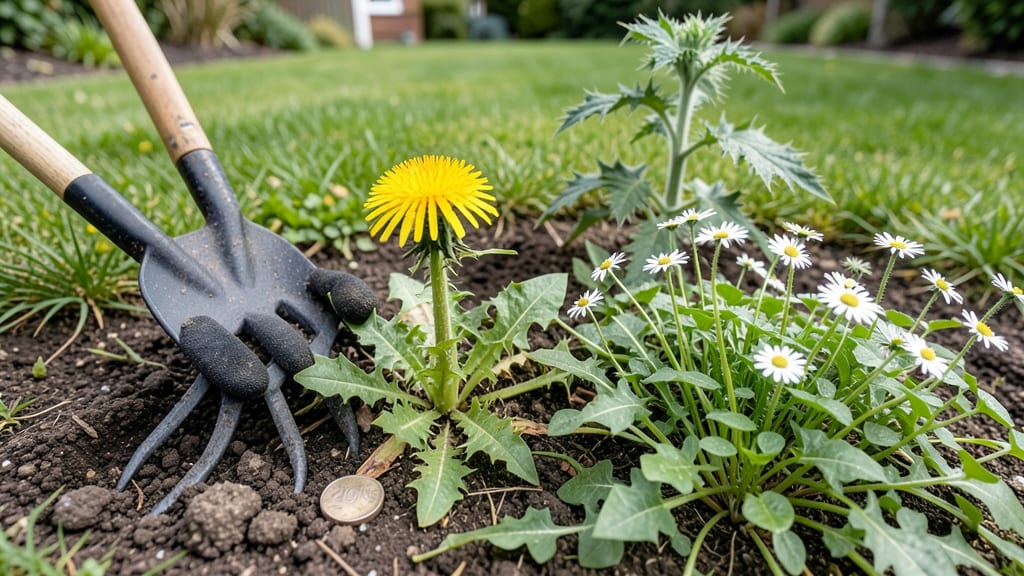
Garden weeds in the UK thrive year-round, with broadleaf types like docks and chickweed dominating spring, while grasses and bindweed peak in summer. Target them by hand-pulling or using vinegar-based sprays, focusing on roots to prevent regrowth. Always check for invasive species like Japanese knotweed before removal.
Dealing with garden weeds in the UK requires understanding their seasonal patterns and growth habits. 🌱 Broadleaf weeds like docks and chickweed spread aggressively in spring when soil moisture increases, while perennial grasses and bindweed take over as summer heat encourages rapid growth.
The UK's mild climate means weeds don't follow strict seasonal cycles like in colder regions, so year-round vigilance is key. I've found that vinegar-based solutions work best for broadleaf types, while a sharp hoe is more effective for grassy weeds that grow close to the surface.
What many gardeners overlook is how removal methods affect soil health. Pulling weeds by hand gives you complete control over roots, but it's time-consuming for large areas. Organic alternatives like boiling water or mulching with cardboard can suppress weeds without chemicals, though they require more frequent maintenance.
Always test small areas first—some plants, like Japanese knotweed, are protected under UK law and require professional removal to avoid legal consequences.
💡 In This Article
- Common UK Garden Weeds by Season and Identification Tips
- Safe Weed Removal Methods for UK Gardens and Soil Health
Common UK garden weeds by season and identification tips
The UK's temperate maritime climate creates ideal conditions for weeds to thrive year-round, with distinct seasonal patterns.
Spring brings the most aggressive broadleaf weeds like docks (with their deep purple stems) and chickweed (small white flowers and fuzzy leaves), which spread rapidly when soil temperatures hit 10-15°C and moisture levels rise.
These weeds take advantage of the UK's wet springs, which can deliver 150-200mm of rain between March and May, creating perfect germination conditions. 🌱 The key identifier for spring weeds is their rapid leaf growth—dandelions can grow 3 inches per week under ideal conditions, while ground elder spreads through underground runners that can extend 6 feet in a single season.
Summer transforms the weed landscape as grasses like annual meadow grass and bindweed dominate, taking advantage of the UK's average 18-22°C summer temperatures. Bindweed, in particular, is a nightmare because its roots can penetrate 12 feet deep and its white trumpet-shaped flowers appear from June to September.
The creeping buttercup, with its bright yellow flowers and jagged leaves, also thrives in summer, often forming dense mats that smother lawns. What makes summer weeds particularly challenging is their ability to photosynthesize even in partial shade, which is why they often outcompete garden plants in borders and pathways.
Autumn and winter bring different challenges as perennial weeds like nettles and brambles persist, while winter brings bittersweet (with its distinctive orange berries) and ivy that can smother other plants. The UK's mild winters (rarely dropping below 0°C in most regions) mean many weeds continue growing, though at reduced rates.
One surprising fact is that some weeds like ground elder actually become more active in autumn, as its tubers store energy for next year's growth. This is why many gardeners find their worst weed problems appear in late autumn when the plant is preparing for dormancy.
Visual identification is crucial because many weeds have similar shapes but different growth habits. For example, dandelions and groundsel both have yellow flowers, but dandelions have deeply lobed leaves while groundsel has jagged, irregular edges.
The creeping buttercup leaves are heart-shaped with scalloped edges, while speedwell has square stems and small purple flowers. 🔍 Pay attention to leaf arrangement—alternate leaves suggest one type of weed, while opposite leaves often indicate another.
The presence of milky sap (like in ground elder) or spiky seed heads (like dandelions) can also provide quick identification clues in the field.
What most gardeners don't realize is how weed identification affects removal strategies. For instance, bindweed requires different treatment than chickweed because its deep roots make it resistant to surface herbicides.
The UK's Wildlife and Countryside Act 1981 also protects some native weeds like bittersweet and ivy, meaning you can't remove them without proper justification. This legal protection adds another layer of complexity to UK weed management, making accurate identification essential before taking any action.
Seasonal changes also affect weed behavior. In spring, weeds grow rapidly to take advantage of available sunlight before trees leaf out. By summer, many weeds develop protective layers on their leaves to conserve water during the UK's occasional dry spells.
This biological adaptation means summer weeds often require more aggressive removal methods. The key takeaway is that understanding these seasonal patterns allows you to time your weed control efforts more effectively, often catching weeds when they're most vulnerable to removal.