
Light Requirements
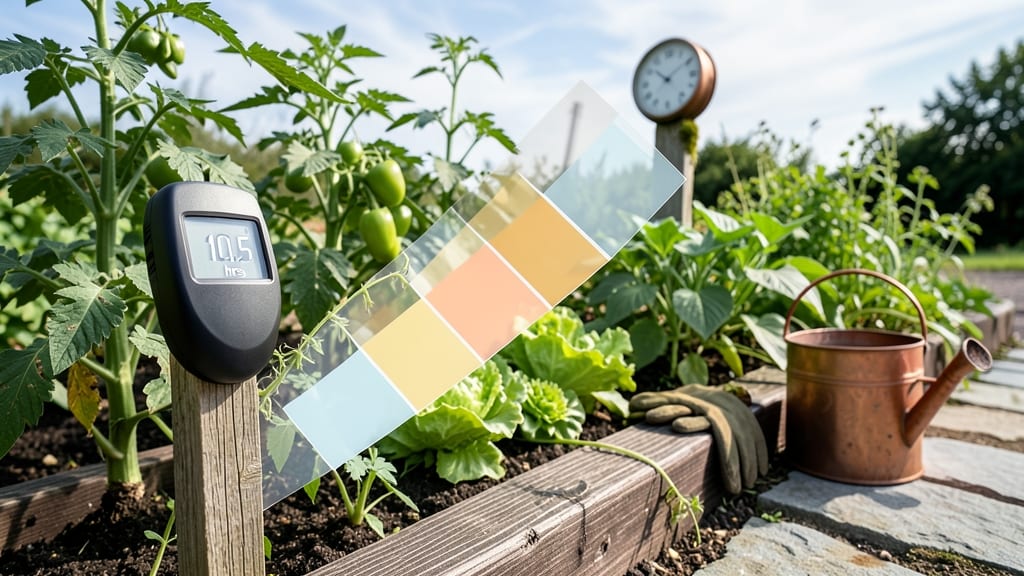
A vegetable garden needs at least 6 to 8 hours of sunlight daily—but some crops crave more while others bolt in too much heat. 🥬
Picture this: your tomatoes are thriving in the brightest corner of the yard, while your lettuce wilts by midday. That’s not a fluke—it’s sunlight science. Too little, and your veggies stretch weak and tasteless. Too much, and heat-sensitive greens turn bitter or go to seed before you can harvest them.
Here’s the game-changer: most vegetables fall into three sunlight zones—full sun, partial shade, or a mix—and knowing which is which saves you from wasted space and disappointed harvests.
Below, I’ll break down the exact needs for your top crops, plus how to tweak your garden layout if your yard isn’t cooperating.
You’ll also discover how to measure sunlight in your space (yes, there’s a trick with a tennis ball), when to shade plants in summer, and which veggies secretly love dappled light. No more guesswork—just a garden that works as hard as you do.


Sunlight requirements by vegetable type: full sun vs. partial shade needs
Understanding your garden’s sunlight exposure is the first step to growing a thriving vegetable patch. Most vegetables fall into two categories: those needing full sun (6+ hours) and those that prefer partial shade (3-6 hours). The difference can mean the gap between a bountiful harvest and struggling plants.
For example, tomatoes and peppers crave intense sunlight, while leafy greens like spinach can bolt or turn bitter in too much heat. Let’s break down exactly what each of your favorite veggies needs—and how to adjust for your unique climate.
In high-altitude gardens or cloudy climates, sunlight behaves differently. At elevations above 5,000 feet, UV intensity increases, which can scorch tender leaves even with the same hours of sun.
Meanwhile, in overcast regions like the Pacific Northwest, what’s considered "full sun" might actually deliver only 4-5 hours of effective light. Always observe your garden’s microclimate: a north-facing spot might get only 3 hours of sun, while a south-facing area could exceed 8.
Use a sunlight tracker or simple chalk mark to log daily exposure for accuracy.
Now, let’s dive into the specifics. The table below categorizes common vegetables by their sunlight needs, including notes on adjustments for shade or heat tolerance. This will help you map your garden layout for optimal growth—and avoid the heartbreak of wilting zucchini or leggy herbs.
Why do some vegetables wilt in too much sun while others bolt in too little? It comes down to their natural growing habits. Sun-loving plants like tomatoes and peppers originate from tropical regions where intense light fuels fruit production.
Without enough sun, their energy shifts to leaf growth instead of flowering. Conversely, leafy greens evolved in temperate climates where partial shade protects them from overheating. When exposed to full sun, their metabolic processes speed up too quickly, causing them to flower prematurely (bolting) and become bitter or woody.
If your garden has uneven sunlight, strategically place plants with similar needs together. For instance, group tomatoes, peppers, and basil in the sunniest spot, while lettuce, spinach, and carrots thrive in the dappled shade of taller plants or near a fence.
In high-altitude gardens, where sunlight is more intense, use shade cloths or reflective mulch to protect delicate plants. For cloudy climates, extend the growing season by choosing cold-hardy varieties like kale or Swiss chard, which tolerate lower light levels better than tomatoes or cucumbers.
Pro tip: If you’re unsure about your garden’s sunlight, conduct a week-long test. Place a white board or chalk marker in your planting spots and track how many hours of direct light each area receives.
Adjust your plant selection based on these observations—it’s the fastest way to avoid common mistakes like overcrowding sun-hungry plants in shady corners. Remember, even a 5-hour difference can mean the difference between a thriving plant and one that struggles to produce.
For container gardening, prioritize sun-loving vegetables in south-facing pots and place shade-tolerant herbs like parsley or cilantro in east-facing spots. Rot
How to measure and optimize sunlight in your garden for better yields
Measuring sunlight in your garden isn’t just about eyeballing the sunniest spot—it’s about precision. Most vegetables need 6 to 8 hours of direct sunlight daily, but some thrive with less, while others bolt or wilt without enough.
Start by mapping your yard’s sunlight zones using a simple DIY test: place a white tennis ball on a stick in potential garden spots. Track its shadow every hour for a week to see how much direct light each area gets.
Sunlight isn’t static—it shifts with the seasons. In summer, your garden might get 10+ hours of sun, while winter could drop to just 3-4 hours in northern climates.
Use this to your advantage: plant heat-sensitive crops like lettuce or spinach in summer shade spots, then move them to sunnier areas in spring or fall. A sun calculator (like those from the National Renewable Energy Lab) can help predict seasonal changes based on your location.
Urban gardeners often face uneven sunlight due to buildings or trees. If your space has partial shade, opt for crops like kale, Swiss chard, or bush beans, which tolerate 3-6 hours of sun.
For deeper shade (less than 3 hours), try arugula, radishes, or green onions, though yields will be smaller. Reflective mulch (like white gravel) can bounce extra light onto shade-loving plants, boosting growth by up to 20%.
⚠️ Sunlight Shortcut: Most Vegetables Need 6-8 Hours—But Not All!
Full Sun Lovers (6-8+ hours): Tomatoes, peppers, cucumbers, squash, corn, and eggplants. Too little sun = stunted growth, poor fruit set. Too much in summer can scorch leaves—use shade cloth (30-50%) for high-heat zones.
Partial Shade Tolerant (3-6 hours): Leafy greens (spinach, lettuce), herbs (basil, cilantro), and root veggies (carrots, beets). Over-sun exposure causes bolting (going to seed) or bitter flavors.
Shade Seekers (<3 hours): Rare in veggies, but arugula, radishes, and green onions can handle it. Expect smaller yields—prioritize these for container gardens near north-facing walls.
Design your garden layout like a sunlight puzzle. Place tall, sun-loving plants (like tomatoes or corn) on the south or west sides of beds to avoid shading shorter crops. Use vertical trellises for vining plants (cucumbers, beans) to keep them out of the way of ground-level veggies.
If your space is small, group plants with similar sunlight needs together—this minimizes wasted area and makes watering easier.
Seasonal adjustments are key. In summer, when sun is intense, mulch heavily to retain moisture and reduce soil temperature. For winter, move potted plants closer to walls or use clear plastic tunnels to extend sunlight hours.
Even a few extra minutes of light can mean the difference between a bountiful harvest and a struggling plant.
Don’t let imperfect sunlight stop you—even urban balconies or north-facing yards can grow veggies with the right approach. Start with shade-tolerant varieties, use reflective surfaces, and rotate crops annually to balance sunlight exposure.
With these tweaks, you’ll turn every inch of your garden into prime real estate, no matter how much sun it gets.