Light Requirements
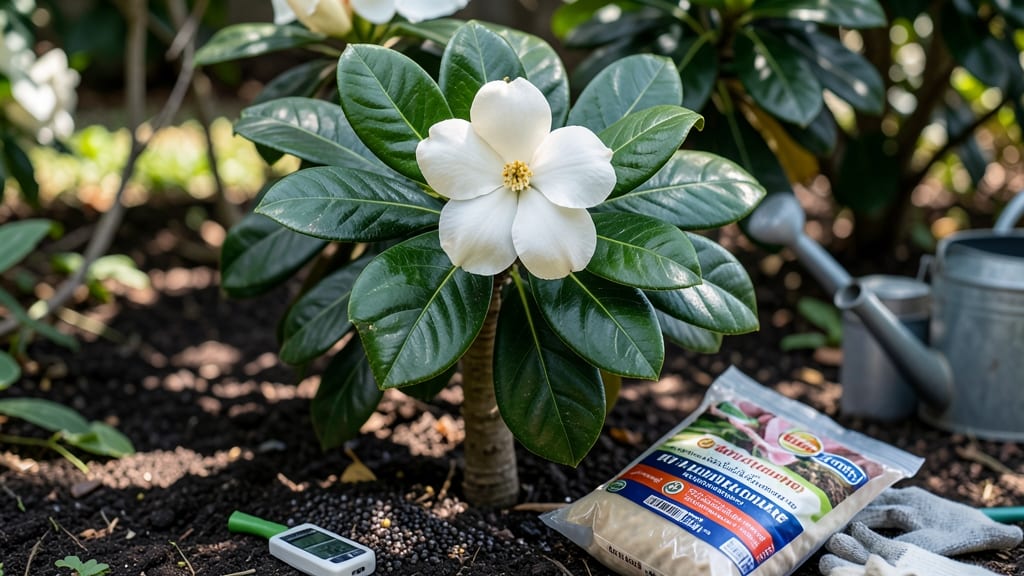
Understanding the gardenia fertilizer requirements is essential for achieving those stunning white blooms—because these acid-loving plants refuse to thrive in just any soil mix.
Struggling to keep your gardenia blooming? The secret isn’t just water or sunlight—it’s the right fertilizer applied at the perfect time. Gardenias demand precise care, and their acid-loving roots need a feeding schedule as delicate as their fragrant white blooms.
Too much fertilizer burns their leaves, while too little leaves you with sparse blooms and leggy stems. The solution? A balanced, acid-based fertilizer applied in spring and summer—but only when the soil is warm and the plant is actively growing.
Below, I break down the best fertilizer types, the exact feeding schedule for Zone 6 gardenias, and how to spot when you’ve overdone (or underdone) it. Let’s get those blooms back in full force!

Best fertilizer types for gardenias: acid-loving formulas that work
Gardenias thrive when their acid-loving roots receive the right nutrients, but choosing the wrong fertilizer can stunt growth or even kill your plant. These tropical shrubs need a balanced NPK ratio with extra micronutrients like iron and magnesium to produce their signature fragrant blooms.
Without proper feeding, you’ll notice fewer flowers, yellowing leaves, or weak stems—all clear signs your gardenia is hungry for the right care.
Not all fertilizers work equally well for gardenias. Synthetic options like 8-3-9 acid-loving formulas provide quick results, while organic choices such as composted pine bark or fish emulsion improve soil health over time.
The key is matching your gardenia’s pH needs (5.0–6.5) with a fertilizer that won’t raise the soil pH too high, which can lock out essential nutrients.
The best fertilizers for gardenias fall into two main categories: slow-release granules and liquid acid fertilizers. Granules like Osmocote Smart-Release Plant Food provide steady nutrition, while liquid fertilizers such as Miracle-Gro Azalea, Camellia, and Rhododendron Plant Food deliver fast-acting nutrients.
Both have pros and cons depending on your gardenia’s current health and your feeding schedule.
Here’s a quick comparison to help you decide which fertilizer aligns with your gardenia’s needs:
For gardenias, iron deficiency is one of the most common issues, causing yellowing leaves while veins remain green—a condition called chlorosis. A chelated iron fertilizer or Epsom salt (magnesium sulfate) can correct this quickly.
Always apply fertilizers in the early morning to avoid leaf burn from heat stress, and water thoroughly afterward to prevent salt buildup in the soil.
If your gardenia is potted, choose a slow-release fertilizer to avoid overfeeding, as container plants dry out faster and absorb nutrients more quickly. In-ground gardenias benefit from a layer of composted pine bark mixed into the soil at planting time to maintain acidity naturally.
This organic matter also improves soil structure, helping roots access water and nutrients more efficiently.
One mistake many gardeners make is using high-nitrogen fertilizers, which encourage leafy growth at the expense of blooms. Gardenias need a balanced NPK ratio with slightly more phosphorus (the middle number) to promote flowering.
For example, a 6-6-6 or 8-3-9 formula works better than a 10-0-0 lawn fertilizer, which can shock your plant’s delicate root system.
To test your soil’s acidity, use a digital pH meter or send a sample to your local cooperative extension service. If the pH is too high (above 6.5), amend the soil with elemental sulfur or peat moss to lower it gradually.
Aim for a pH of 5.0–6.5—this sweet spot ensures your gardenia can absorb all the nutrients you’re providing.
For container gardenias, flush the soil with water every 3–4 months to remove excess salts from fertilizers. This simple step prevents root burn and keeps your plant healthy. Pair this with a well-draining potting mix amended with orchid bark or perlite to mimic their natural acidic, humus-rich habitat.
Remember, the goal is to feed your gardenia without overwhelming it. Start with a light application of fertilizer in early spring, then adjust based on your plant’s response. Healthy gardenias reward you with glossy leaves and abundant blooms—proof that you’ve nailed the fertilizer formula! 🌸
Gardenia fertilizing schedule: monthly feeding plan for year-round blooms
Your gardenia’s blooming potential hinges on a precise fertilizing schedule that matches its natural growth cycles. Unlike hardy shrubs, gardenias are acid-loving and sensitive to overfeeding—so timing and dosage matter more than quantity.
The key is feeding lightly in spring, consistently in summer, and completely stopping in fall/winter when the plant rests.
Container gardenias need more frequent feeding than in-ground plants because their roots have less access to nutrients. Always use a balanced, acid-based fertilizer (like 6-6-6 or 8-3-9 NPK) with added iron and magnesium to prevent yellowing leaves.
Below, I’ve mapped out the exact schedule, including how to adjust for container vs. in-ground plants and signs your gardenia is protesting with leaf burn or sparse blooms.
-
🌱 Spring (April-May)
Light Feed
Apply 1 tbsp per in-ground plant or ½ tbsp per container plant of acidic fertilizer (e.g., Miracle-Gro Azalea/Camellia). Focus on root growth before blooming.
-
☀️ Summer (June-August)
Feed Monthly
Feed every 4-6 weeks with ½ tbsp per plant (in-ground or container). Use liquid fertilizer after blooming cycles to sustain flowers. Reduce to every 8 weeks if leaves show signs of stress.
-
🍂 Fall (September-October)
Skip
Stop fertilizing entirely. Focus on mulching with pine bark to protect roots and maintain soil acidity. Prune lightly to remove dead blooms.
-
❄️ Winter (November-March)
Dormant
Avoid fertilizing—roots are inactive. Water sparingly (only when soil is dry). Test soil pH in late winter (should be 5.0-6.5); amend with sulfur if needed.
-
🪴 Container Adjustments
Monthly
Double the frequency: Feed every 3-4 weeks in summer (vs. every 6 weeks for in-ground). Use half the dosage but double the micronutrients (iron, magnesium) to prevent deficiencies.
Watch for yellowing leaves or crispy leaf edges—these are over-fertilization signs. If you see sparse blooms or leggy stems, your gardenia needs more micronutrients (try a compost tea or Epsom salt spray).
For container plants, flush the soil with water every 3 months to prevent salt buildup from fertilizers.
Pro tip: Apply fertilizer in the early morning when the soil is damp (not soggy). This ensures nutrients are absorbed before the heat of the day. Pair this schedule with regular pruning after blooming to encourage next year’s buds—your gardenia will reward you with fragrant, year-round blooms.