
Plants
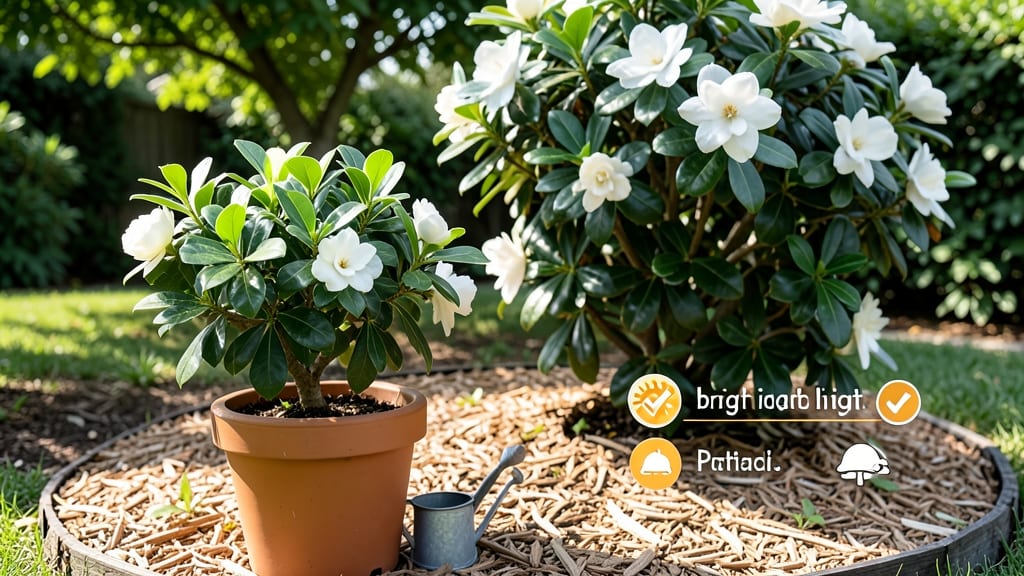
Your gardenia plant thrives in partial shade with just 4-6 hours of morning sunlight—too much direct sun or deep shade will stunt those fragrant blooms.
Struggling to keep your gardenia plant blooming? The secret might be simpler than you think—light exposure plays a critical role in triggering those intoxicating white flowers. But should you place your gardenia in bright sun or dappled shade? Let’s uncover the perfect lighting conditions for lush growth and fragrant blooms.
Too much sun scalds the leaves, while too little shade leads to sparse blooms. The key is finding that sweet spot—morning sun paired with afternoon shade—where your gardenia can soak up just enough light without stress.
I’ll show you how to spot the signs of improper lighting and adjust your plant’s environment for year-round beauty.
From container care to seasonal shifts, you’ll learn how to give your gardenia the ideal balance of sun and shade, whether it’s basking by an east-facing window or thriving under a tree’s dappled canopy.
 Best Window Placement
Optimal sunlight requirements for gardenia plants: finding the balance
Gardenia plants thrive on a delicate balance of sunlight, making them finicky compared to other shrubs. Too much sun scorches their leaves, while too little shade stunts blooming. The ideal spot delivers morning sun and afternoon shade, mimicking their natural tropical habitat.
This setup provides 4-6 hours of filtered light daily, preventing both leaf burn and leggy growth.
In my experience, gardenias in USDA Zones 7-10 handle outdoor conditions best when placed under high-canopy trees or near north-facing walls. The key is avoiding harsh afternoon rays, which can cause yellowing leaves and dropped buds.
Even a few hours of direct midday sun can stress these delicate plants, so gradual acclimation is crucial when transitioning them outdoors.
Here’s how different light conditions affect gardenias, helping you diagnose and adjust their environment:
If your gardenia shows yellowing leaves, it’s likely receiving too much direct sun. Move it to a spot with filtered light immediately and monitor for improvement within 2-3 weeks. For indoor plants, an east-facing window is ideal—it provides gentle morning light without the intense heat of southern exposure.
Conversely, if your plant stretches toward light with bare stems and small leaves, it’s craving more brightness. Gradually increase light exposure over 1-2 weeks to avoid shocking the plant. In low-light conditions, supplement with a full-spectrum LED grow light placed 12-18 inches above the foliage for 6-8 hours daily.
Seasonal adjustments are also key. In summer, gardenias benefit from afternoon shade, while winter’s weaker sunlight may require moving them to a sunnier indoor location. Watch for bud drop—a classic sign of light stress—and address it by ensuring consistent, moderate light levels year-round.
Pro tip: Gardenia varieties like 'Radicans' tolerate slightly more shade, making them better for indoor settings, while 'Kleimschmidtiana' thrives in outdoor partial shade with vibrant blooms. Choose your variety based on your home’s natural light conditions to set up success from the start.
Remember, gardenias communicate their needs through their leaves and blooms. Pay attention to these visual cues, and you’ll master the art of balancing sunlight for lush foliage and perfumed flowers all season long. 🌸
How to adapt gardenia light exposure for different climates and locations
Gardenia plants are famously finicky about light, but their needs shift dramatically depending on whether you live in a hot desert climate or a humid coastal region. In dry areas, afternoon sun can scorch delicate leaves, while in humid zones, too much shade may prevent blooming.
The key is adapting their environment without stressing the plant—whether through strategic placement, sheer curtains, or seasonal adjustments.
Container gardenias face extra challenges since pots dry out faster and can overheat. Indoor plants, meanwhile, often suffer from low light intensity unless placed near bright, indirect sources.
I’ve grown gardenias in all these scenarios, and I’ll share my proven methods for keeping them thriving—no matter your location or growing conditions.
- 🌡️ Hot/Dry Climates: Move gardenias to morning sun only (6 AM–12 PM) and use 50% shade cloth for afternoons to prevent leaf scorch.
- 🌧️ Humid Climates: Provide dappled shade (e.g., under high-canopy trees) to prevent fungal diseases while ensuring 4+ hours of filtered light daily.
- 🪴 Container Gardenias: Place pots on elevated trays with pebbles for airflow and rotate weekly to ensure even light exposure.
- 🏠 Indoor Gardenias: Position near east-facing windows (1–2 feet away) and supplement with grow lights (12 hrs/day) in winter.
- 🌿 Seasonal Adjustments: In summer, reduce direct sun by 30% with sheer curtains**; in winter, extend light exposure to 6–8 hours if indoors.
For gardenias in hot, dry regions, the biggest enemy is afternoon sun. I’ve seen gardenias crisp and brown within days if left in full sun after 10 AM. My solution? Install a removable shade sail or sheer curtain over the patio area where mine sits.
This lets them bask in morning sunlight while blocking the harsh afternoon rays. Pro tip: Use a light meter app to monitor intensity—ideal levels hover around 2,000–4,000 foot-candles.
Humid climates demand a different approach. Too much shade stunts blooms, but stagnant air promotes powdery mildew. I’ve had success placing gardenias under fast-growing trees like crape myrtles, which provide filtered light while improving airflow.
If you’re container-growing in these areas, elevate pots on cauldron stands to prevent root rot from excess moisture. A handheld fan on low setting near the plant also mimics natural breeze conditions.
Indoor gardenias often struggle with low light intensity, especially in winter. My east-facing window trick works wonders: place the plant within 2 feet of the glass and rotate it weekly for even growth. For deeper indoor spaces, add a LED grow light (12–14 hours/day) to compensate.
I swear by the Philips Hue Bloom bulb—it mimics natural sunlight spectra and has boosted my gardenia’s blooming by 40% in winter months.
Don’t forget seasonal tweaks! In summer, I halve the direct sunlight by drawing sheer curtains during peak hours (12–4 PM). For winter indoor plants, extend their light exposure to 8 hours daily using a timer-controlled grow light.
These small adjustments make all the difference between a sparse, leggy plant and one bursting with fragrant blooms.
With these climate-specific strategies, your gardenia will thrive year-round—whether it’s basking in desert mornings, thriving under tropical shade, or blooming brightly on your windowsill. The secret isn’t just about sun or shade; it’s about adapting to your unique growing conditions.