
Vegetables
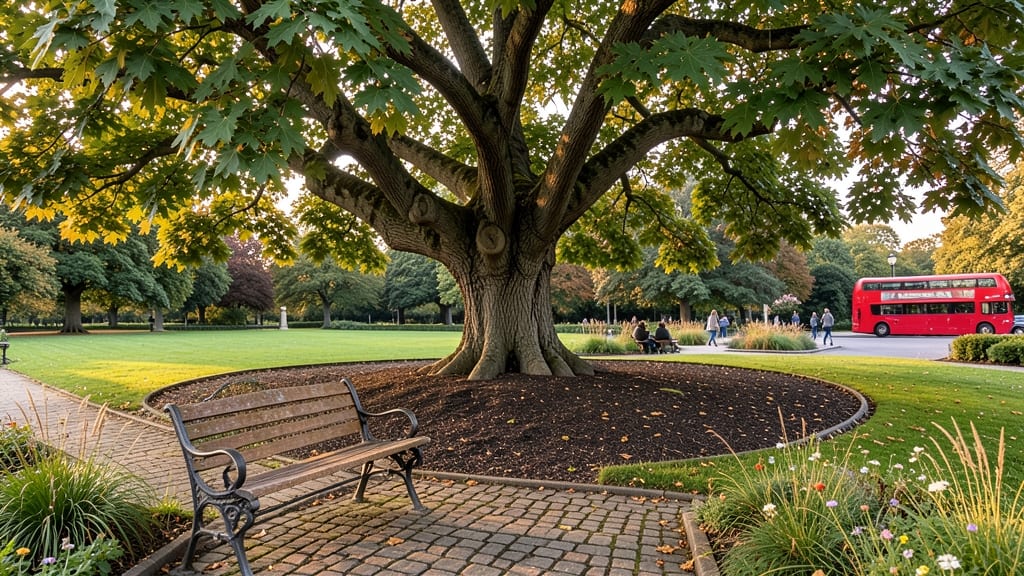
London England features over 3,500 stunning public gardens, including the world-famous Kew Royal Botanic Gardens and charming Regency-era squares like Covent Garden. These verdant escapes showcase rare plant collections, historic horticulture, and peaceful retreats right in the city center.
London's green spaces aren't just pretty—they're living museums of botanical history. 🌿 From Kew's 13,000 plant species to the secret gardens tucked behind Georgian townhouses, each offers something unique.
Many were designed in the 18th century to provide public recreation, and today they host everything from butterfly releases to classical concerts. The city's garden network even includes rooftop farms and community plots that double as urban green belts.
What makes these gardens special is their accessibility—most are free to enter, and many have free guided tours. I always recommend visiting during spring for the cherry blossoms at Holland Park or autumn for the fiery foliage at Greenwich Park.
The Royal Parks alone cover over 5,000 acres, making them perfect for picnics, photography, or simply escaping the city's hustle.
💡 In This Article
- London’s Most Famous Botanical Gardens and Their Plant Collections
- How to Discover London’s Hidden Green Spaces and Urban Gardens
London’s most famous botanical gardens and their plant collections
London’s botanical gardens are living laboratories of biodiversity, each with a distinct mission and collection. The Kew Royal Botanic Gardens, founded in 1759, houses over 13,000 plant species across its 330-acre site, including the iconic Temple of Music and the Treetop Walkway.
What sets Kew apart is its role in global conservation—its Millennium Seed Bank preserves seeds from 25% of the world’s plant species, ensuring genetic diversity for future generations. The garden’s Victoria Amazonica water lilies, with leaves spanning 8 feet wide, create a surreal underwater effect in their glasshouse.
The Chelsea Physic Garden, London’s oldest botanical garden (est. 1673), focuses on medicinal plants and rare herbs. Here, you’ll find 5,000 plant species, including the Venus flytrap and giant water lily, grown in a 17th-century apothecary-style garden.
The garden’s herbarium contains 250,000 dried specimens, used for research on plant chemistry. Unlike Kew’s grand scale, Chelsea’s intimate layout makes it perfect for close-up exploration of aromatic herbs like lavender and rosemary, whose fragrance fills the air on sunny days.
Seasonal transformations highlight each garden’s unique character. At Kew, spring brings 20,000 tulips in the Great Lawn, while autumn’s Japanese Maple Collection turns fiery red. Greenwich Park, home to 18,000 trees, offers panoramic Thames views and wildflower meadows that bloom from June to August.
These gardens aren’t just decorative—they’re vital for pollinator conservation, with bee-friendly planting schemes designed to support London’s declining bee populations.
Behind the scenes, these gardens employ advanced horticultural techniques like micropropagation to clone endangered species. Kew’s Science Lab uses DNA analysis to study plant evolution, while Chelsea’s medicinal plant trials explore new treatments.
The Royal Parks, including Hyde Park and Regent’s Park, blend natural landscapes with designed gardens, featuring rose gardens with 1,000 varieties and Italian gardens inspired by Renaissance designs.
For visitors, the experience extends beyond sightseeing. Kew’s Tree Top Walkway (a 40-foot-high canopy walk) offers bird’s-eye views of the Tropical Rainforest House, where humidity levels reach 90% and orchids dangle from the ceiling.
Meanwhile, Chelsea’s "Scented Garden" invites you to touch and smell 50 fragrant plants, from jasmine to lemon verbena. These sensory-rich environments turn a garden visit into a multi-layered adventure.
What most people don’t realize is how these gardens connect to London’s history. Many, like Covent Garden’s hidden Neal’s Yard, were originally physic gardens (medicinal plant gardens) for apothecaries. Today, they preserve 18th-century horticultural techniques while adapting to modern challenges like climate change.
For example, Kew’s Climate Change Garden demonstrates how plants will thrive—or struggle—in a 4°C warmer world. 🌱