
Planting
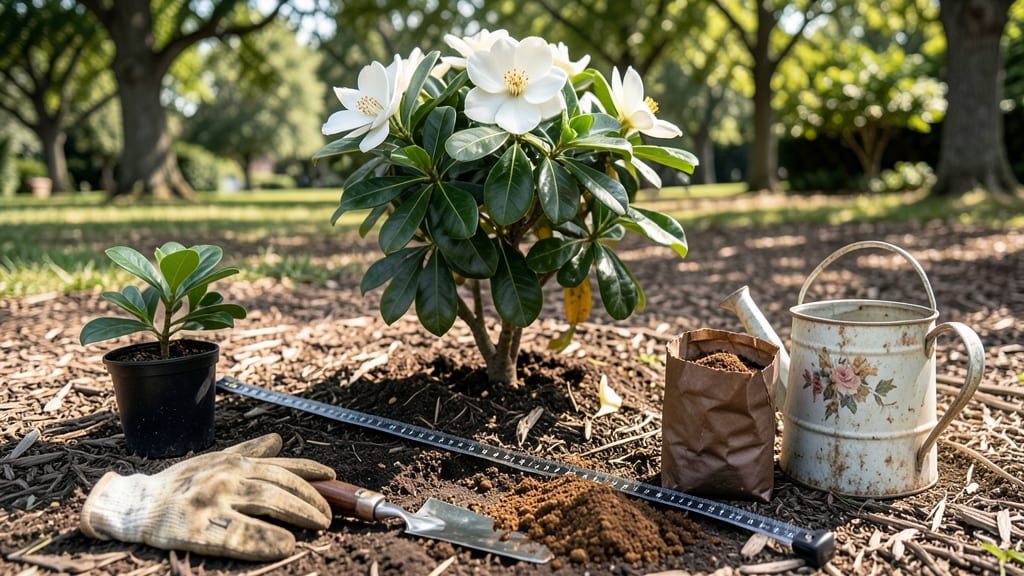
When planting gardenias, space them 5 to 8 feet apart to maximize sunlight penetration and root growth while preventing fungal diseases. Dwarf varieties only need 3 to 4 feet of separation.
Proper spacing isn't just about aesthetics—it directly impacts your gardenias' health. 🌿 The 5-8 foot rule for standard varieties ensures each plant gets enough sunlight for those signature white blooms, while dwarf types thrive in tighter quarters.
I've found that gardeners in humid climates should increase spacing slightly to improve airflow, which drastically reduces powdery mildew risks. Well-draining soil becomes even more critical when plants are closer together, as competition for nutrients increases.
For small spaces, consider container gardening with 3-foot spacing—just use larger pots (at least 18 inches wide) to accommodate root systems. The key is balancing visual appeal with plant needs; too close, and you'll struggle with blooms and pests.
I always recommend sketching a layout first to visualize how the mature plants will interact with your landscape.
💡 In This Article
- Gardenia Spacing Science: Sunlight, Roots, and Growth Factors
- Gardenia Planting Layouts for Different Garden Sizes
Gardenia spacing science: sunlight, roots, and growth factors
Gardenia spacing directly impacts photosynthesis efficiency through sunlight exposure. These tropical plants thrive on 6-8 hours of direct sunlight daily, but their broad, glossy leaves create natural shade that can block light from neighboring plants when spaced too closely.
At 5-8 feet apart, standard gardenias receive optimal light while maintaining airflow—critical for preventing fungal diseases like powdery mildew that thrive in humid conditions. The root systems of mature gardenias spread 3-4 feet wide, so proper spacing prevents root competition that leads to stunted growth and fewer blooms.
The science behind root development reveals why spacing matters. Gardenias develop a fibrous root system that needs room to expand horizontally. When planted too close (3 feet or less), roots become tangled and compete aggressively for water and nutrients, which stresses the plant and reduces flowering.
In well-draining soil with 5.0-6.5 pH, roots can access deeper moisture reserves, but crowded conditions force them to rely on surface water that evaporates quickly. The 8-foot maximum for standard varieties accounts for mature plant width plus this root expansion zone.
Climate plays a surprising role in spacing needs. In hot, humid regions (like Florida or Southeast Asia), I recommend increasing spacing to 6-8 feet to enhance airflow—this reduces fungal spores that thrive in stagnant air.
In cooler climates (Zones 8-9), you can reduce spacing to 4-5 feet since humidity levels are naturally lower. The 3-4 foot spacing for dwarf varieties works because their mature height (2-3 feet) and root spread are significantly smaller, but they still need room for airflow between branches.
Soil quality interacts with spacing to determine success. Heavy clay soils require 1-2 feet more spacing because water pools around roots, creating anaerobic conditions that stunt growth. Amending with organic matter (compost or peat moss) improves drainage and allows closer planting (4-5 feet for standard varieties).
The key is creating a balance where roots can access nutrients while avoiding waterlogged conditions that invite root rot—a common issue in crowded plantings.
Here's what happens when spacing is wrong: Plants too close (2-3 feet) develop weak stems that flop under the weight of blooms, while those too far apart (10+ feet) struggle to reach sunlight through competing vegetation.
The 5-8 foot range represents the Goldilocks zone where gardenias get enough light, air circulation, and root space to thrive without overcrowding. For container gardening, this translates to 18-inch pots with 3-foot spacing between plants to mimic these natural conditions.
Visualize the ideal setup: Imagine a gardenia's canopy as a 4-foot diameter circle at maturity. This space ensures each plant gets full sunlight without shading its neighbors. The 8-foot spacing accounts for this canopy plus the 3-foot root zone, creating a 12-foot diameter influence area per plant.
This spatial awareness prevents the "overcrowding spiral" where plants grow tall and leggy in search of light while producing fewer blooms.