How To
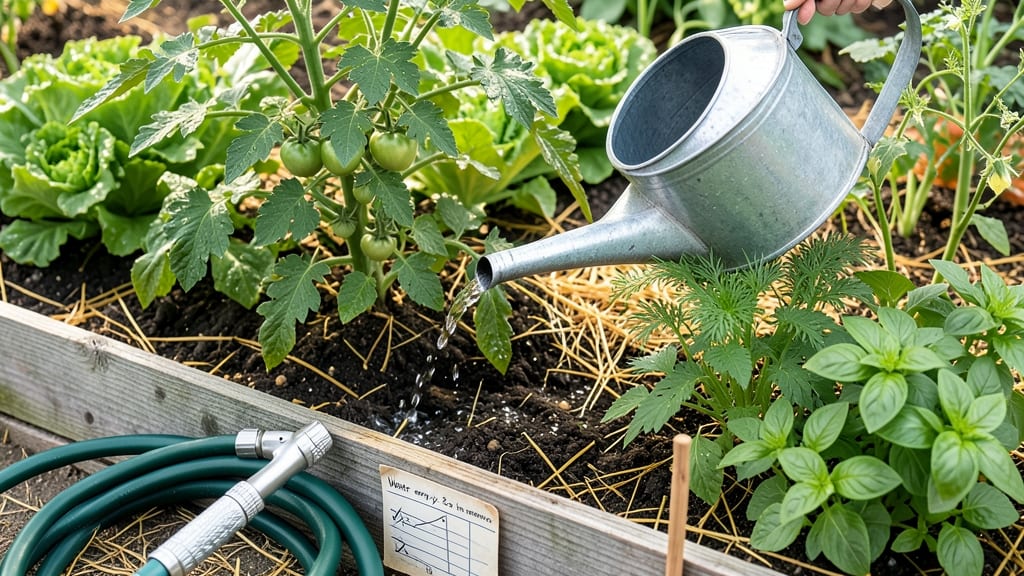
Watering your vegetable garden for the right length of time keeps roots thriving and waste at bay—yet most gardeners either drown their plants or leave them parched.
Overwatering kills more vegetable gardens than drought—yet most gardeners guess their watering time instead of measuring. This guide reveals the exact soil-moisture method to water your 🥬 efficiently, saving time and resources while maximizing growth.
Why does it matter? Too little water stresses plants, while too much rots roots and invites pests. The key lies in understanding how long to water based on soil type, plant needs, and weather—without relying on guesswork.
Here’s how to determine the perfect duration for deep, effective watering that keeps your garden moist but never soggy, plus tools and techniques to make it effortless.


The 3-Zone soil-moisture test: how long to water based on plant type
Most gardeners water their vegetable gardens based on a schedule or when the soil looks dry—but that’s a guessing game. Instead, I use the 3-zone soil-moisture test to determine the exact watering duration for each plant type.
This method focuses on root-depth moisture, not surface dryness, because that’s where your plants actually drink. By testing three zones—surface, mid-depth, and deep—you’ll avoid both underwatering and overwatering, which are the top killers of vegetable gardens.
The key is understanding that leafy greens, root vegetables, and fruiting plants all need different moisture levels. For example, lettuce thrives in consistently moist soil, while carrots need evenly moist but not soggy conditions.
Meanwhile, tomatoes demand deeper watering to support their heavy fruit loads. The 3-zone test helps you tailor watering times to each category, ensuring your garden stays healthy without wasting water.
Here’s how it works: Insert a soil moisture meter or your finger into the soil at three depths—0-1 inch (surface), 2-3 inches (mid-depth), and 4-6 inches (root zone). For leafy greens, aim for moisture at all three levels.
For root crops, keep the mid-depth zone consistently damp while letting the surface dry slightly. Fruiting plants need deep moisture but should have a slightly drier surface to encourage root growth.
🌱 Pro Tip: Test soil moisture before watering—not after. If the 4-6 inch zone is dry, your plants are thirsty. If it’s soggy, you’re overdoing it. Adjust your watering duration based on what you find, and always water deeply to encourage strong root systems.
| Plant Category | Ideal Soil Moisture at Root Depth | Watering Duration (Per Session) | Signs of Proper Moisture |
|---|---|---|---|
| Leafy Greens (Lettuce, Spinach, Kale) | Consistently moist at 0-3 inches | 5-10 minutes (drip) / 10-15 mins (sprinkler) | Tender leaves, no wilting |
| Root Vegetables (Carrots, Beets, Radishes) | Evenly moist at 2-4 inches | 8-12 minutes (drip) / 15-20 mins (sprinkler) | Smooth, crack-free soil surface |
| Fruiting Plants (Tomatoes, Peppers, Cucumbers) | Deep moisture (4-6 inches), surface slightly dry | 10-20 minutes (drip) / 20-30 mins (sprinkler) | Firm stems, no blossom-end rot |
| Herbs (Basil, Parsley, Cilantro) | Moist at 1-2 inches, tolerates slight dryness | 5-8 minutes (drip) / 8-12 mins (sprinkler) | Bright green leaves, no yellowing |
Let’s break down the watering duration for each category.
For leafy greens, a quick 5-10 minute drip irrigation session is often enough because their roots are shallow. Root vegetables need slightly longer—8-12 minutes—to ensure moisture reaches their expanding roots without causing rot. Fruiting plants, like tomatoes, require the most water (10-20 minutes) because their deep roots and heavy fruit loads demand consistent moisture at depth.
💧 Adjust for Soil Type: Sandy soil drains fast, so you may need shorter bursts (e.g., 5 minutes) followed by frequent checks. Clay soil holds moisture longer, so longer sessions (e.g., 15-20 minutes) every 3-4 days work better.
Always test the 4-6 inch zone—this is where your plants’ roots are actively growing.
One common mistake is watering based on time alone instead of soil conditions. For example, a 15-minute sprinkler session might be perfect for tomatoes in loamy soil but overkill for the same plants in clay.
Instead, use the 3-zone test to calibrate your watering duration. Start with the recommended times, then adjust based on what you feel when you test the soil.
For container gardens, the rules change slightly because pots dry out faster. Test the soil daily in the 2-3 inch zone—if it’s dry, water until it drains from the bottom.
Most herbs and small veggies in containers need 5-8 minutes of watering every 1-2 days, depending on the pot size and weather.
🌿 Final Tip: Water in the early morning (before 10 AM) to reduce evaporation and fungal diseases. Avoid evening watering, as damp foliage overnight can lead to blight in tomatoes and peppers. By mastering the 3-zone soil-moisture test, you’ll water efficiently, save resources, and grow healthier, more productive vegetables.
Watering duration chart: how long to run your hose or irrigation system
Determining how long to water your vegetable garden depends on three key factors: your soil type, the watering method you use, and the current weather conditions. Unlike guesswork, this chart gives you precise time estimates to ensure roots get the right amount without waste.
Whether you're using a hose, sprinkler, or drip system, these durations will help you avoid both drought stress and waterlogged soil.
For example, sandy soil drains quickly, requiring shorter bursts, while clay soil holds moisture longer, needing longer watering sessions. Your irrigation method also matters—drip systems deliver water slowly and efficiently, while sprinklers may need longer run times to penetrate deeply.
Below, I’ve broken down the ideal watering durations for each scenario, including adjustments for hot or windy weather.
Young seedlings and newly transplanted veggies need shorter, more frequent watering—think 5-10 minutes with drip irrigation or until the top inch of soil feels damp. As plants mature, like tomatoes or peppers, increase duration to encourage deep root growth.
For example, a mature tomato plant in loam soil might need 20-25 minutes with drip irrigation, while a leafy green like lettuce in sandy soil could thrive with just 10 minutes.
Pro tip: Use a soil moisture meter to verify when to stop watering. Stick it 2-3 inches deep—if it reads moist, you’re done. This method saves water and prevents over-saturation, which can drown roots and attract pests.
Adjust your timer based on the meter’s readings, especially during heatwaves or after heavy rain.
Remember, morning watering is always best—it reduces evaporation and fungal diseases like powdery mildew. If you’re using a sprinkler, aim for early morning hours (before 8 AM) to let foliage dry quickly. For drip systems, set them up in the late morning to avoid wetting leaves overnight.
Finally, mulch your garden beds with straw or wood chips to lock in moisture and reduce evaporation. This can cut your watering time by up to 30%, especially in sandy or loamy soils. With these adjustments, you’ll have a thriving vegetable garden that’s both efficient and low-maintenance.