
Light Requirements
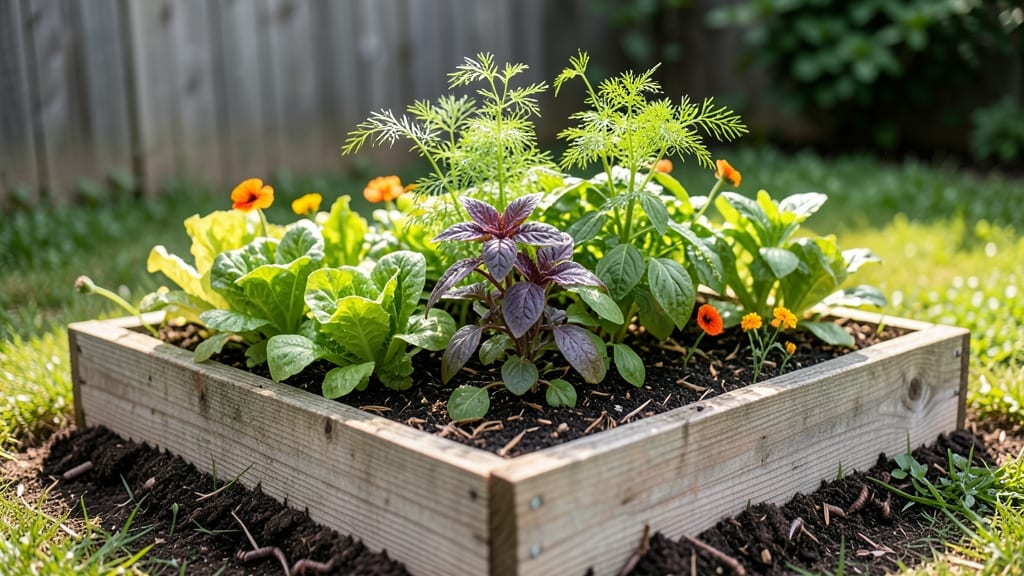
To determine how much dirt for a raised garden bed, multiply the bed's length × width × depth (in feet), then add 10% extra for settling. A standard 4×8 ft bed filled 12 inches deep needs about 3.2 cubic yards of soil mix, with larger or deeper beds requiring proportionally more material.
This simple calculation ensures you buy enough soil to fill your raised bed completely without running short. 🌱 Most gardeners forget to account for settling—organic materials compress over time, so that extra 10% prevents mid-project scrambling for more supplies.
For example, a 3×6 ft bed filled 18 inches deep would need roughly 2.5 cubic yards, while deeper beds (like 24 inches) could require up to 50% more material. Always check your soil mix's bulk density, as heavier blends (like those with compost) may need slight adjustments to your calculations.
Pro tip: Order your soil in bulk from local suppliers to save money, and consider pre-mixed raised bed soil blends that include compost and perlite for optimal plant growth. The right mix not only ensures proper drainage but also provides essential nutrients your plants will thrive on from day one.
💡 In This Article
- Calculating Soil Volume for Raised Garden Beds by Dimensions
- Best Soil Mixes and Layering Techniques for Raised Beds
Calculating soil volume for raised garden beds by dimensions
The core calculation for determining how much dirt you need involves multiplying your bed's length, width, and depth—all measured in feet—then converting to cubic yards. This formula works because soil volume is three-dimensional space, and precise measurements ensure you avoid shortages.
For instance, a 4×8 ft bed filled 12 inches deep (which is 1 foot) requires 32 cubic feet of soil (4 × 8 × 1 = 32).
Since most suppliers sell soil in cubic yards, you'll convert by dividing by 27 (since 1 cubic yard = 27 cubic feet), resulting in about 1.18 cubic yards—but remember, we'll adjust for settling later.
Depth matters more than you might think—it directly impacts plant root growth and yield potential. A 12-inch depth is ideal for most vegetables, allowing roots to spread without competing with underlying soil.
However, deeper beds (18-24 inches) support heavier feeders like tomatoes or squash by providing 30-50% more root space. The trade-off? Deeper beds require significantly more soil: that same 4×8 ft bed at 24 inches deep jumps to 6.4 cubic yards of material.
Always measure your bed's exact dimensions, as even a few inches difference can mean buying an extra bag or two.
Here's where most gardeners trip up: accounting for settling. Organic materials like compost and peat moss compress over time, reducing volume by 10-20% as moisture and weight settle them.
That's why we add 10% extra to our initial calculation—it's the difference between a perfectly filled bed and one that leaves unsightly gaps. For example, a 3×6 ft bed at 18 inches deep starts with 3 cubic yards but should actually use 3.3 cubic yards to compensate.
This buffer also accounts for uneven bed frames or slight over-filling during construction.
Bulk density varies by soil type, so check your mix's specifications. A standard topsoil blend might weigh 2,000-2,500 pounds per cubic yard, while lighter mixes with perlite could be 1,500-1,800 pounds per cubic yard.
Heavier mixes require stronger bed frames to support the weight, while lighter mixes may need more volume to achieve the same depth. Always verify with your supplier—some "premium" mixes market themselves as "lighter" but still pack densely.
For a 4×8 ft bed at 12 inches, you're typically looking at 1.5-2 tons of soil, depending on the blend.
Pro tip: Use a soil volume calculator (many are free online) to input your exact dimensions and get instant results. These tools often include settling adjustments and even suggest optimal soil mixes based on your plants.
For example, vegetable gardens benefit from a 60% topsoil, 30% compost, 10% perlite mix, while flower beds might use 50% topsoil, 40% compost, 10% sand for better drainage. Always buy 5-10% more than calculated to account for spillage or uneven edges during filling.
Visualize your bed's capacity by thinking in layers. A 12-inch deep bed is like stacking three 4-inch layers of soil—each layer should be level and compacted slightly to prevent air pockets.
For deeper beds, consider adding a 4-inch drainage layer of gravel or coarse sand at the bottom before filling with soil. This prevents waterlogging and ensures roots access oxygen. The key is balance: too much depth wastes material, while too little restricts growth.
Most gardeners find 12-18 inches strikes the perfect balance for most plants.
Remember, your soil's texture changes as you work with it. Freshly delivered soil often looks fluffy but settles into a firmer state once watered. This is why professional gardeners recommend watering the soil as you fill the bed—it helps distribute weight evenly and reduces future settling.
For a 4×8 ft bed, plan to water in 2-3 inch increments as you go, tamping lightly with a board or your hands. This method also helps eliminate air pockets that could stunt root growth.