
Watering
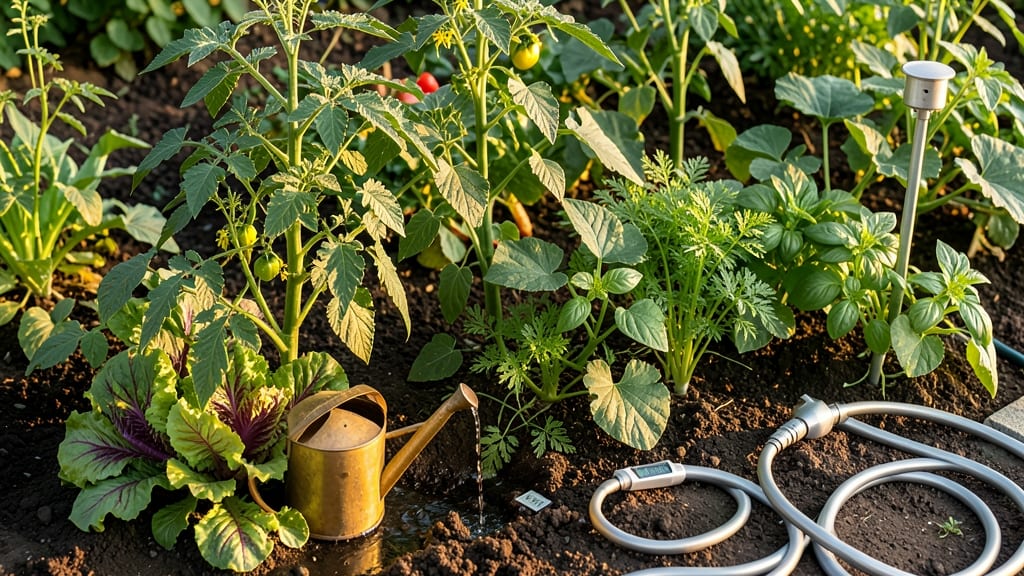
A vegetable garden needs 1 to 2 inches of water per week for most plants, but the real secret is delivering it deeply to encourage strong root growth.
Struggling to keep your vegetable garden thriving without overwatering or drowning your plants? The right watering schedule isn’t just about quantity—it’s about understanding each plant’s unique needs and delivering water deeply for stronger roots.
Too little water and your tomatoes turn bitter; too much and your carrots rot before they ripen. The key is matching watering to soil type, plant type, and even the time of day you water.
In this guide, I’ll break down exactly how much water different vegetables need, when to water for best results, and how to spot the signs of over- or under-watering so you can adjust before it’s too late.


Deep-watering schedule by vegetable type: how often and how long
Watering your vegetable garden isn’t a one-size-fits-all task—each plant has unique needs based on its growth stage, soil type, and climate conditions. Deep watering encourages roots to grow downward, creating hardier plants.
For example, tomatoes and peppers need consistent moisture, while leafy greens prefer frequent, shallow watering. Understanding these differences prevents both underwatering and overwatering, which can lead to disease or poor yields.
Soil type plays a critical role in how often you water. Sandy soil drains quickly, requiring more frequent watering, while clay soil holds moisture longer, reducing the need for daily sessions. The key is to water deeply—1-2 inches per week—and adjust based on rainfall.
For instance, during peak summer heat, even drought-tolerant plants like zucchini may need daily attention, whereas root crops like carrots thrive with less frequent, deeper watering.
Here’s a quick reference for common vegetables, including how often and how long to water based on their needs: