
Picking
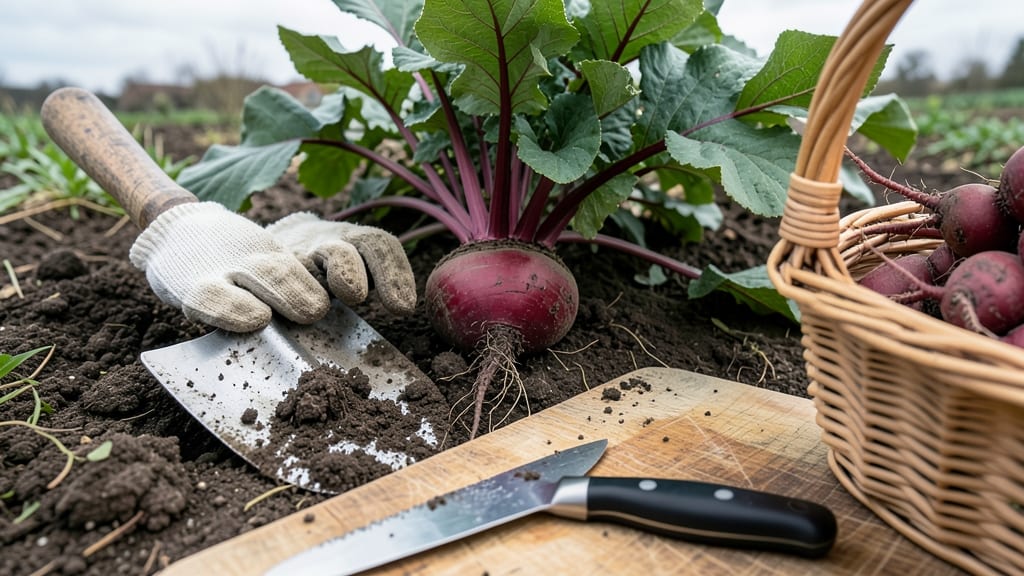
Knowing when to pick beetroot from the garden ensures you harvest sweet, tender roots packed with flavor—but timing is everything. If you pull them too early, they’ll be small and underdeveloped, while waiting too long turns them tough and woody.
Most gardeners miss the sweet spot because they focus on days since planting rather than visual cues. The truth? Your beetroot 🍠 tells you exactly when it’s ready—through root size, leaf color, and skin firmness.
Ignore these signals, and you could end up with a harvest that’s either too bland or too fibrous.
In this guide, I’ll walk you through the three key visual cues that guarantee a perfect harvest every time. Whether you’re growing golden, red, or striped varieties, these simple checks will help you avoid common mistakes and enjoy beetroot at its peak—sweet, vibrant, and ready for your kitchen.
From soil temperature to seasonal timing, we’ll also cover how to adjust your approach based on your climate. By the end, you’ll know exactly when to reach for your garden fork—and why timing makes all the difference in flavor and yield.

3 Visual cues to determine when beetroot is ready for harvest
Harvesting beetroot at the perfect moment transforms your garden into a treasure trove of sweet, tender roots. But timing is everything—pick too early, and you’ll miss out on full flavor development; wait too long, and you’ll end up with tough, fibrous roots that ruin even the best beet recipes.
The key lies in three simple visual cues that tell you exactly when your beetroot is ready to harvest.
I’ve learned through years of gardening that these cues—root size, leaf color, and stem thickness—are foolproof indicators. Mastering them will ensure you never harvest too soon or too late again.
Let’s break down each one so you can confidently pull beetroot from your garden at its peak.
- Root Size: Aim for 1-3 inches in diameter. Smaller roots (under 1 inch) are still developing their sweetness, while larger roots (over 3 inches) become woody and tough.
- Leaf Color: Look for deep green, vibrant foliage. Pale or yellowing leaves signal stress or underdevelopment, while overly large leaves (over 4 inches) may indicate the beetroot has outgrown its prime.
- Stem Thickness: A thick, sturdy stem (about the width of a pencil) means the beetroot is fully mature. Thin stems suggest the root isn’t ready, while overly thick stems can indicate overmaturity.
Let’s start with the most obvious clue: root size. When I first grew beetroot, I made the mistake of assuming bigger always meant better. But nothing could be further from the truth. Beetroot reaches its peak sweetness and tenderness when it’s between 1 and 3 inches in diameter.
At this size, the flesh is juicy and flavorful, perfect for roasting, pickling, or tossing into salads.
To check the size without digging up your entire patch, gently loosen the soil around the base of the plant with your fingers. If the exposed root is the size of a small potato, it’s ready.
If it’s smaller than a golf ball, give it another 1-2 weeks to mature. And if it’s larger than a tennis ball, you’ve missed the window—those roots will be tough and less flavorful.
Next, pay attention to the leaf color and overall health of the foliage. Healthy beetroot leaves should be a deep, glossy green, indicating the plant is thriving. When the leaves reach about 3-4 inches tall, that’s another green light for harvest.
But watch out for yellowing or wilting leaves—these are red flags that your beetroot is either stressed from drought or overcrowded.
I once grew a batch of beetroot in a crowded bed, and the leaves turned pale and sparse. By the time I noticed, the roots were small and underdeveloped. Since then, I’ve made sure to space my beetroot 12 inches apart and thin seedlings early to avoid this issue.
Healthy leaves mean happy roots, so keep an eye on the foliage as your beetroot grows.
The third and final cue is stem thickness, which is often overlooked but just as important. A mature beetroot will have a thick, firm stem that’s about the width of a pencil.
To test this, gently grasp the stem between your thumb and forefinger. If it feels resistant and sturdy, your beetroot is ready. If it’s thin or flimsy, it needs more time.
One trick I use is to press lightly on the stem with my fingernail. If it leaves a slight indentation, the beetroot isn’t fully mature yet. But if the stem holds its shape, that’s your cue to harvest.
This simple test has saved me from pulling beetroot too early—and missing out on that perfect sweetness.
Putting it all together, these three cues work like a checklist. When your beetroot has 1-3 inch roots, deep green leaves, and a thick stem, it’s time to harvest.
And remember, beetroot is one of those rare vegetables where smaller often means sweeter. Don’t wait until the roots get too large, or you’ll sacrifice flavor for size.
Once you’ve mastered these visual cues, harvesting beetroot becomes second nature. And the best part? You’ll never again wonder whether your beetroot is ready—you’ll just know. Happy digging, and enjoy those sweet, tender roots straight from your garden!
How soil conditions affect beetroot harvest timing (and how to fix common mistakes)
Soil conditions play a critical role in determining when your beetroot reaches harvest readiness. Too much dryness or poor soil structure can delay maturity by 2-3 weeks, while ideal conditions help roots reach peak sweetness faster.
I’ve seen firsthand how compacted soil or inconsistent watering turns what should be a 50-day harvest into a 70-day struggle—with tough, less flavorful results.
The biggest mistake I see gardeners make is assuming beetroot will mature on its own schedule, regardless of soil health. In reality, moisture levels, nutrient balance, and even soil temperature directly impact root development.
For example, sandy soil drains too quickly, while clay holds moisture but suffocates roots. Both scenarios push back harvest timing and reduce yield quality.
⚠️ Common Soil Mistakes That Delay Harvest
Overwatering: Leads to soggy soil and root rot, stunting growth. Always check soil moisture 1 inch below surface before watering.
Underwatering: Causes woody roots and bitter flavor. Beetroot needs 1 inch of water weekly during active growth.
Poor drainage: Roots can't expand properly in waterlogged conditions. Amend clay soil with compost and perlite for better aeration.
Nutrient deficiency: Pale leaves signal low phosphorus. Use a 5-10-10 fertilizer when seedlings emerge for optimal root development.
Let’s start with watering consistency, which is the most common issue I encounter. Beetroot thrives on even moisture—never let the soil dry out completely between waterings. During hot summers, I water my beetroot beds every 2-3 days in the morning to prevent stress.
The key is to keep the soil consistently damp (not soggy) at all times. A simple test: stick your finger 1 inch into the soil—if it feels dry, it’s time to water.
Next, soil pH makes a surprising difference. Beetroot prefers a pH between 6.0 and 7.0. If your soil is too acidic (below 6.0), roots may develop poorly and take longer to mature. I test my soil every spring and amend it with lime if needed.
For alkaline soil (above 7.0), adding sulfur or peat moss helps balance the pH. This small adjustment can shave 1-2 weeks off your harvest timeline.
Don’t overlook spacing and thinning, which directly affects root size and maturity. When beetroot plants are overcrowded (less than 12 inches apart), they compete for nutrients and water, resulting in smaller, underdeveloped roots.
I always thin seedlings to 3-4 inches apart initially, then transplant to 12-inch spacing when they’re 2 inches tall. This gives roots room to expand properly, reaching harvest-ready size faster.
Finally, soil temperature matters—especially in cooler climates. Beetroot grows best in soil temperatures between 60°F and 75°F. If your soil stays below 50°F, roots will develop slowly. To speed up maturity, I use black plastic mulch in early spring to warm the soil faster.
In hot climates, shade cloth prevents bolting and maintains even growth. These simple adjustments ensure your beetroot reaches peak harvest timing regardless of your local climate.
By mastering these soil conditions, you’ll transform your beetroot harvest from a hit-or-miss experience to a predictable, flavorful success. The next time you’re tempted to blame slow growth on "bad luck," check your soil first—you’ll likely find the answer (and the fix) right under your feet. 🌱