Watering
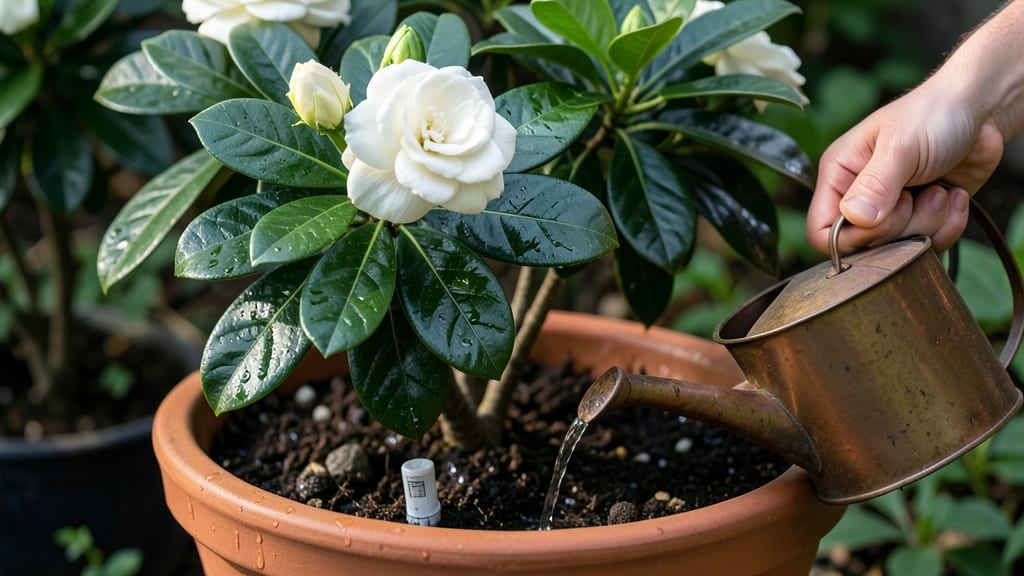
To water gardenias properly, you’ll need a deep-but-dry approach that keeps roots moist without drowning them—this is the key to those fragrant, waxy blooms you love.
Struggling to keep your gardenia blooming? The secret isn’t just how much you water—it’s how you water. Too little, and buds drop; too much, and roots rot. Get this right, and your 🌸 gardenia will reward you with years of lush, fragrant flowers.
Gardenias thrive in well-draining, acidic soil (pH 5.0-6.5) and hate soggy roots, which is why a morning watering routine with deep soaks works best. In containers, check soil moisture daily—stick your finger in 2 inches deep to avoid overwatering.
In this guide, I’ll break down the exact watering schedule for containers vs. in-ground plants, how to spot over- or underwatering, and why rainwater (or filtered tap water) keeps your gardenia healthier than chlorinated tap. Ready to master the art?


The deep-but-dry watering method for gardenias explained
If your gardenia’s leaves are turning yellow or buds keep dropping, your watering routine might be the culprit. Gardenias demand deep hydration but despise soggy roots. This deep-but-dry method ensures roots get the moisture they crave without suffocating in wet soil.
Think of it like giving your plant a long, refreshing drink—just once in a while—rather than sipping all day.
The key is mimicking their natural tropical habitat where heavy rains soak the soil deeply, followed by dry spells. In containers, this means watering until water drains from the bottom, while in-ground gardenias need moisture reaching 12-18 inches deep.
Overwatering causes root rot, while underwatering stresses the plant into dropping buds. Let’s fix this once and for all.
| Care Task | Frequency | Key Technique |
|---|---|---|
| Soil Check | Before watering | Insert finger 2-3 inches deep; water only if dry |
| Watering Time | Morning (6-9 AM) | Avoid evening watering to prevent fungal diseases |
| Water Amount | Container: 1-2 gallons; In-ground: 3-5 gallons | Water until soil is saturated 12" deep |
| Drainage Check | After watering | Ensure excess water drains within 30-60 minutes |
| Seasonal Adjustments | Spring/Summer: Every 2-3 days; Fall/Winter: Weekly | Reduce watering when temps drop below 60°F |
Start by testing your soil’s moisture level before watering. Stick your finger 2-3 inches deep into the soil. If it feels dry at this depth, it’s time to water. If it’s still damp, wait another day.
Gardenias in containers dry out faster than those planted in-ground, so check them daily during hot weather. Pro tip: Use a moisture meter for accuracy—it’s a game-changer for picky plants like gardenias.
When you water, go deep. For container plants, pour 1-2 gallons until water flows freely from the drainage holes. In-ground plants need 3-5 gallons to saturate the soil to a depth of 12-18 inches.
This encourages roots to grow deeper, making your gardenia more resilient. Avoid light, frequent watering—this leads to shallow roots and weak plants. Think of it like training for a marathon, not sprinting.
Morning is the best time to water gardenias. Watering in the early hours (between 6-9 AM) reduces evaporation and gives the plant time to absorb moisture before the heat of the day. Evening watering is a big no-no—it promotes fungal diseases like powdery mildew by keeping foliage wet overnight.
If you must water in the evening, do it by 5 PM and ensure leaves dry quickly.
Seasonal changes drastically affect your gardenia’s water needs. During spring and summer, when growth is active, water every 2-3 days. In fall and winter, reduce watering to once a week as the plant enters dormancy.
Watch for signs like drooping leaves (underwatering) or yellowing leaves (overwatering) to adjust your schedule. Rainy seasons? Skip watering entirely—gardenias thrive on natural hydration when possible.
One common mistake is ignoring the drainage system. Gardenias hate soggy feet, so ensure your containers have drainage holes and in-ground plants are in well-draining soil. If your gardenia sits in waterlogged soil for more than a day, it’s at risk of root rot.
Amend heavy soil with perlite or sand to improve drainage. For container plants, elevate them slightly to prevent water pooling at the bottom.
Water quality matters too. Gardenias prefer soft, slightly acidic water (pH 5.0-6.5). If your tap water is hard or alkaline, use rainwater or distilled water instead. You can also collect rainwater in barrels for a free, plant-friendly water source.
Avoid using water with high chlorine levels—let tap water sit out for 24 hours before using it to water your gardenia.
Finally, mulch around your gardenia to retain moisture
Signs your gardenia is overwatered or underwatered (and how to fix it)
Your gardenia’s leaves tell a story—wilting, yellowing, or dropping buds are cry for help from your plant. The key to fixing these issues is understanding the difference between overwatering and underwatering, which often look similar at first glance.
Both problems stem from disrupted root health, but the fixes couldn’t be more opposite.
Overwatered gardenias suffer from root rot and suffocation, while underwatered plants struggle with nutrient starvation and stress. The good news? Both conditions are reversible with the right adjustments.
Start by checking soil moisture 2 inches deep—if it’s damp, you’re overwatering; if dry, it’s time to hydrate. Let’s break down the visual symptoms and actionable fixes.
How to Water Gardenia: Overwatered vs. Underwatered
💧 Overwatered Gardenia
Yellow leaves (especially lower ones)
Mushy stems at base
Foul odor from soil
Bud drop before blooming
Fix: Let soil dry completely between waterings; improve drainage with perlite
🌱 Underwatered Gardenia
Crispy, brown leaf edges
Drooping leaves (won’t perk up after water)
Bud failure (buds dry up)
Dusty, dry soil 2+ inches deep
Fix: Water deeply until runoff; mulch to retain moisture
Yellow leaves are the #1 red flag for overwatering, but they can also signal underwatering if paired with crispy edges. The difference? Overwatered leaves turn soft and mushy, while underwatered leaves feel dry and papery.
If you spot yellowing, pause watering for 3-5 days and let the soil dry out completely before resuming your routine.
For underwatered gardenias, the solution is simpler: deep, infrequent watering. Aim to water until you see 1-2 gallons of runoff from container plants or until the top 4-6 inches of soil are saturated.
In-ground gardenias need less frequent but deeper watering—think once a week in summer rather than daily shallow drinks.
Bud drop is a heartbreaking sign of stress, whether from over- or underwatering. To prevent it, maintain consistent moisture and avoid letting the soil dry out completely between waterings.
If buds are already dropping, reduce watering frequency and increase humidity with a pebble tray or misting. A humidifier nearby can work wonders for indoor gardenias.
Remember: Gardenias are tropical plants that thrive in humid, acidic conditions. If your home’s air is dry, supplement with a humidifier or grouping plants together to create a microclimate.
This mimics their natural habitat and reduces watering-related stress. With these fixes, your gardenia will bounce back—and next season, you’ll enjoy abundant, fragrant blooms without the guesswork.