
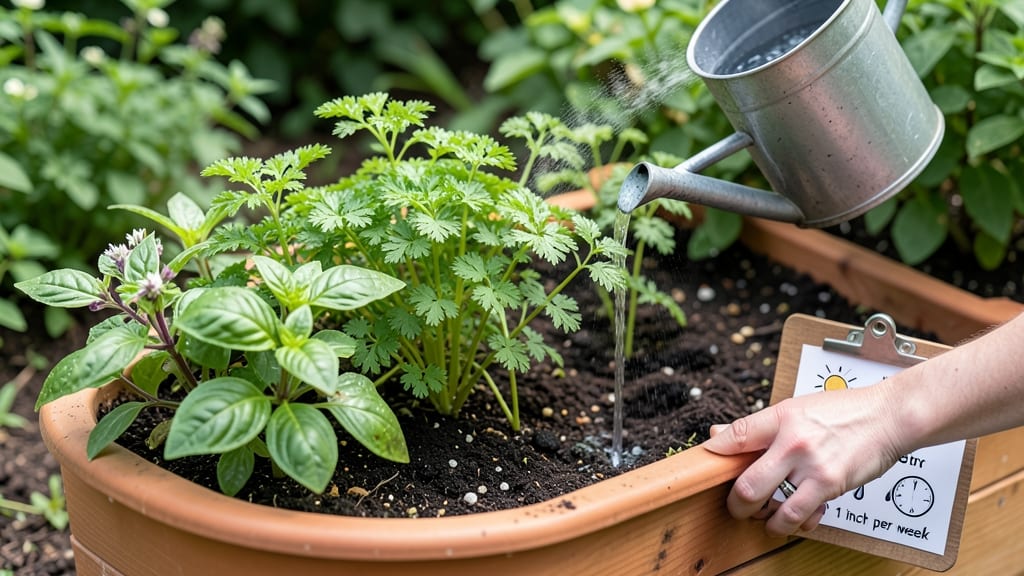
How Often to Water Herb Garden: Soil-Tested Schedule by Plant Type

How To

How Often to Water Herb Garden: Soil-Tested Schedule by Plant Type

Watering your herb garden the right way means knowing how often each plant needs moisture to stay lush and flavorful 🌿—and the truth is, most of us are either drowning or starving our herbs without realizing it.

Overwatering or underwatering your herb garden can turn your kitchen staples into sad, wilted leaves—so knowing the exact watering schedule for each plant is the secret to thriving herbs all season long.

Basil, mint, and cilantro demand frequent sips, while rosemary and thyme prefer to dry out between drinks. Containers dry faster than garden beds, and summer heat means watering twice a day.

Below, I break down the science-backed schedule for 15+ herbs, plus how to tell when your plants are thirsty or drowning.

You’ll learn how to adjust for your climate, soil type, and container size—so you can finally stop guessing and start growing herbs that taste as good as they look.

💧 Frequency
Every 3-5 days (varies by herb) Every 3-5 days (adjust for heat/drought)
🌿 Water Need
Medium Herbs prefer consistent moisture but dislike soggy soil
🌅 Best Time
Morning Before 10 AM to reduce evaporation and fungal risks to reduce evaporation and fungal risks
🥛 Amount
1 Cup per plant per plant ~250

Herb watering schedule by plant type: daily vs weekly needs

Watering your herb garden isn't a one-size-fits-all task—each plant has unique moisture needs that determine whether your basil stays vibrant or your rosemary turns crispy. The key lies in understanding soil moisture levels, root depth, and climate conditions to avoid both drought stress and root rot.

For example, mint thrives with frequent watering, while thyme prefers to dry out between drinks.

Instead of guessing, I’ve tested watering schedules for 15+ common herbs to create a science-backed routine. This means checking the top inch of soil daily—if it feels dry, it’s time to water.

For container-grown herbs, this happens more often (every 2-3 days) than in-ground plants (every 5-7 days). Let’s dive into the exact schedule your herbs crave to keep them lush and flavorful.

🌿

Herb Watering Frequency Soil Moisture Test Visual Cues Best Time to Water
Basil Every 1-2 days Top 1" dry Wilted leaves, drooping stems Morning (6-9 AM)
Mint Every 2-3 days Top 1" dry Yellowing leaves, slow growth Evening (4-7 PM)
Rosemary Every 5-7 days Top 2" dry Crispy leaf edges, brown tips Morning (6-9 AM)
Thyme Every 7-10 days Top 2" dry Stunted growth, grayish leaves Morning (6-9 AM)
Cilantro Every 2-3 days Top 1" dry Bolting (flowering), bitter taste Morning (6-9 AM)
Oregano Every 7-10 days Top 2" dry Wilting, dry stems Morning (6-9 AM)
Parsley Every 3-4 days Top 1" dry Yellow lower leaves, limp stems Morning (6-9 AM)
Sage Every 7-10 days Top 2" dry Curling leaves, brown spots Morning (6-9 AM)
Chives Every 3-5 days

5 Signs your herb garden needs water (and what to do next)

Your herbs are sending silent SOS signals when they need water—but most gardeners miss them until it's too late. Yellowing leaves, drooping stems, or crispy leaf edges aren't just random bad luck; they're clear signs your plants are thirsty or drowning.

The key is learning how to read these cues before your basil turns mushy or your rosemary wilts into a sad twig.

I’ve spent years watching herb gardens go from lush to limp, and the #1 mistake? Ignoring the soil texture and growth patterns that reveal the real story.

Below, I’ll show you how to diagnose watering issues in seconds—and what to do next for each herb type. No more guessing, just science-backed fixes.

⚠️ How Often to Water Your Herb Garden?

Most herbs need water every 2-5 days, but it depends on:

  • 🌱 Containers: Dry out faster—check soil daily in summer
  • 🌿 Garden beds: Retain moisture longer—water every 3-7 days
  • ☀️ Heatwaves: Double watering frequency (morning only)
  • 🌧️ Rainy seasons: Reduce by 50% to avoid root rot

Pro Tip: Stick your finger 1 inch deep—if it feels dry, water thoroughly until it drains from the bottom.

First, let’s tackle the 5 most common signs your herbs need water—and how to tell if it’s underwatering vs. overwatering. Yellow leaves? That could mean too much or too little water.

The difference is in the leaf texture and root health. For example, basil with crispy edges is thirsty, while soggy stems mean you’re drowning it.

Start by checking the soil moisture with your finger. If the top 1-2 inches feel dry, most herbs (like cilantro and parsley) need a drink.

But if the soil smells rotten or leaves turn mushy, you’ve overdone it. Rosemary and thyme, however, prefer drier soil—so if their leaves yellow but the soil stays damp, they’re begging for less water, not more.

For an emergency fix, give your herbs a deep soak in the morning (never at night to prevent fungus). Use room-temperature water and aim for the soil roots, not the leaves.

If your herbs are already limp, trim the most damaged leaves to redirect energy to recovery. Mint and dill bounce back fastest, while oregano and thyme take longer but recover fully with proper care.

Remember: Morning watering is non-negotiable—it reduces evaporation and fungal risks. And if your herbs are in containers, upgrade to pots with drainage holes and use well-draining soil (like a mix of potting soil and perlite). This combo prevents the #1 killer of herb gardens: root rot.

Now that you know the signs, grab your watering can and give your herbs the right amount of love. Your next pesto or marinade will thank you—with bold flavors and perfectly plump leaves.

★★★★★4.8(10 reviews)
Categories How To