
Tools
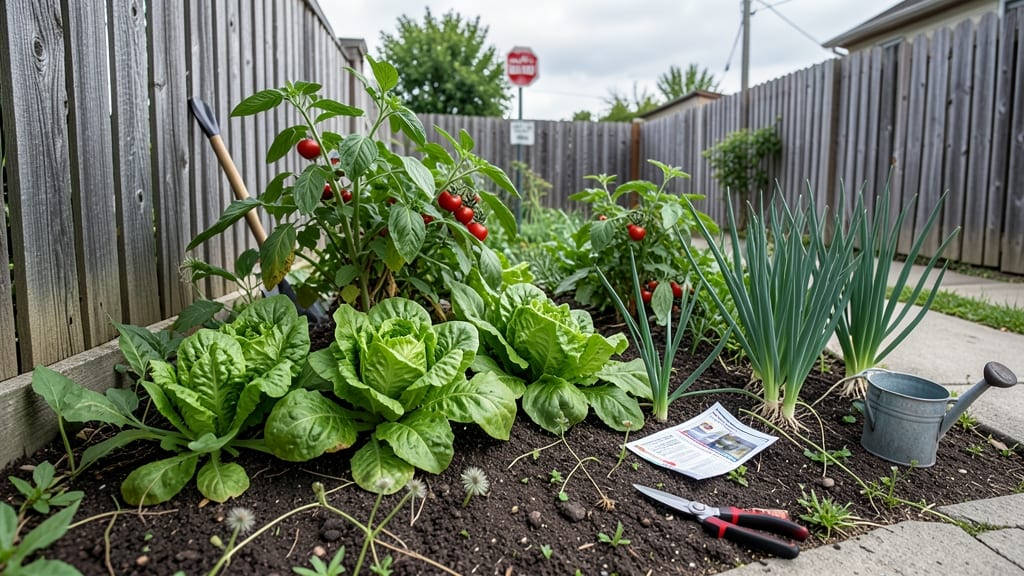
An illegal front yard vegetable garden violates local zoning laws, HOA rules, or agricultural restrictions, often requiring permits or prohibiting food crops in residential areas. Always check municipal codes and neighborhood covenants before planting.
A front yard vegetable garden often faces legal hurdles because many cities designate residential areas for ornamental landscaping, not food production. 🌱 Zoning laws typically separate agricultural zones from neighborhoods, while HOAs may enforce strict aesthetic standards that classify edible plants as "non-conforming."
Even if your city allows gardening, food crops might trigger additional permits or inspections to ensure they don’t become commercial operations. The consequences can range from fines to forced removal, so verifying local regulations is non-negotiable.
For example, some communities permit herbs or flowers but ban tomatoes or peppers, while others require a special use permit for any edible plants. I’ve seen cases where homeowners unknowingly violated rules by growing vegetables in visible front yard beds, only to face penalties after a neighbor complained.
The key is to research your city’s land use ordinances and HOA policies before digging—what’s legal in one suburb might be prohibited just blocks away.
💡 In This Article
- Key Legal Factors Behind Front Yard Garden Restrictions
- How to Legally Grow Vegetables in Restricted Areas
Key legal factors behind front yard garden restrictions
At the core of front yard vegetable garden bans are zoning laws designed to separate residential aesthetics from agricultural use. Cities like Los Angeles and Houston explicitly prohibit food crops in front yards because they classify them as commercial agriculture, which requires permits and inspections.
The logic? Food production can attract pests, reduce property values, or create maintenance burdens for municipal services. For instance, a tomato plant might seem harmless, but its ripe fruit could draw raccoons or skunks—animals that cities spend millions controlling. 🐿️
Homeowners associations (HOAs) add another layer by enforcing covenants, conditions & restrictions (CC&Rs) that often ban "edible landscaping." These rules typically stem from neighborhood uniformity concerns—imagine a row of manicured lawns suddenly dotted with cornstalks or zucchini vines.
In some cases, HOAs have forced homeowners to remove vegetable gardens, citing violations of setback requirements (how far plants must be from property lines) or landscaping standards. Even decorative plants like chives or basil can trigger complaints if they’re visibly productive.
The financial stakes are real: fines for violations can range from $250 to $5,000, depending on the city. For example, in Austin, Texas, a homeowner faced a $1,500 fine for growing tomatoes in their front yard after neighbors filed a complaint.
Property values also take a hit—studies show homes with unconventional landscaping (like vegetable gardens) sell for 5-15% less in competitive markets. The fear isn’t just legal; it’s about preserving neighborhood appeal and resale potential.
State agricultural laws further complicate matters. Some states, like California, require commercial farming permits for any plot larger than 500 square feet, even if it’s just for personal use.
Meanwhile, others, like New Mexico, allow front yard gardens but mandate non-edible varieties—meaning you can grow marigolds but not marigolds with tomatoes nearby.
The confusion arises because these rules often conflict: a city might permit gardening, but the county’s agricultural board might classify your front yard as a "nuisance farm."
What most people overlook is the inspection process that can follow a complaint. Cities may send code enforcement officers to verify whether your garden is truly "personal" or secretly commercial. They’ll check for irrigation systems, fencing, or even the size of your harvest—all red flags that could escalate fines.
For example, if your neighbor reports your front yard garden for "excessive produce," inspectors might assume you’re selling the harvest, triggering a business license requirement you never anticipated.
Even well-intentioned gardeners can stumble into legal trouble by misunderstanding ornamental vs. edible plant distinctions. A plant labeled "edible" in a nursery catalog might still be banned in your HOA’s rules.
For instance, Swiss chard is often permitted as an ornamental, but its leafy greens make it a food crop—and thus off-limits in many communities. The gray area lies in plants like pepper bushes—decorative in some HOAs but classified as edible in others. Always ask for written confirmation before planting.