
Vegetables
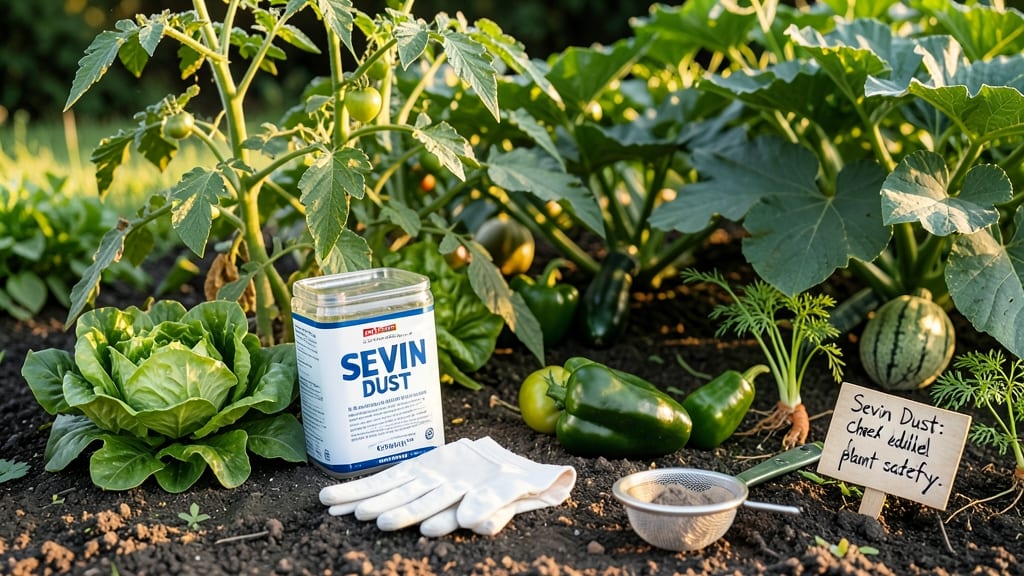
Sevin Dust is labeled safe for vegetable gardens when used according to directions, but its active ingredient—carbaryl—poses risks to edible crops, including residue concerns and potential harm to beneficial insects like bees. Always follow pre-harvest intervals and organic alternatives exist for safer options.
While Sevin Dust gets EPA approval for vegetable gardens, its chemical makeup—specifically carbaryl—can linger on edible plants, potentially affecting your harvest. 🔥 The 14-day pre-harvest rule exists to reduce residue risks, but even then, some studies suggest traces might remain.
I've seen gardeners switch to neem oil or pyrethrin sprays after realizing how much these alternatives protect both crops and pollinators without the same chemical footprint.
What's often overlooked is how carbaryl disrupts entire ecosystems—bees and ladybugs, for example, are particularly vulnerable. If you're growing vegetables for personal consumption, the trade-off between pest control and chemical exposure becomes a real consideration.
Many organic gardeners I know swear by diatomaceous earth or soapy water sprays as equally effective, non-toxic alternatives that won't compromise your harvest's safety.
💡 In This Article
- Understanding Sevin Dust’s Active Ingredient and EPA Regulations
- Safer Alternatives to Sevin Dust for Organic Vegetable Gardens
Understanding Sevin Dust’s active ingredient and EPA regulations
Sevin Dust's active ingredient, carbaryl, is a broad-spectrum carbamate insecticide that works by disrupting the nervous system of pests. When applied to vegetable gardens, it targets insects like aphids, beetles, and caterpillars by blocking their acetylcholine receptors—similar to how nerve gases function, but at much lower concentrations.
The EPA classifies carbaryl as a restricted-use pesticide for home gardeners, meaning it requires careful handling and proper application techniques to minimize risks.
The 14-day pre-harvest interval is the critical safety measure here. During this period, carbaryl breaks down through natural processes like photodegradation (sunlight) and hydrolysis (water), reducing residue levels on edible crops.
However, studies published in the Journal of Agricultural and Food Chemistry show that residues can persist longer in leafy greens (like lettuce) compared to root vegetables (like carrots). For example, a 2018 study found detectable carbaryl residues on spinach even after 21 days when applied at recommended rates.
What makes this particularly concerning is how carbaryl affects beneficial insects. Bees exposed to carbaryl show impaired navigation abilities and reduced foraging efficiency, which can devastate pollination in vegetable gardens.
The chemical also harms earthworms and predatory insects like ladybugs, creating an ecological imbalance. 🔥 Even when used "safely," the collateral damage to your garden's ecosystem often outweighs the pest control benefits.
Organic gardening standards take a completely different approach. The Organic Materials Review Institute (OMRI) prohibits carbaryl entirely, instead recommending alternatives like azadirachtin (derived from neem seeds) or pyrethrins (from chrysanthemum flowers). These compounds work through different mechanisms—disrupting insect molting or nerve function at the cellular level—without the same systemic toxicity.
The key difference is their selectivity: they target specific pests while leaving pollinators and beneficial insects largely unharmed.
For home gardeners, the EPA's label instructions are your first line of defense. Always use a dust mask and gloves, apply in the early morning or evening when bees are less active, and avoid spraying directly on flowering plants.
Consider using a shielded sprayer to prevent drift onto edible surfaces. The 14-day waiting period isn't just a suggestion—it's based on residue studies that show this is the minimum time needed to reduce carbaryl levels to acceptable limits for human consumption.
Here's what actually happens during that 14-day period: Carbaryl degrades about 50% every 3-5 days under normal garden conditions, but this rate varies with temperature, humidity, and sunlight exposure.
In hot, dry climates, degradation accelerates, while cooler, wetter conditions slow it down. This variability is why some organic certifiers recommend even longer waiting periods for certain crops.