
Vegetables
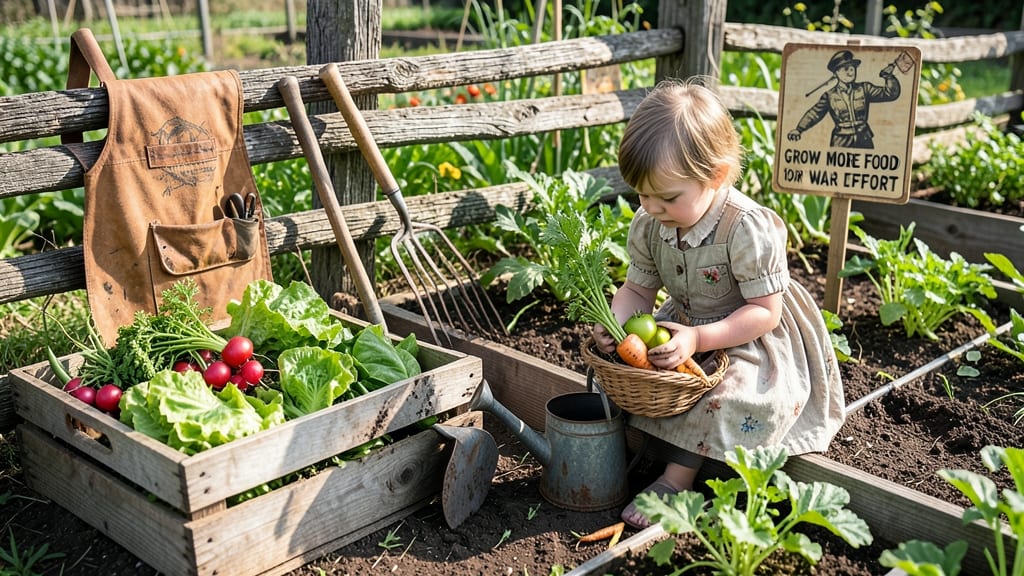
The purpose of victory gardens was to boost wartime food production during World War II by encouraging Americans to grow their own vegetables, directly reducing strain on commercial farms and easing food rationing across the country. These gardens became a patriotic symbol of self-sufficiency and resource conservation for military needs.
The U.S. government launched victory gardens in 1942 as part of a nationwide campaign, urging families to dedicate even small yards or balconies to growing vegetables like tomatoes, potatoes, and carrots. 🌱 By 1943, these gardens produced an estimated 40% of the nation's produce, freeing up commercial crops for troops overseas.
The initiative wasn't just about food—it fostered community spirit and gave civilians a tangible way to contribute to the war effort beyond rationing stamps.
What's fascinating is how these gardens evolved from ornamental spaces into productive farms. The government provided seed packets, gardening guides, and even radio broadcasts with planting tips—turning gardening into a civic duty.
Many families planted "war gardens" in vacant lots, schoolyards, and even rooftops, proving that even modest spaces could make a difference when everyone pitched in.
💡 In This Article
- How Victory Gardens Supported WWII Food Security
- Gardening Tips for Modern Victory Gardens
How victory gardens supported WWII food security
Victory gardens weren't just about growing vegetables—they were a calculated response to wartime food shortages.
The U.S. government launched the program in 1942 after realizing commercial agriculture couldn't keep pace with military demands. 🌱 By 1943, these gardens produced about 40% of the nation's fresh produce, equivalent to feeding the entire population of New York City at the time.
The initiative directly addressed rationing by diverting homegrown crops from commercial markets, freeing up trucking resources for military supplies.
The government's strategy was multi-pronged: they distributed 30 million seed packets nationwide, published gardening manuals in newspapers, and even created radio programs featuring experts like George Washington Carver.
These efforts transformed ornamental gardens into productive plots, with families planting high-yield crops like potatoes (which could be stored for months) and carrots (which grew well in poor soil).
The shift from flowers to food was so dramatic that some cities saw 80% of their garden space converted to edible crops within months.
What made this system work was its decentralized nature. Instead of relying on a few large farms, victory gardens created thousands of local food sources. This reduced transportation needs—critical since 75% of trucks were repurposed for military use—and minimized spoilage from long-distance shipping.
The psychological impact was equally significant: families saw their gardens as direct contributions to the war effort, turning rationing from a burden into a patriotic duty.
Behind the scenes, the government coordinated with agricultural departments to standardize planting schedules. For example, they recommended planting early-maturing varieties like early cabbage (30-40 days to harvest) to ensure continuous yields. This scientific approach maximized output from limited space, proving that even small plots could make a measurable difference.
The program's success demonstrated how civilian participation could complement military logistics in unexpected ways.
One often-overlooked aspect was how victory gardens influenced food distribution networks. By 1944, commercial farmers could focus on canned goods and grains for troops, while home gardens provided fresh vegetables.
This division of labor prevented shortages of both types of food—canned goods for overseas troops and fresh produce for domestic consumption. The system's efficiency became so valued that some aspects were later incorporated into post-war agricultural policies.
The victory garden movement also had a lasting cultural impact. It proved that ordinary citizens could make extraordinary contributions during crises. Many families who started victory gardens continued gardening after the war, laying the foundation for America's modern suburban gardening culture.
Today, we see echoes of this initiative in community gardens and urban farming movements.