
Tools
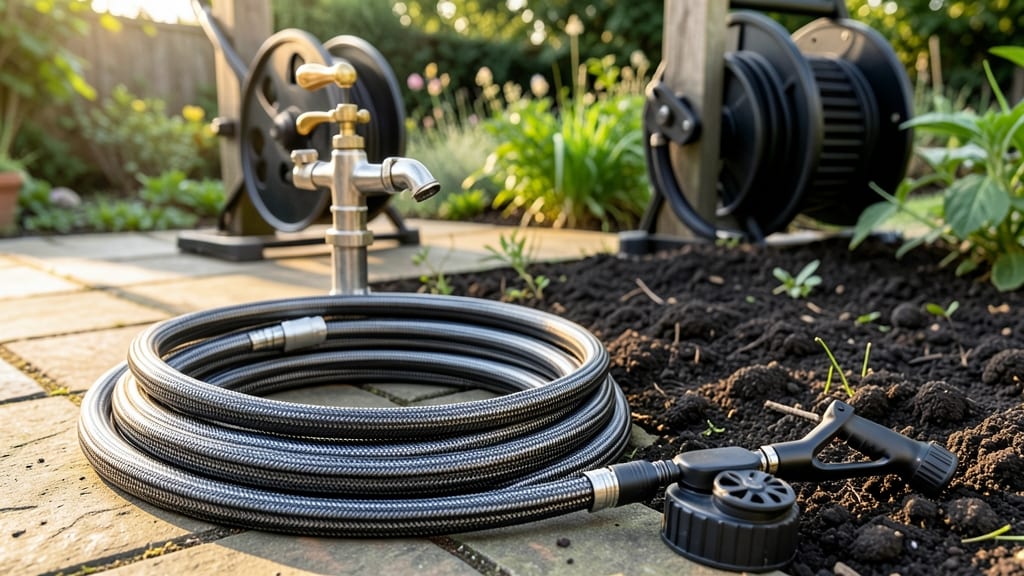
Old garden hoses with lead in their rubber or brass connectors can release toxic lead into water, creating serious health hazards. Detect contamination with a home test kit or lab analysis, then either replace the hose entirely or flush the system thoroughly with vinegar and water before using it for any purpose.
Lead contamination in garden hoses is most common in older models with brass fittings or rubber hoses that contain lead-based additives. 🔥 The problem worsens when water sits stagnant in the hose, allowing lead particles to dissolve and mix with your irrigation water or even drinking water if connected to household systems.
Children, pets, and anyone with compromised immune systems face the highest risks, with potential neurological damage or kidney problems from prolonged exposure.
For immediate action, I recommend testing your hose with a lead test kit (available at hardware stores for under $20) or sending a sample to a certified lab for precise results.
If contamination is confirmed, replacing the hose with a PVC or polyethylene model labeled "lead-free" is the safest long-term solution. For temporary fixes, flushing the hose with a vinegar-water solution (1:1 ratio) for 10-15 minutes can reduce lead levels, though this isn't a permanent fix.
💡 In This Article
- How Lead Enters Garden Hoses and Health Risks
- Step-by-Step Lead Removal and Hose Replacement Guide
How lead enters garden hoses and health risks
Lead sneaks into garden hoses primarily through two sources: degraded rubber compounds and corroded brass fittings. Older rubber hoses often contain lead-based stabilizers that break down over time, especially when exposed to sunlight and temperature fluctuations.
These additives can leach into water at concentrations exceeding 0.015 mg/L—the EPA's action level for lead in drinking water. Brass connectors and solder used in hose attachments may also contain up to 80% lead by weight, which corrodes when water sits stagnant in the hose for extended periods.
The leaching process accelerates under specific conditions. For example, acidic water (pH below 7.0) dissolves lead particles more aggressively, while stagnant water—like what collects overnight—gives lead time to accumulate. You might notice a metallic taste or visible discoloration in water after letting the hose sit unused for several hours.
The risk isn't just theoretical: prolonged exposure to even low levels of lead (5 micrograms per day) can cause developmental delays in children, kidney damage in adults, and weakened immune responses in pets.
Material choices make a dramatic difference in safety. Traditional rubber hoses with brass fittings are high-risk, while modern polyethylene or PVC hoses labeled "lead-free" contain no more than 0.25% lead by weight.
The EPA recommends replacing hoses older than 5-10 years, particularly if they show cracks, brittleness, or signs of corrosion. Even "new" hoses from discount stores may contain lead—always check for third-party certifications like NSF/ANSI 61 for water safety compliance.
Lead's health impact varies by exposure level but becomes critical at chronic doses. Children under 6 years old are most vulnerable, with IQ drops of 4-7 points possible from lead exposure as low as 10 micrograms per deciliter in blood.
Adults may experience subtle symptoms like fatigue or joint pain, while pets—especially dogs—can develop gastrointestinal issues or neurological disorders. The CDC warns that no safe blood lead level exists for children, making prevention through material selection and regular testing essential.
Visual inspection alone won't reveal lead contamination, which is why testing is crucial. Home kits detect lead levels down to 0.01 mg/L, while lab tests offer precision to 0.001 mg/L.
If your hose tests positive, avoid using it for anything beyond non-edible plant watering until you've taken remediation steps. The vinegar flush method works by dissolving lead particles through acetic acid's chemical reaction, but it's only a temporary solution—replacement remains the gold standard for long-term safety.
Consider this comparison: a 50-foot rubber hose with lead stabilizers could release enough lead to exceed safe drinking water limits after just 30 days of daily use. In contrast, a polyethylene hose maintains lead levels below detection limits even after years of service.
The difference comes down to material science—lead-free polymers simply don't degrade in the same way.