
Tools
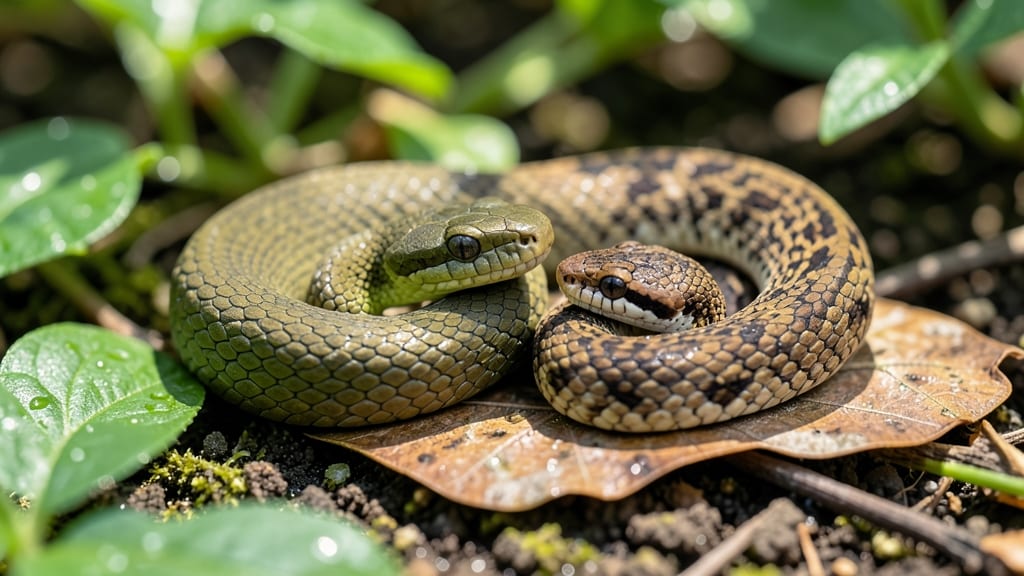
Louisiana garden snakes include species like corn snakes, rat snakes, and milk snakes, which thrive in yards and wooded areas. Recognizing them by their distinct color patterns, body size, and preferred habitats helps safely tell harmless varieties apart from venomous mimics like copperheads or water moccasins.
If you're gardening in Louisiana, you'll likely encounter several harmless snake species that help control pests like rodents and insects. 🌿 These reptiles often blend into their surroundings, so knowing their key traits—such as the corn snake's reddish-orange hue with square black spots or the rat snake's smooth scales and long tails—can prevent unnecessary fear.
Venomous species, while rare in residential areas, typically have triangular heads, slit-like pupils, and thick bodies, making them easier to spot once you know what to look for.
Most Louisiana garden snakes are nocturnal, meaning they're most active at dawn and dusk, which is why you might spot them hunting for food during these times.
Creating a snake-friendly habitat—like leaving some leaf litter or rocks—can encourage these beneficial creatures to stick around, as they'll naturally keep your garden free of pests without needing chemical interventions.
💡 In This Article
- Key Features to Identify Louisiana Garden Snake Species
- Safe Coexistence: Gardening with Non-Venomous Snakes
Key features to identify Louisiana garden snake species
Louisiana's garden snakes each have unique physical traits that make them easier to distinguish. The corn snake (Pantherophis guttatus) stands out with its smooth, glossy scales and bold pattern of reddish-orange ground color with square black spots outlined in white.
Their bodies typically reach 3-5 feet long, and their heads are slightly wider than their necks—a key feature for identification. In contrast, the eastern rat snake (Pantherophis alleghaniensis) sports a more uniform gray or brown color with faint blotches, often featuring a distinctive white chin and throat.
Scale patterns are another critical clue.
Corn snakes have smooth, shiny scales that lack keeled edges, while rat snakes may show faint keeling along their bodies. Tail markings also differ—the corn snake's tail tapers to a point, whereas the rat snake's tail is often longer and thicker, sometimes ending in a white tip. 🐍 These differences help separate them from venomous mimics like the copperhead, which has hourglass-shaped bands and a triangular head.
Observing these details in natural light can make identification straightforward for even novice observers.
Behavioral habits further refine identification. Most Louisiana garden snakes are nocturnal, meaning they're active at dawn and dusk, which is why you might spot them hunting for rodents or insects during these times.
Corn snakes, for instance, are excellent climbers and often seek refuge in trees or shrubs, while rat snakes prefer ground-level habitats like leaf litter or rock piles. Understanding these preferences can help you predict where you're likely to encounter them in your garden or yard.
Size plays a role too. Adult corn snakes usually measure between 3-5 feet, while rat snakes can grow even larger, reaching up to 6 feet in length.
The milk snake (Lampropeltis triangulum), another common species, mimics the color patterns of venomous coral snakes but with red, black, and white bands in a different sequence—red touching yellow means it's safe. These snakes are typically 2-4 feet long and have smooth, shiny scales similar to corn snakes.
Habitat preferences also vary. Corn snakes thrive in wooded areas and abandoned buildings, while rat snakes favor farmlands and suburban gardens where they can hunt rodents. Milk snakes often inhabit rocky outcrops and forests, making them less common in residential areas.
Recognizing these patterns helps you determine which species might be visiting your property and how to coexist peacefully.
For a quick visual reference, imagine the corn snake as a "red and black checkerboard" with smooth scales, the rat snake as a "gray shadow with a white chin," and the milk snake as a "striped rainbow" with a distinct banding pattern.
These mental images can serve as handy shortcuts when identifying snakes in the wild. 🌿