
Planting
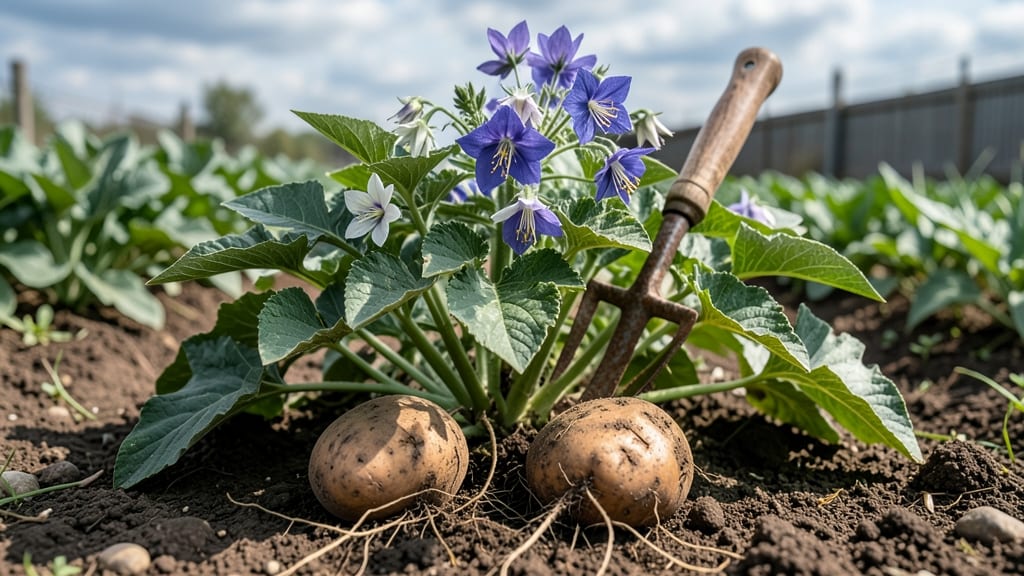
Spacing potatoes in your garden correctly is the difference between a bountiful harvest and a wasted season—and it all starts with the right distance between each plant.
Picture this: you’ve just planted your 🥔 seed potatoes in early spring, dreaming of crisp, golden spuds by summer. But if they’re too close, you’ll end up with stunted growth and disease.
Too far apart, and you’ll lose valuable space. The key? Understanding how variety, soil, and even your garden’s layout change the rules.
From 12-inch spacing for russets to 8-inch gaps for fingerlings, and adjusting for containers or raised beds, we’ll break down the science—and the shortcuts—so you can maximize every inch of your plot.
Learn how to avoid the most common spacing mistakes, when to hill your plants for better airflow, and why row depth matters just as much as distance—because a little planning now means a big harvest later.
Optimal potato spacing by variety: row depth and plant distance explained
Mastering potato spacing transforms your garden from a haphazard experiment to a high-yielding system. Every variety—from russet potatoes to fingerlings—demands precise spacing to thrive. Too close? You’ll face blight and stunted growth.
Too far? You’ll waste precious garden real estate. The science behind spacing ensures maximum sunlight exposure, airflow circulation, and soil resource access for each plant.
Potatoes grow underground, but their foliage needs room to breathe. The row depth (4-6 inches for seed pieces) and plant distance (8-18 inches apart) vary dramatically by variety. Early-season potatoes like Yukon Golds can handle tighter spacing, while late-season Idaho Russets need more elbow room.
Even the row spacing between rows (24-36 inches) impacts airflow and disease prevention.
Let’s break down the science-backed spacing guidelines for your garden. Whether you’re growing heirloom potatoes, organic varieties, or container-friendly fingerlings, these rules will maximize your harvest. Pro tip: Always plant seed pieces with the eyes facing upward—this ensures faster sprouting and stronger stems.
The row depth of 4–6 inches is non-negotiable for most varieties. Planting too shallow risks exposing tubers to light, turning them green and toxic. Meanwhile, planting too deep delays sprouting and reduces yield. For heavy clay soils, add compost or sand to improve drainage and prevent rot.
Airflow is your first line of defense against late blight, a fungal disease that devastates potato crops. Proper row spacing (24–36 inches) ensures leaves dry quickly after rain, reducing humidity levels where fungi thrive.
If your garden is prone to high humidity, consider widened rows (36+ inches) or vertical trellising for vine varieties like Sweet Potatoes.
Don’t overlook the soil’s role in spacing success. Loose, well-aerated soil allows tubers to expand freely without competing for space. Before planting, mix in aged compost or peat moss to improve soil structure.
Avoid compacted soil, which restricts root growth and leads to small, misshapen potatoes. A simple soil test can reveal if your garden needs amendments like perlite or vermiculite.
For container gardening, adjust spacing to fit your pots. Fingerlings thrive 3–4 inches apart in 10-gallon containers, while larger varieties like Russets need 12–18 inches in 20-gallon pots.
Use well-draining potting mix and avoid overcrowding—roots will compete for nutrients, stunting growth. Elevate containers to prevent waterlogging, a common killer of potato plants.
One of my biggest mistakes was planting Russets too closely in a raised bed, leading to blight within weeks. After adjusting to 18-inch spacing and 36-inch rows, my yield doubled, and the plants stayed healthier.
If you’re short on space, try interplanting with fast-maturing greens like lettuce or radishes,
How to adjust potato spacing for small gardens vs. large plots
When your garden space is limited, potato spacing becomes a creative challenge—but it’s also where you can maximize yields without sacrificing plant health. In small gardens or containers, tight spacing (3-4 inches apart) works surprisingly well, while large plots thrive with 16-24 inches between rows.
The key is balancing airflow, sunlight exposure, and tuber development to avoid blight and stunted growth.
For containers or raised beds, think vertically: use 5-gallon buckets or deep pots (12+ inches deep) and plant 2-3 potato plants per container, spacing seed pieces 3-4 inches apart.
This mimics the natural growth habit of potatoes, which spread horizontally underground while growing upright above soil. The trade-off? You’ll need to hill soil regularly to encourage tuber formation.
In raised beds, the magic happens with layered planting. Start with early-maturing varieties (like ‘Yukon Gold’) in the center, then add mid-season types (e.g., ‘Kennebec’) around the edges. This staggered approach ensures a continuous harvest and prevents overcrowding as plants mature.
For rows, keep them 16-24 inches apart—wide enough for a hose to reach the middle without compacting soil.
Large plots reward patience: 18-24 inches between plants and 30-36 inches between rows give tubers room to expand without competing for nutrients. Here, soil depth matters most. Dig trenches 12 inches deep and place seed pieces 4-6 inches down, then cover with loose, compost-rich soil.
This encourages deep tuber formation and reduces scab disease risk from surface moisture.
Pro tip: Interplant with shallow-rooted crops like lettuce or radishes between potato rows. These fast growers use up early-season space while potatoes establish, then get harvested before potatoes need full coverage. Just avoid planting anything that competes for nitrogen, like corn or tomatoes.
Remember, spacing isn’t set in stone—adjust based on your local climate and variety. In humid areas, increase airflow by widening rows; in dry climates, cluster plants slightly to retain soil moisture. The goal? Healthy foliage + happy tubers—no matter your plot size.