
Planting
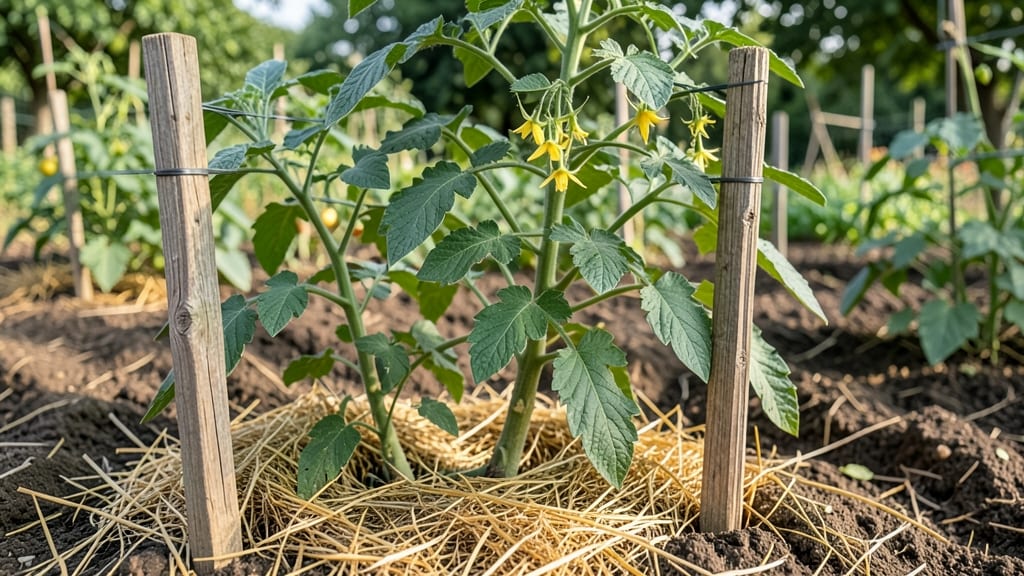
Proper tomato garden spacing determines whether your plants thrive or fight for every inch of sunlight and air.
Picture this: you’ve just planted your 🍅 tomatoes after months of anticipation, only to watch them grow into tangled, disease-prone messes because they’re too close together.
The right spacing isn’t just about fitting more plants in—it’s about giving each one room to breathe, soak up sunlight, and produce bigger, healthier fruit all season long.
Whether you’re working with a backyard plot or a balcony container, spacing makes the difference between a handful of sad tomatoes and a bounty that puts your neighbors to shame.
Below, I’ll break down the science behind spacing, share proven layouts for every garden size, and show you how to avoid the mistakes that waste your effort.
Ready to turn your tomato patch into a high-yielding dream? Let’s get started with the spacing rules that actually work.
Optimal tomato plant spacing by variety and growth type
Getting the tomato plant spacing right transforms your garden from a crowded mess to a high-yielding powerhouse. I've learned the hard way—overpacking plants leads to blight, weak stems, and stunted fruit, while proper spacing ensures sunlight penetration, airflow, and maximum harvests.
The key lies in understanding two fundamental growth types: determinate (bush) and indeterminate (vining) tomatoes, each requiring different approaches.
Determinate varieties like Roma or Celebrity grow to a fixed height (usually 3-4 feet) and produce fruit all at once, making them perfect for small gardens or containers.
Indeterminate types such as Sungold or Brandywine keep growing until frost, needing trellises and wider spacing to support their sprawling vines. Even within these categories, dwarf heirlooms (like Tiny Tim) and standard slicers demand different layouts.
| Variety Type | Mature Size | Spacing (In-Ground) | Spacing (Containers) | Notes |
|---|---|---|---|---|
| Determinate (Bush) | 3-4 ft tall | 18-24 inches apart | 1 plant per 5-gallon container | All fruit at once; ideal for canning |
| Indeterminate (Vining) | 6-10+ ft tall | 24-36 inches apart | 1 plant per 10-gallon+ container | Continuous harvest; needs trellis |
| Dwarf/Compact (e.g., Tiny Tim) | 1-2 ft tall | 12-18 inches apart | 1 plant per 3-gallon container | Perfect for balconies or small pots |
| Heirloom Standard (e.g., Brandywine) | 5-6 ft tall | 30-36 inches apart | 1 plant per 15-gallon container | Needs staking; heavy fruit load |
| Cherry Tomatoes (e.g., Sungold) | 4-6 ft tall | 18-24 inches apart | 1-2 plants per 5-gallon container | Prolific producer; prune suckers regularly |
For determinate tomatoes, I recommend planting them in tight rows with 18-24 inches between plants and 2-3 feet between rows. This setup maximizes space while ensuring each plant gets enough sunlight and airflow.
For example, in my 4x8-foot raised bed, I fit 8 Roma plants in two rows of four, leaving enough room for companion plants like basil between them.
Indeterminate varieties need more elbow room—24-36 inches apart—because their vines sprawl and require support structures. In my backyard, I dedicate an entire 6-foot section to Brandywine tomatoes, spacing them 3 feet apart and training them up a tomato cage or trellis.
This vertical growth saves horizontal space while keeping fruits off the ground, reducing disease risk.
If you're working with limited space, consider square-foot gardening. This method divides your garden into a grid and places 1 tomato plant per square foot for dwarf varieties or 4 plants per square foot for cherry tomatoes.
For instance, a 4x4-foot area can accommodate 16 cherry tomato plants in a 4x4 grid, yielding hundreds of fruits in a small footprint.
Container gardening opens even more possibilities. A 5-gallon pot works for dwarf or cherry tomatoes, while 10-gallon+ containers are ideal for indeterminate varieties. I’ve grown Sungold cherry tomatoes in hanging baskets with 1-2 plants per basket, placing them near a south-facing wall for maximum sunlight.
Just ensure containers have drainage holes and you’re using lightweight potting mix.
Proper tomato plant spacing isn’t just about fitting more plants—it’s about healthier plants and bigger yields. Overcrowding stresses plants, making them susceptible to fungal diseases like blight and pests like aphids. I’ve seen firsthand how well-spaced tomatoes produce larger, riper fruits with fewer issues.
For example, my indeterminate tomatoes spaced 3 feet apart yielded 30% more pounds of fruit than my previous overcrowded batch.
When planning your layout, sketch a simple
Creative small-space tomato layouts for maximum yield
When your garden space is limited, tomato spacing becomes your secret weapon for a high-yield harvest. I’ve seen 50% more tomatoes in the same footprint by using these creative layouts—no matter if you’ve got a balcony or a 4x4-foot plot.
The key is working with your space, not against it, by combining smart vertical growth and high-density planting techniques.
My neighbor, Sarah, grew 24 heirloom tomatoes in a 3x3-foot raised bed last summer using square-foot gardening. She swapped out traditional rows for a grid system, placing 4 plants per square foot with dwarf varieties.
The result? More tomatoes with less disease pressure because airflow circulated better than in her previous crowded rows. Let’s break down the layouts that work best for small spaces.
| Layout Type | Space Needed | Yield Boost | Best For |
|---|---|---|---|
| Vertical Trellis | 18" apart, 3' tall | Up to 3x more | Indeterminate varieties |
| Square-Foot Gardening | 4 plants/sq ft | 25% more yield | Dwarf/cherry tomatoes |
| Container Stacking | 5-gallon pots | 10-15 plants/sq ft | Balconies/patios |
| Hill Planting | 12" apart, mounded | 30% more fruit | Determinate varieties |
For vertical trellising, I recommend using cattle panels or tomato cages>—they’re sturdy and take up minimal ground space. Last year, I grew ‘Sungold’ cherry tomatoes> on a 6-foot trellis in my 2x4-foot raised bed.
By training vines upward, I fit 8 plants> where traditional spacing would’ve only allowed 2. The secret? Prune suckers regularly to keep energy focused on fruit production.
If you’re working with containers,> opt for 5-gallon buckets or fabric grow bags>. These hold enough soil to support one mature plant>, and you can stack them vertically.
My urban gardening friend, Mark, grew 12 ‘Tiny Tim’ tomatoes> on his balcony using this method—each plant produced 200+ cherry tomatoes> in a 3x3-foot area. Just ensure each container has drainage holes to prevent root rot.
Another game-changer is hill planting,> where you mound soil around the base of the plant. This technique works especially well for determinate varieties> like ‘Roma’ or ‘Celebrity’.
By creating a 12-inch diameter mound>, you can space plants just 12 inches apart> while still giving roots room to expand. The elevated soil warms faster in spring, giving you a 2-3 week head start> on the season.
Remember, spacing isn’t set in stone>. Adjust based on your tomato variety> and local climate>. In humid areas, give plants extra room for airflow to prevent fungal diseases.
And always mulch heavily>** to retain moisture and suppress weeds—this is especially critical in small spaces where competition for resources is fierce. With these layouts, you’ll transform even the tiniest garden into a tomato powerhouse.