
Tools
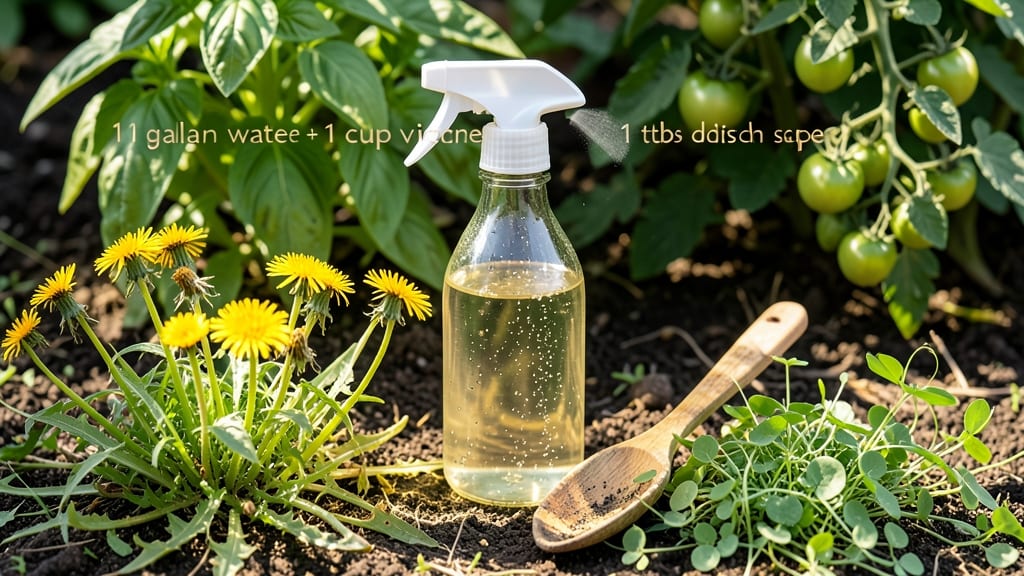
Vinegar as a weed killer in the garden works by disrupting plant cell membranes, but its effectiveness depends on concentration, application timing, and plant type. A 20% solution kills most weeds within 24 hours, though it may harm nearby plants and soil microbes.
Vinegar's acetic acid content is the real game-changer here—it essentially burns weeds from the inside out by breaking down their cell walls. 🌱 The stronger the vinegar (like 20% concentration), the faster it works, but it also means you need to be more careful around your prized plants.
I've found that applying it on a sunny day boosts results, as the sun helps dry out the weeds faster after treatment. Just remember: while it's great for weeds, it won't discriminate between them and your flowers!
For best results, I recommend mixing vinegar with a little dish soap to help it stick to the leaves, and always test a small area first. The key is consistency—reapply every few days for tough weeds, and avoid using it when rain is forecasted.
It's a natural solution, but it's not perfect for every garden situation.
💡 In This Article
- How Vinegar Kills Weeds: Science and Mechanism
- Best Vinegar Weed Killer Recipes and Application Tips
How vinegar kills weeds: science and mechanism
Vinegar’s weed-killing power comes from its acetic acid content, which acts like a chemical scalpel for plant cells. When you spray a 5-20% acetic acid solution on weeds, the acid penetrates their leaves and stems, causing immediate cell membrane disruption.
This process—called desiccation—prevents the plant from absorbing water and nutrients, effectively dehydrating it from within.
The higher the acetic acid concentration, the faster this happens: 20% vinegar can kill weeds in as little as 6-24 hours, while household vinegar (5% acid) may take 3-7 days for visible results. 🔥
The pH shift is equally critical—vinegar’s acidity (typically pH 2-3) creates an environment where weeds can’t metabolize properly. Most plants thrive in near-neutral soil (pH 6-7), so this extreme acidity confuses their biochemical pathways, halting photosynthesis and growth.
Unlike synthetic herbicides that target specific enzymes, vinegar’s broad-spectrum approach affects all green plant matter it touches, which is why it’s non-selective. Sunlight amplifies this effect: UV rays help dry out treated weeds faster, while cloudy conditions can dilute the vinegar’s potency.
What sets vinegar apart from commercial herbicides is its lack of soil persistence. Synthetic options like glyphosate linger in the soil for weeks, while vinegar breaks down within 24-48 hours after application, making it safer for organic gardens.
However, this also means it won’t prevent new weeds from sprouting—you’ll need to reapply regularly. The trade-off? Vinegar’s eco-friendly profile makes it ideal for small-scale gardens where chemical residues are a concern, though its indiscriminate nature demands careful application near desirable plants. ✨
Here’s where the science gets interesting: vinegar’s effectiveness varies by weed type. Broadleaf weeds (like dandelions) are more susceptible than grasses because their leaf structure absorbs the acid more efficiently.
For stubborn weeds with thick stems (e.g., bindweed), you’ll need to reapply every 2-3 days until the foliage turns crispy brown. The key is consistency—partial coverage lets weeds recover, while thorough saturation ensures complete cell membrane breakdown. Think of it like applying a chemical sunburn to the weed’s leaves!
For comparison, synthetic herbicides often combine multiple active ingredients to target weeds at different growth stages. Vinegar, however, works purely through osmotic shock—disrupting the balance of water and nutrients inside plant cells. This makes it less effective on deep-rooted perennials, which can regrow from underground rhizomes.
That’s why gardeners often pair vinegar with physical removal methods for tough invaders like creeping charlie. The bottom line? Vinegar is a powerful tool, but it’s not a one-and-done solution—it requires strategy and patience. 💫
One critical factor often overlooked is temperature. Applying vinegar on days above 70°F (21°C) enhances its drying power, while cooler temperatures slow the process. This is why late morning applications work best—the sun has time to amplify the vinegar’s effects before evening dew sets in.
Pro tip: Add 1 teaspoon of dish soap per gallon of vinegar solution to improve adhesion and reduce runoff, especially on waxy-leaved weeds like clover.