
Planting
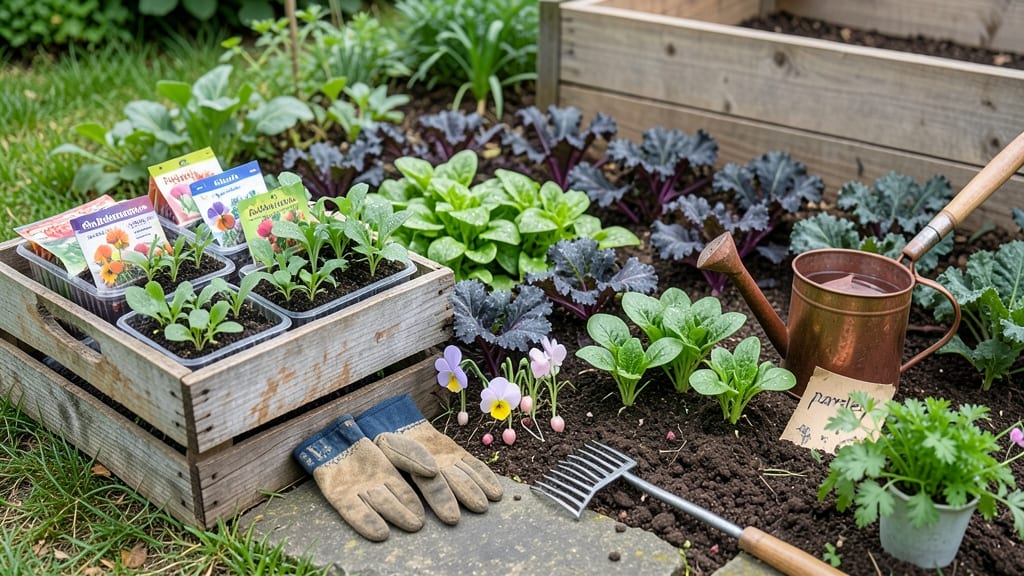
What you can plant in your garden now varies by your local frost zone and current soil conditions: cool-season crops like radishes, spinach, and peas grow quickly in chilly weather, while warm-season favorites such as tomatoes, peppers, and cucumbers require soil temperatures above 60°F. Always check your last frost date to time plantings for optimal growth and avoid frost damage.
Your planting choices should align with both your climate zone and the current weather trends in your area. 🌱 For example, leafy greens like kale and lettuce can often be sown directly into the soil as soon as the ground is workable, even in cooler temperatures, while tender crops like basil and eggplant need to wait until nighttime temperatures stay consistently above 55°F.
Many gardeners also swear by planting fast-maturing varieties first to extend their harvest season—think bush beans or bok choy, which can be ready in as little as 30 days.
Pro tip: Use a soil thermometer to verify warmth before planting warm-season crops. If your soil is still cool, consider covering seeds with black plastic or using row covers to accelerate warming.
Companion planting can also give your garden a head start—pairing radishes with spinach helps deter pests while maximizing space efficiency.
💡 In This Article
- Best Vegetables to Plant by Frost Zone and Season
- Fastest-Growing Crops for Quick Harvests and Garden Success
Best vegetables to plant by frost zone and season
Your frost zone determines which vegetables thrive in your garden right now.
For example, in Zones 3-5, where winters are harsh, cool-season crops like spinach and kale can be planted as early as 4-6 weeks before the last frost date, while in Zones 8-10, you might be planting warm-season crops like okra or sweet potatoes year-round.
The key difference lies in soil temperature: cool-season crops tolerate 40-60°F soil, while warm-season crops need 60-70°F to germinate. 🌱
Seasonal timing is equally critical. In spring, plant radishes (ready in 25-30 days) or peas (ready in 60-70 days) when soil reaches 45°F, but avoid planting tomatoes until soil warms to 60°F or higher.
Fall planting works similarly: in Zones 6-9, you can still sow bush beans or carrots 8-10 weeks before the first frost for a late harvest. The goal is to align planting with the crop's days-to-maturity and your local frost window.
Frost damage isn't just about temperature—it's about freezing moisture in plant tissues. For instance, lettuce can survive light frosts (28°F), but its flavor bolts (becomes bitter) if exposed to prolonged cold (20°F or lower).
Warm-season crops like cucumbers or eggplants wilt instantly at 32°F because their cell walls lack the protective compounds found in cold-hardy plants. This is why gardeners in Zones 3-5 often start warm-season crops indoors 6-8 weeks before the last frost and transplant seedlings after soil warms.
Soil temperature matters more than air temperature for germination. A soil thermometer is your best tool—plant warm-season crops only when readings hit 60°F at a 4-inch depth for 5-7 consecutive days. In contrast, cool-season crops like broccoli or cabbage can germinate at 40°F but grow slower in cold soil.
This is why gardeners in Zones 8-10 might plant green beans in fall (when soil cools) but tomatoes only in spring (when soil warms).
Companion planting also varies by zone. For example, radishes (which mature quickly) can be interplanted with carrots in Zones 3-7 to deter carrot flies, while basil (a warm-season herb) repels mosquitoes and improves tomato flavor in Zones 8-10.
The science behind this is allelopathy—some plants release chemicals that inhibit pests or improve growth. For instance, marigolds release alpha-terthienyl, a compound toxic to nematodes, making them a universal companion for nearly any vegetable.
Pro tip: Use a frost calendar to track your local first and last frost dates. For example, in Zone 5, you might plant spinach in early April but switch to beans by mid-May once soil hits 60°F.
In Zone 9, you could plant squash in February for a winter harvest. The key is matching crop needs to your microclimate—some spots in your garden may warm faster than others due to sun exposure or wind patterns. 🌿
Finally, consider succession planting to extend harvests. In Zones 3-6, sow lettuce every 2 weeks from spring to fall for continuous harvests, while in Zones 7-10, you might plant bush beans every 3 weeks to avoid bolting in heat.
This strategy maximizes yield and ensures you always have fresh produce. The secret? Plan ahead—know your crop's days-to-maturity and your frost dates to time plantings perfectly.