
Plants
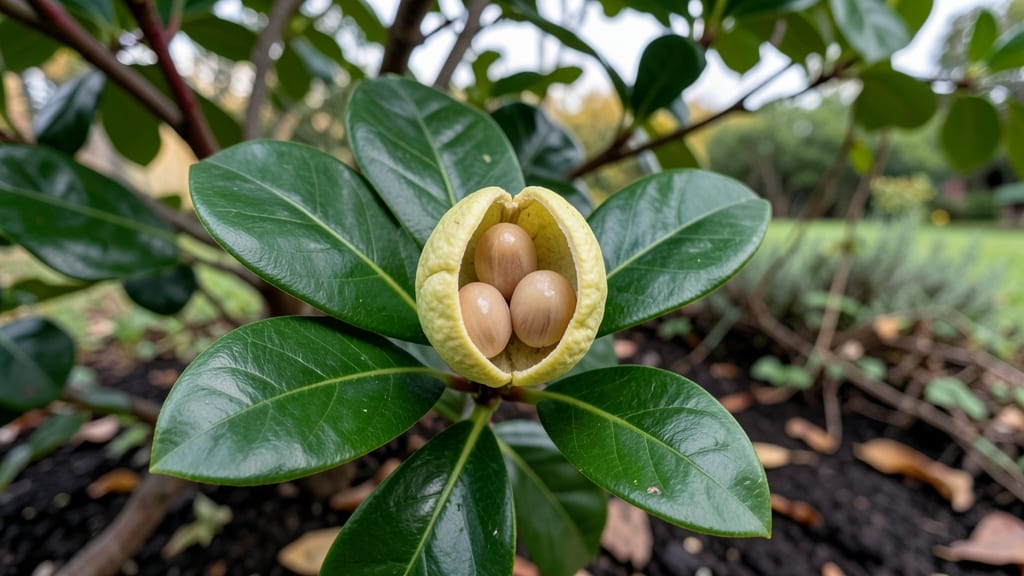
Gardenia seeds look like tiny, elongated black beans—smooth, glossy, and about 1/4 inch long—found inside the plant’s woody seed pods after flowering. They’re hard, dense, and often clustered in groups of 5-10 per pod.
Gardenia seeds are easy to spot once you know what to look for: their dark, bean-like shape and glossy surface make them stand out against the plant’s dried seed pods. 🌱 Unlike coffee beans, which are more irregular, gardenia seeds have a uniform oval shape with a slightly tapered end.
Their deep black color and smooth texture help distinguish them from other seeds you might find in your garden, like the wrinkled appearance of pea seeds or the flat, winged shapes of maple seeds.
These seeds play a crucial role in the plant’s life cycle—their hard outer shell protects the embryo while maintaining moisture levels until conditions are right for germination.
When harvesting, look for pods that have turned brown and begin to split open naturally; this is your cue that the seeds inside are ready for planting.
💡 In This Article
- Identifying Gardenia Seeds: Size, Shape, and Color Details
- When and How to Harvest Gardenia Seeds for Planting
Identifying gardenia seeds: size, shape, and color details
Gardenia seeds measure roughly 0.25 to 0.35 inches in length, with a diameter of about 0.1 inch—similar to a small coffee bean but more uniform in shape.
Their elongated oval form tapers slightly at one end, creating a subtle "point" that distinguishes them from rounder seeds like those of peas. The surface is completely smooth and glossy, reflecting light in a way that makes them appear almost wet to the touch, though they're actually quite dry.
Their deep black color comes from a high concentration of melanin in the seed coat, a natural pigment that also protects against UV damage. This darkness contrasts sharply with the light brown or tan interior of the woody seed pod, making the seeds instantly visible once the pod splits open.
Under magnification, you can see fine striations running lengthwise along the seed's surface, though these are too subtle to notice with the naked eye. 🌿
When comparing gardenia seeds to other common seeds, their density stands out—they feel surprisingly heavy for their size when held in your palm. Coffee beans, for instance, are roughly the same size but have a more irregular shape and a slightly rougher texture.
Pea seeds, on the other hand, are much flatter and wrinkled, while gardenia seeds maintain their perfect oval form even when dried. This uniformity helps gardeners quickly identify them during harvesting.
The seeds' hard outer shell isn't just for show—it's a survival mechanism. The dense, impermeable coating helps regulate moisture loss, allowing seeds to remain viable for months if stored properly. This protective layer also prevents premature germination, ensuring the seed only sprouts when conditions are optimal.
The glossy finish you feel when running your finger along the seed's surface is actually a waxy cuticle that further reduces water evaporation.
Color variations can occur based on the gardenia variety, but most seeds stay within a range of deep brown to almost black. Some hybrid varieties might have slightly lighter seeds with a reddish tint, though these are rare.
The color intensity often darkens as the seed matures inside the pod, serving as a natural indicator of readiness for harvest. This visual cue is why experienced gardeners can often tell at a glance whether a pod contains mature seeds.
One fascinating detail about gardenia seeds is how their appearance changes when exposed to moisture. If you place a dry seed in water for a few hours, the glossy black surface will begin to dull slightly as the seed coat absorbs water.
This subtle change signals the start of germination, where the seed's protective layer softens to allow the embryo to emerge. Understanding these visual cues helps gardeners assess seed viability without needing specialized equipment.
For those new to gardenia cultivation, here's a pro tip: always harvest seeds from pods that have naturally opened—they'll be at their darkest color and hardest texture, indicating peak maturity. Seeds from unripe pods may appear lighter and feel softer, and these are less likely to germinate successfully. 💡