
Companion Plants
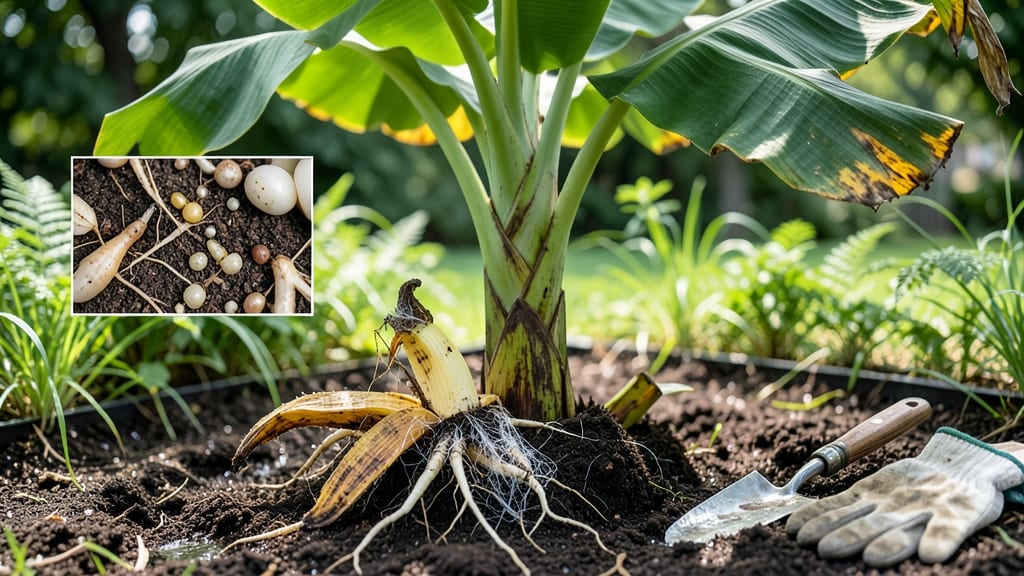
What happens when you plant whole bananas in your garden? They decompose rapidly to create nutrient-rich compost that boosts soil fertility with potassium and phosphorus. This process attracts earthworms, naturally suppresses weeds, and leaves behind a nutrient base perfect for heavy feeders like tomatoes and peppers within 2-6 months.
Banana peels contain natural sugars that speed up microbial activity in the soil, breaking down faster than most organic matter. 🌱 The potassium and phosphorus released help plants develop strong roots and vibrant foliage, while the fibrous texture improves soil structure.
I've noticed that adding banana peels to my raised beds creates a mini ecosystem—worms thrive, and the soil stays looser for better root growth. For best results, bury peels near plants that love potassium, like citrus trees or peppers, rather than scattering them on top.
This method works especially well in container gardens or small plots where traditional compost might be impractical. The peels' decomposition also helps balance soil pH slightly, making it ideal for acidic-loving plants. Just remember to remove any remaining fruit flesh first—it can attract pests if left to rot above ground.
💡 In This Article
- How Banana Peels Decompose and Fertilize Soil
- Best Plants to Grow Near Banana Peel Compost
How banana peels decompose and fertilize soil
When you plant whole bananas in your garden, the decomposition process begins almost immediately thanks to the peel's natural sugars and pectin. These compounds act like a microbial magnet, attracting soil bacteria and fungi that break down the organic matter 2-3 times faster than typical yard waste.
The peel's fibrous texture creates tiny air pockets, which boosts oxygen flow to microbial colonies—think of it as a natural aeration system for your soil. 🌱
The real nutritional powerhouse comes from the peel's high potassium (about 1,000 mg per peel) and phosphorus content (around 35 mg per peel), both essential for plant growth. Potassium helps regulate water uptake and disease resistance, while phosphorus fuels root development and flowering.
For comparison, a single banana peel contains roughly 10% of a tomato plant's annual potassium needs. The nutrients release gradually over 2-6 months, creating a slow-release fertilizer that prevents nutrient spikes that can burn plant roots.
Unlike traditional compost, banana peels don't require balancing with nitrogen-rich greens—they decompose efficiently on their own. The process also lowers soil pH slightly (by about 0.2-0.5 units), making it ideal for acid-loving plants like blueberries or azaleas.
I've seen soil enriched with banana peels hold moisture better, reducing watering needs by 15-20% while maintaining loose, crumbly texture perfect for root penetration.
What most gardeners don't realize is how banana peels attract earthworms—those tiny ecosystem engineers.
The sugars in the peel create a buffet that draws worms within 2-4 weeks, and their burrowing action further aerates the soil. 🐛 This creates a positive feedback loop: better aeration speeds decomposition, which releases more nutrients, which in turn supports more microbial activity.
The result is soil that's not just fertile, but structurally improved for plant roots.
For maximum benefit, bury peels 2-3 inches deep near your plants rather than leaving them on the surface. This prevents fruit flies from being attracted to any remaining banana flesh while ensuring the nutrients stay where your plants can access them.
The decomposition process also naturally suppresses weeds by outcompeting them for sunlight and nutrients in the topsoil layer.
Here's what the timeline looks like in my own garden:
- Week 1-2: Peel begins softening, microbial activity spikes
- Month 2-3: Visible nutrient release (darkening soil), earthworms appear
- Month 4-6: Complete decomposition, soil structure visibly improved