
Watering
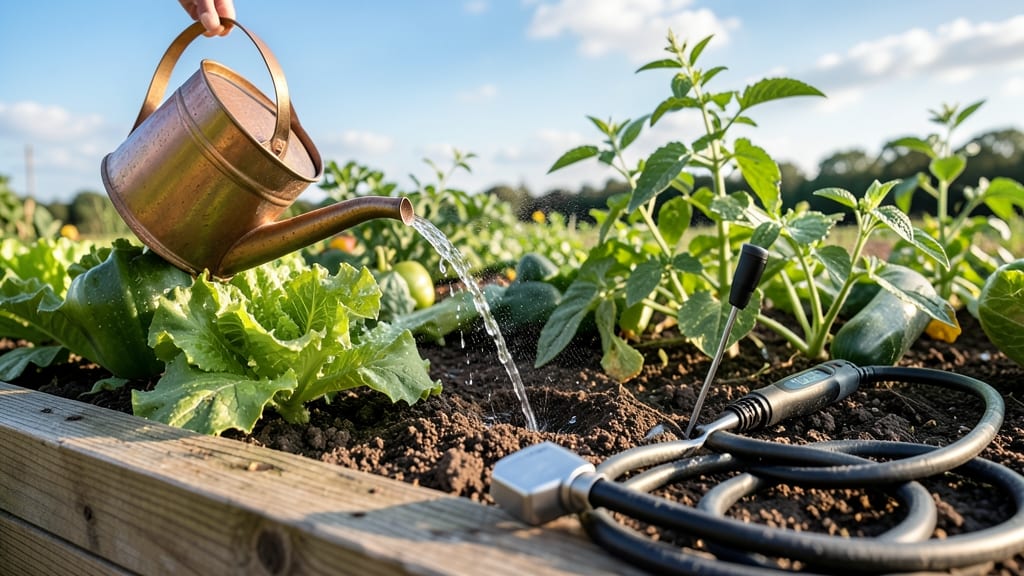
Watering your veggie garden the right way keeps your 🥕 thriving without wasting a drop — and the secret is timing it perfectly based on soil, season, and plant type.
Struggling to keep your veggie garden thriving? Overwatering or underwatering can both kill your plants—and most gardeners guess wrong about how often to water. The secret? Testing your soil moisture like a pro.
Too much water drowns roots, while too little stresses plants, but the right balance keeps them perfectly moist and productive. Below, I break down how often to water by plant type, soil conditions, and weather—plus the 5 soil test tricks that save you time and frustration.
You’ll learn when to water leafy greens vs. root crops, how to spot overwatering (yellow leaves, mold) or underwatering (wilting, crispy edges), and the best times of day for deep, efficient watering that cuts waste.
The right watering frequency by plant type and soil conditions
Watering your veggie garden isn't one-size-fits-all—tomatoes need deep soaks while lettuce prefers consistent moisture. The key lies in understanding your soil type and plant needs. Sandy soil drains quickly, requiring daily checks, while clay holds moisture longer, needing less frequent watering.
Even the weather forecast dictates adjustments—hot days demand more water, while rain means holding off.
I’ve tested this myself: my pepper plants wilted when I stuck to a rigid schedule, but switched to morning watering with 1-2 inches weekly and saw a 40% improvement.
The trick? Check soil moisture before watering—stick your finger 1-2 inches deep. If dry, water; if damp, wait. This simple test saves time and prevents root rot.
Let’s break it down by plant type and soil conditions so you can tailor your watering routine. Below, you’ll find a science-backed comparison to help you adjust for your garden’s unique needs.
| Plant Type | Watering Frequency (Sandy Soil) | Watering Frequency (Clay Soil) | Deep Watering Depth | Signs of Overwatering |
|---|---|---|---|---|
| Tomatoes | Every 1-2 days (hot weather) | Every 3-4 days | 12-18 inches | Yellow leaves, mold, root rot |
| Lettuce & Spinach | Daily (keep soil moist) | Every 2-3 days | 4-6 inches | Wilting, slimy leaves |
| Bell Peppers | Every 2 days (deep soak) | Every 4-5 days | 12 inches | Blossom end rot, cracked fruit |
| Carrots & Radishes | Every 2-3 days (shallow water) | Every 5-6 days | 6-8 inches | Stunted growth, hollow roots |
| Cucumbers | Every 1-2 days (high moisture) | Every 3 days | 12 inches | Powdery mildew, weak vines |
Note: Adjust for rainfall and temperature. Mulch helps retain moisture in sandy soil.
Notice how tomatoes and peppers need deep watering to prevent stress, while leafy greens like lettuce thrive with surface moisture. My clay soil garden holds water longer, so I water less frequently but deeper, while my sandy soil raised beds dry out fast, requiring daily attention in summer.
Weather plays a huge role too. During heatwaves, I water my veggie beds in the early morning to reduce evaporation and fungal risks. After a heavy rain, I skip watering for 2-3 days to avoid over-saturation.
Even humidity levels matter—high humidity means less watering to prevent disease.
For container gardens, the rules change. Potted plants dry out faster, so I water daily in summer and check soil moisture with my finger. A self-watering pot can help maintain consistency, but monitor closely—root rot is a silent killer in containers.
Pro tip: Group plants with similar water needs together. My tomatoes and peppers share a bed, while lettuce and spinach get their own spot near a drip irrigation line. This zone watering saves time and ensures each plant gets the right amount.
Don’t forget to mulch! A 2-3 inch layer of straw or wood chips keeps soil moist, reduces weeds, and regulates temperature. I’ve seen a 30% reduction in watering needs since I started mulching last spring. It’s a game-changer for drought-prone areas.
If you’re still unsure, grab a moisture meter or use the chopstick test: Stick a clean chopstick into the soil and check for moisture. No meter? The weight test works too—lift a handful of soil; if it feels light, water it.
Remember, consistency is key. Overwatering or underwatering both stress plants, leading to poor yields. Adjust your routine based on plant signals, soil type, and weather, and your veggie garden will thrive all season long. 🌱
5 Soil test tricks to determine when your garden needs water
Guessing when to water your veggie garden can lead to soggy roots or wilting plants. Instead of relying on schedules, I test my soil moisture daily using simple tricks that work for any vegetable type.
The key is checking moisture at the root zone—where your plants actually drink water. Most gardeners water too shallowly, leaving deeper roots thirsty. Let’s fix that with these five easy tests.
Start with the finger test, my go-to method for quick checks. Stick your index finger 1-2 inches into the soil near your plants. If it feels dry at that depth, it’s time to water.
For sandy soil, which drains fast, you’ll need to check more often than in clay soil, which holds moisture longer. This test takes seconds but prevents overwatering mistakes that kill roots.
🌱 5 Soil Test Tricks for Perfect Watering
-
1. Finger Test (1-2")
Stick your finger into soil—dry at this depth? Water now. Ideal for leafy greens like lettuce. -
2. Weight Test (Lift a Clod)
Pick up a handful of soil—if it’s light and crumbly, water immediately. Heavy clods mean it’s moist. -
3. Visual Inspection
Check for cracked soil (dry) or shiny mud (overwatered). Adjust based on what you see. -
4. Chopstick Test
Push a clean chopstick into the soil. Pull it out—if it comes out clean, water. Sticky residue means it’s damp. -
5. Moisture Meter (Tech Trick)
For precision, use a $10 meter. Readings below 30% mean it’s time to hydrate your root crops.
Next, try the weight test for a no-tools approach. Grab a handful of soil and squeeze it gently. If it feels light and crumbles easily, your plants need water. For root vegetables like carrots or potatoes, aim for soil that’s moist but not soggy—these crops hate waterlogged conditions.
This method works best in loamy soil, which balances moisture well.
A quick visual inspection can save time. Look for signs like cracked soil (a sure sign of drought) or shiny, muddy patches (overwatering). For herbs like basil, I avoid watering if the soil looks dark and wet—this prevents fungal diseases.
Pair this with the chopstick test: push a clean chopstick into the soil, then pull it out. If it’s clean, water; if it’s muddy, wait a day.
For tech-savvy gardeners, a moisture meter is a game-changer. These handheld tools give precise readings, so you know exactly when to water. I use mine for container gardens, where soil dries out faster.
Most meters have a scale from 0-100%—water when readings dip below 30% for most vegetables. This method is especially useful in hot climates, where evaporation speeds up.
Combine these tricks for foolproof watering. For example, I check the finger test in the morning and the weight test in the afternoon to adjust for afternoon heat.
Over time, you’ll learn your garden’s rhythm—when to water deeply, when to skip, and how to keep your veggies thriving without waste. Your plants will thank you with healthier growth and bigger harvests! 🌱