
Tools
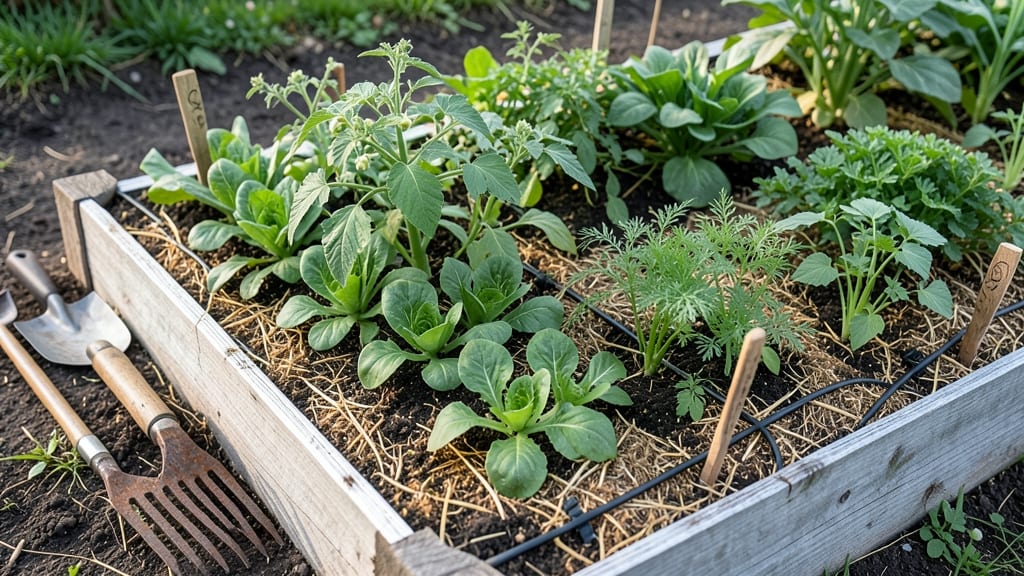
A market garden is a small-scale farming operation focused on growing high-demand vegetables, herbs, and fruits for direct sale to local consumers, restaurants, or farmers' markets. These plots prioritize efficiency, diversity, and quick turnover to maximize profitability in limited space.
A market garden thrives by focusing on fast-growing, high-value crops like leafy greens, tomatoes, and herbs that sell quickly at premium prices. 🌱 Unlike large-scale farms, these operations rely on intensive planting schedules and small plots to keep costs low while delivering fresh produce to nearby customers.
I've seen market gardens succeed with as little as a quarter-acre by leveraging direct sales channels like farmers' markets or community-supported agriculture (CSA) programs, which cut out middlemen and boost profits.
What sets them apart is their adaptability—many growers rotate crops seasonally to maintain steady income, while others specialize in niche products like microgreens or heirloom varieties. The key? Understanding your local market's demand and planning accordingly.
For example, a garden near a restaurant might prioritize basil and peppers, while one near families might focus on zucchini and carrots.
The beauty of market gardening lies in its scalability. You don't need vast land to start—even urban gardeners with balconies or rooftops can grow herbs and salad greens for local sales.
The real secret? Treating every inch of space like prime real estate and treating customers like partners in your harvest.
💡 In This Article
- Key Characteristics of Successful Market Gardens
- Starting a Profitable Market Garden: Essential Steps
Key characteristics of successful market gardens
Market gardens succeed by focusing on high-value, fast-growing crops that sell quickly at premium prices. Leafy greens like kale and spinach, tomatoes, and herbs such as basil and cilantro are staples because they yield multiple harvests per season.
For example, a single 10x20-foot plot can produce 50-100 pounds of leafy greens in just 30-45 days, depending on the variety and growing conditions. This rapid turnover ensures steady income and minimizes waste.
The secret lies in intensive planting techniques like succession planting, where crops are sown every 2-3 weeks to maintain a continuous harvest. Soil health is non-negotiable—market gardens often use compost-rich, well-draining soil with a pH of 6.0-7.0 to optimize nutrient uptake.
Drip irrigation systems are another game-changer, delivering water directly to roots while reducing waste by up to 50% compared to overhead sprinklers. The result? Healthier plants, fewer diseases, and less labor.
Seasonal planning is critical to avoid gluts or shortages. For instance, a garden in the Pacific Northwest might prioritize winter squash and Brussels sprouts in fall, then shift to spring radishes and peas as temperatures rise.
This strategy keeps sales consistent and allows gardeners to charge premium prices during off-seasons when local supply is scarce. The goal isn’t just to grow food—it’s to grow food that sells.
Another standout feature is diversity within small spaces. Instead of dedicating acres to a single crop, market gardens interplant complementary species—like tomatoes with basil or carrots with onions—to maximize yield per square foot.
This polyculture approach also deters pests naturally, reducing the need for chemical interventions. For example, marigolds planted alongside tomatoes can repel nematodes, while borage attracts pollinators and improves flavor.
Technology plays a role too. Many successful market gardens use low-tech tools like hoop houses or row covers to extend growing seasons by 4-6 weeks at either end of the year.
These simple structures create microclimates that protect crops from frost or heat stress, letting gardeners harvest year-round in many climates. The payoff? Longer sales windows and higher profits per season.
Finally, direct-to-consumer relationships are the backbone of profitability. When gardeners sell directly at farmers' markets or through CSAs, they can command 2-3 times the price of wholesale produce. Customers pay for freshness, quality, and the story behind the harvest—like knowing exactly where their greens were grown just hours before purchase.
This connection turns buyers into loyal supporters, even during lean seasons.
What most people overlook is how labor efficiency drives success. Market gardens minimize hand-weeding by using mulch or cover crops, and they automate tasks like irrigation with timers.
The result? More time to focus on sales, customer relationships, and scaling—without burning out. It’s farming as a business, not just a lifestyle.