
Tools
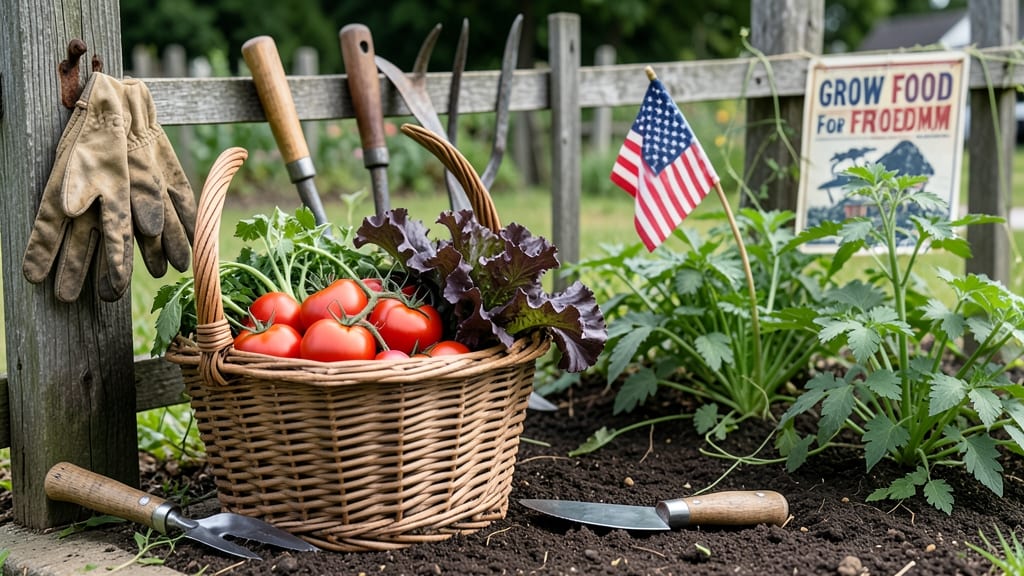
A victory garden is a homegrown plot designed to supplement food supplies during shortages, originally popularized during World War II to boost domestic agriculture and reduce reliance on commercial sources. Today, they’re revived as sustainable urban farming initiatives.
A victory garden is essentially a personal food production system that gained massive popularity during World War II when families grew vegetables to support the war effort. 🌱 The U.S. government even launched campaigns encouraging citizens to plant "victory gardens," resulting in over 20 million gardens producing nearly 40% of the nation's fresh vegetables.
This concept has evolved into today's urban gardening movement, where people grow food in small spaces to promote sustainability and reduce grocery costs.
Modern victory gardens often use creative solutions like container gardening and vertical planters to maximize space in urban environments. These gardens aren't just about growing food—they're about building community resilience and reconnecting people with their food sources.
Many urban farmers today combine traditional gardening with innovative techniques to create productive spaces even in limited areas.
💡 In This Article
- Victory Gardens in WWII: Purpose and Historical Impact
- Modern Urban Victory Garden Techniques and Benefits
Victory gardens in WWII: purpose and historical impact
The concept of victory gardens emerged as a direct response to food shortages during World War II, when commercial food supplies were diverted to support troops overseas. 🌱 By 1943, the U.S. government launched the "Victory Garden" campaign, encouraging families to grow their own vegetables to reduce pressure on public food distribution systems.
This initiative was so successful that over 20 million gardens were planted across America, producing nearly 40% of the nation's fresh vegetables—equivalent to feeding the entire civilian population.
The average victory garden during this era measured about 1,000 square feet, capable of yielding 4-5 tons of produce annually. Common crops included tomatoes, potatoes, carrots, and leafy greens—all high-yield, nutrient-dense vegetables that required minimal space.
The government provided free seeds, gardening guides, and even radio programs featuring tips from agricultural experts. This collective effort wasn't just about food security; it was a symbol of patriotism, with families proudly displaying their harvests as a contribution to the war effort.
What made victory gardens uniquely effective was their adaptability to urban environments.
Many were planted in backyards, vacant lots, or even on rooftops, proving that food production could thrive in limited spaces. 🌿 The success of these gardens demonstrated how decentralized agriculture could stabilize food supplies during crises—a lesson that resonates strongly in today's discussions about climate change and supply chain vulnerabilities.
The wartime model showed that when communities band together, they can dramatically increase local food resilience.
Beyond their practical benefits, victory gardens fostered a sense of community. Neighborhoods organized shared plots, swapped seeds, and collaborated on maintenance tasks, creating social bonds that strengthened during challenging times. This communal aspect is one reason why the concept has been revived in modern urban farming movements.
The WWII experience proved that gardening isn't just about growing food—it's about building connections and preparing for uncertainty.
Interestingly, the impact of victory gardens extended beyond the war years.
Many families who participated in the program continued gardening after the conflict ended, establishing a lasting cultural shift toward homegrown food. 🌱 This legacy helps explain why victory gardens remain relevant today, serving as both a historical model and a practical solution for contemporary food challenges.
The wartime gardens proved that even small-scale efforts could make a massive difference when coordinated at a national level.