
Tools
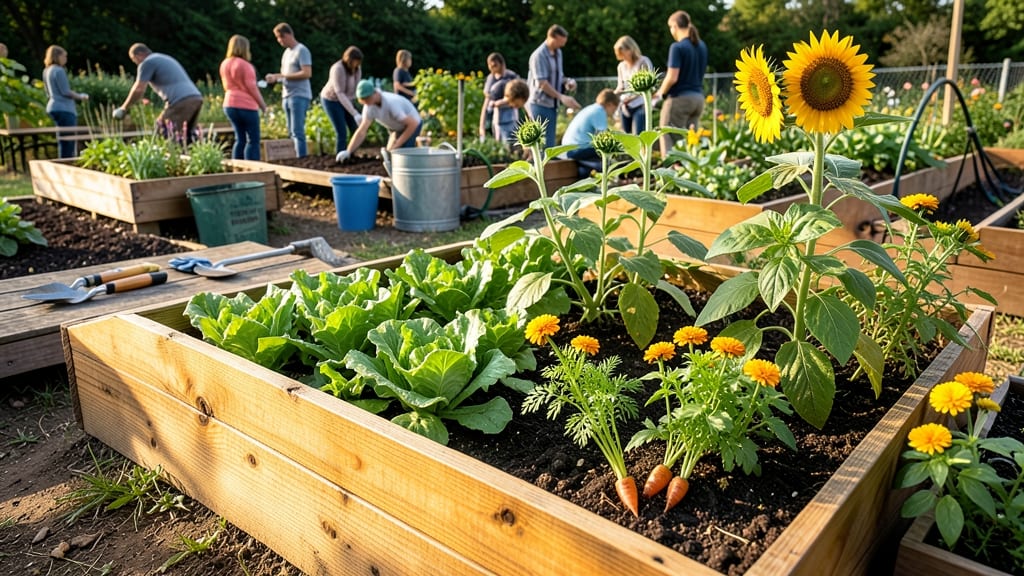
Community gardening is a collaborative effort where groups cultivate shared plots to grow produce, flowers, and herbs, creating stronger neighborhoods and healthier ecosystems. These spaces often rely on donated land and encourage participation from all skill levels.
This shared-growing movement transforms vacant lots into thriving green spaces that benefit both people and the planet. 🌱 By pooling resources and expertise, community gardens help reduce food waste while building social bonds—studies show they cut neighborhood crime rates by up to 30%.
The best part? You don't need a green thumb to contribute; many gardens provide tools, training, and even starter plants for beginners.
What sets these gardens apart is their adaptability—whether it's urban rooftop plots or rural farm shares, the core mission remains the same: grow food together. 💫 Local initiatives often partner with schools or nonprofits to teach kids about sustainability, creating multi-generational learning opportunities that extend beyond the garden fence.
💡 In This Article
- How Community Gardens Function and Their Environmental Impact
- Steps to Start or Join a Community Garden Near You
How community gardens function and their environmental impact
Community gardens operate through a structured yet flexible system where land is either donated or leased at minimal cost—often from cities, nonprofits, or private owners. These spaces are divided into individual plots, typically measuring 10x20 feet, which are then allocated based on need, skill level, or community voting.
The mechanics involve shared resources like tools, compost, and sometimes even water systems, reducing individual costs while maximizing collective impact. 🌱
The environmental benefits stem from improved soil health through composting and crop rotation. Studies show that urban community gardens can increase local biodiversity by 30-50% by providing habitats for pollinators like bees and butterflies.
They also cut food miles—transporting produce from garden to table eliminates the 1,500+ miles often traveled by conventional grocery store items, slashing carbon emissions. The greening effect extends beyond plots, as gardens cool surrounding areas by up to 5°F through shade and evapotranspiration.
Soil science plays a critical role in their success. Many community gardens use raised beds filled with a mix of 60% topsoil, 20% compost, and 20% perlite to create nutrient-rich, well-draining environments. This method prevents soil compaction common in urban areas while allowing roots to thrive.
The closed-loop system—where kitchen scraps become compost—mirrors natural ecosystems, reducing waste and creating a sustainable cycle that even novice gardeners can maintain.
Beyond environmental gains, these gardens act as carbon sinks by sequestering up to 1.5 tons of CO₂ per acre annually, offsetting emissions from nearby buildings. The urban greening effect also mitigates the "heat island" phenomenon, where cities trap heat.
In neighborhoods with community gardens, summer temperatures can drop by 2-3°F compared to areas without green spaces. This cooling effect directly improves air quality by reducing ozone formation during hot days.
One often-overlooked mechanism is the "ecological succession" that occurs in well-maintained gardens. By planting native flowers alongside vegetables, gardens create corridors for wildlife migration. For example, a 500-square-foot plot might include milkweed for monarch butterflies while growing tomatoes—demonstrating how food production and conservation can coexist.
This dual-purpose approach makes community gardens more resilient against pests and diseases without synthetic chemicals.
Consider the case of Detroit's 313-313 Garden, which transformed a vacant lot into a thriving space producing 3,000 pounds of food annually.
The garden's success stems from its layered approach: raised beds for accessibility, a composting system using food waste from nearby restaurants, and educational workshops that teach soil testing. This model shows how community gardens can address food insecurity while serving as living classrooms for urban agriculture. 💫