
Fertilization
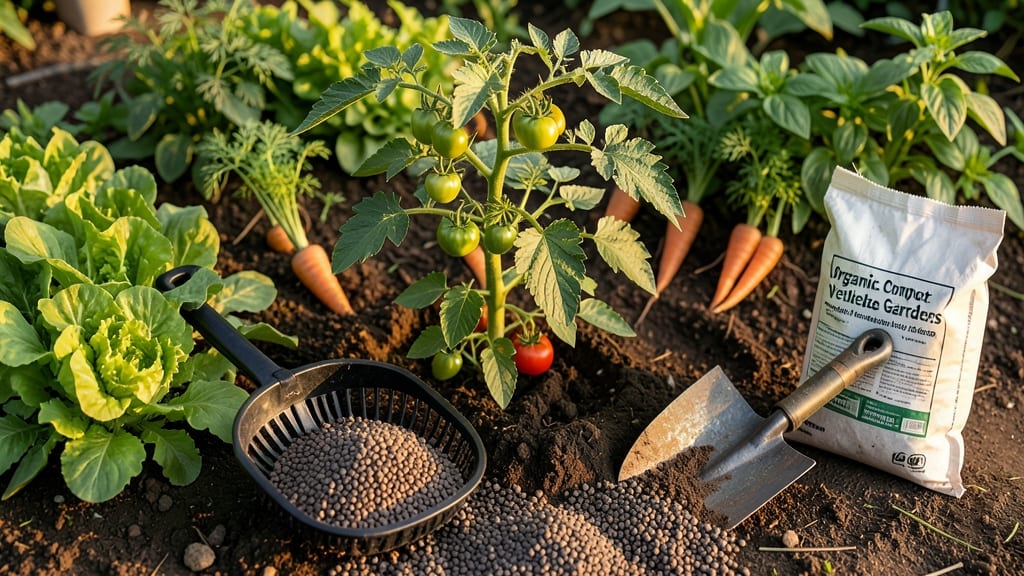
To apply fertilizer to your vegetable garden at the right time means feeding your plants when they actually need it—not before or after—so every nutrient goes to work growing 🥬 instead of sitting idle in the soil.
Timing your fertilizer applications wrong can mean wasted money—or even stunted plants. Whether you're growing leafy greens or heavy producers like tomatoes, the key is matching fertilizer to your crops' growth stages, not just throwing it out in early spring.
Most gardeners overlook the soil test step, which tells you exactly when your vegetable garden needs a boost—and what kind. A quick test reveals whether your soil is hungry for nitrogen, phosphorus, or potassium, so you can fertilize at the perfect moment for each crop.
Below, I break down the science-backed schedule for feeding your garden, from pre-planting prep to mid-season top-ups, plus how to adjust for organic vs. synthetic fertilizers and your local climate.

Optimal fertilizer application times based on soil test results
Your soil test report isn't just a piece of paper—it's a roadmap to healthier plants and bigger harvests. Understanding when to apply nitrogen, phosphorus, and potassium based on your soil's needs is the key to avoiding wasted fertilizer and achieving peak growth.
For example, leafy greens like lettuce thrive with extra nitrogen early on, while root crops such as carrots need phosphorus to develop strong roots.
The first step is identifying your soil's deficiencies. If your test shows low nitrogen, focus on pre-planting applications, while low phosphorus calls for mid-season feeding when plants start flowering. Potassium deficiencies often appear later in the season, signaling the need for a late-summer boost.
Each vegetable has unique needs, so let's break down how to align your fertilizer schedule with your soil's results.
📌 Pro Tip: Always apply fertilizer when soil is moist but not soggy—this ensures nutrients reach roots efficiently. Early morning or late afternoon are ideal times to avoid midday heat stress on plants.
| Soil Nutrient | Vegetable Type | Application Time | Frequency | Notes |
|---|---|---|---|---|
| Nitrogen (N) | Leafy Greens (Lettuce, Spinach) | Pre-planting + Early Growth | Every 3-4 weeks | High N promotes leafy growth |
| Phosphorus (P) | Root Crops (Carrots, Potatoes) | Pre-planting + Flowering | Every 6-8 weeks | Boosts root and tuber development |
| Potassium (K) | Fruiting Plants (Tomatoes, Peppers) | Mid-season + Late Growth | Every 4-6 weeks | Strengthens disease resistance |
| Micronutrients (Fe, Zn, Mg) | All Vegetables | Pre-planting + Mid-season | Every 8-12 weeks | Prevents deficiencies like yellowing |
For leafy greens, prioritize nitrogen-rich fertilizers during the first 4-6 weeks of growth. These crops grow quickly and need a steady supply of nitrogen to produce lush foliage.
Apply a balanced fertilizer like 10-10-10 at planting, then switch to a high-nitrogen option (e.g., 20-5-10) when the plants are 3-4 inches tall. Avoid overdoing it—too much nitrogen can lead to leafy growth at the expense of flavor.
If your soil test reveals low phosphorus, focus on root crops like carrots and potatoes. Phosphorus is crucial for root development, so apply a bone meal or rock phosphate fertilizer at planting.
For fruiting vegetables such as tomatoes and peppers, phosphorus supports flower and fruit formation. A mid-season application of phosphorus-rich fertilizer (e.g., 5-10-10) when plants start flowering can significantly boost yields.
Potassium is often overlooked but plays a vital role in disease resistance and fruit quality. For tomatoes and peppers, apply a potassium sulfate or greensand fertilizer every 4-6 weeks starting when the first flowers appear.
This helps prevent issues like blossom end rot and ensures sweeter, more flavorful produce. Always water deeply after applying potassium to help it penetrate the soil.
Micronutrients like iron, zinc, and magnesium are often forgotten but critical for overall plant health. If your soil test shows deficiencies, consider a chelated micronutrient spray or soil amendment. For example, iron deficiency (yellowing between leaf veins) can be corrected with a foliar spray of iron sulfate.
Apply micronutrients pre-planting and again mid-season to maintain healthy growth throughout the season.
Timing isn't just about when you apply fertilizer—it's also about how you apply it. For organic fertilizers like compost or manure, work them into the soil 2-4 weeks before planting to allow time for decomposition.
Synthetic fertilizers, on the other hand, can be applied more precisely, such as side-dressing with granular fertilizer every 4-6 weeks. Always follow the manufacturer's instructions for application rates.
One common mistake is fertilizing when plants are stressed by heat or drought. Wait until conditions improve before applying nutrients, as stressed plants can't absorb fertilizer efficiently. Similarly, avoid fertilizing right before a heavy rain, as nutrients can leach
Seasonal fertilizer schedule for vegetable gardens by climate zone
Your vegetable garden's growth depends heavily on when you feed it—not just what you feed it. In cool climates (USDA Zones 1-7), spring and fall are prime times for fertilization, while warm climates (Zones 8-11) benefit from summer feeding with heat-tolerant fertilizers.
The key is matching your fertilizer timing to your plants' natural growth cycles and your local frost dates.
For example, leafy greens like spinach and lettuce thrive with a high-nitrogen boost in early spring, while tomatoes and peppers need phosphorus-heavy fertilizers when they flower.
Organic options like compost or manure break down slowly, so apply them 4-6 weeks before planting, while synthetic fertilizers can be used more precisely during specific growth stages.
🌱
| Season | Cool Climates (Zones 1-7) | Warm Climates (Zones 8-11) | Fertilizer Type | Key Vegetables |
|---|---|---|---|---|
| Spring (Pre-Planting) | 4-6 weeks before last frost | February-March | Organic (compost, manure) | Leafy greens, peas, carrots |
| Early Growth | At planting + 4 weeks later | April-May | Balanced (10-10-10) | Broccoli, cabbage, onions |
| Mid-Season | June-July (flowering/fruiting) | May-June | Phosphorus-rich (5-10-10) | Tomatoes, peppers, squash |
| Fall (Cool Climates) | 4-6 weeks before first frost | September-October | Potassium-rich (5-5-10) | Kale, radishes, spinach |
| Winter (Dormant) | None (soil prep only) | None (unless growing winter crops) | Compost or cover crops | N/A |
In cool climates, focus on spring fertilization to jumpstart growth after winter dormancy. For instance, I apply a balanced fertilizer like 10-10-10 at planting time for my broccoli and cabbage, then switch to a high-phosphorus formula when they bolt.
In warm climates, summer fertilization should be lighter but more frequent—every 3-4 weeks—to prevent nutrient burn in the heat.
For organic fertilizers, like composted manure or worm castings, I mix them into the soil 2-3 months before planting to let them decompose. Synthetic fertilizers, on the other hand, can be applied more precisely: a liquid feed every 2 weeks during active growth.
Always water thoroughly after applying fertilizer to help nutrients penetrate the soil and reach roots.
Pro tip: If your garden soil is sandy or fast-draining, opt for slow-release fertilizers or organic options to prevent nutrients from washing away. In clay-heavy soils, a well-rotted compost improves structure while feeding plants gradually. Always pair fertilization with mulching to retain moisture and regulate soil temperature.
✂️