
Tools
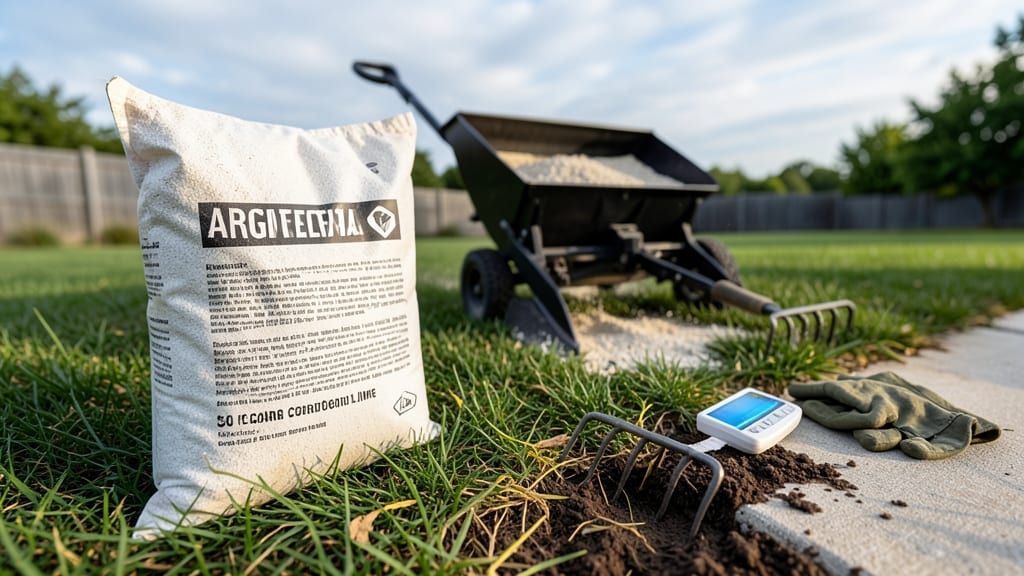
To apply lime to garden soil, choose early fall or late winter when plants are dormant, giving it 2-3 months to adjust soil pH before spring planting. Always test soil first to avoid overapplication, which can damage plants and throw off soil chemistry.
The best time for garden liming aligns with your plants' natural rest period. 🌱 During dormancy, roots aren't actively growing, so the lime's calcium and magnesium can work their magic without causing chemical burns. This timing also lets rainfall help distribute the lime evenly before spring's active growth phase.
I've seen gardeners skip this step and end up with uneven pH levels—especially in clay-heavy soils where lime tends to clump instead of dispersing.
What's interesting is how this timing varies by plant type. Acid-loving plants like blueberries need different care than vegetables like broccoli, which thrive in slightly alkaline soil. The key is testing your soil's current pH first—most garden centers offer simple test kits.
Once you know your baseline, you can calculate exactly how much lime to add without overdoing it.
💡 In This Article
- How Soil pH Affects Lime Application Timing
- Plant-Specific Lime Application Guidelines
How soil pH affects lime application timing
Soil pH balance hinges on the concentration of hydrogen ions, measured on a scale from 0 (acidic) to 14 (alkaline). When soil pH drops below 6.0, it becomes too acidic for most plants, inhibiting nutrient uptake—especially phosphorus and nitrogen.
Lime (calcium carbonate or dolomitic lime) works by releasing calcium and magnesium ions that react with hydrogen ions in the soil, forming water and raising the pH. This chemical reaction is gradual, which is why timing matters so much.
The ideal application window—early fall or late winter—aligns with nature's rhythm. During dormancy, plant roots aren't actively growing, so the lime's alkalinity doesn't cause immediate chemical burns that can scorch tender root systems.
In temperate climates, fall applications benefit from winter rainfall, which helps distribute lime evenly through the soil profile. Conversely, spring applications risk washing lime into groundwater before plants can utilize it. 💫 The magic happens when lime particles dissolve slowly, releasing ions over 60-90 days—perfect for spring planting.
Climate plays a surprising role in lime absorption rates. In humid regions with frequent rainfall, lime dissolves faster, requiring more frequent applications (every 2-3 years). Meanwhile, in dry climates, lime can remain inactive until moisture triggers its chemical reaction.
That's why gardeners in Arizona might apply lime in late winter when spring rains are imminent, while Pacific Northwest gardeners often choose fall to take advantage of winter's consistent precipitation.
What most people don't realize is how soil texture affects lime distribution. In sandy soils, lime particles can wash away quickly, requiring 1-2 times the recommended rate for clay soils where lime tends to clump.
The ideal soil moisture for application is 60-70% field capacity—not too dry (which prevents dissolution) and not too wet (which causes runoff). This is why fall applications often work better than spring in regions with unpredictable rainfall patterns.
Testing your soil's pH before liming is non-negotiable. A simple home test kit (costing $10-$20) reveals whether your soil needs lime at all—most garden soils fall between 5.5-7.0. For precise results, send a sample to a university extension service for $20-$30.
The test will also show your soil's buffer capacity (how much lime it can hold), which determines the correct application rate—typically 5-10 pounds per 100 square feet for acidic soils.
One common mistake is assuming all lime works the same. Dolomitic lime (containing magnesium) is better for magnesium-deficient soils, while calcitic lime raises pH faster.
The choice depends on your soil test results and plant needs—blueberries, for example, thrive at pH 4.5-5.5 and shouldn't receive lime at all. 🌱 Understanding these nuances prevents costly overapplication that can make soil too alkaline for sensitive plants.