
Planting
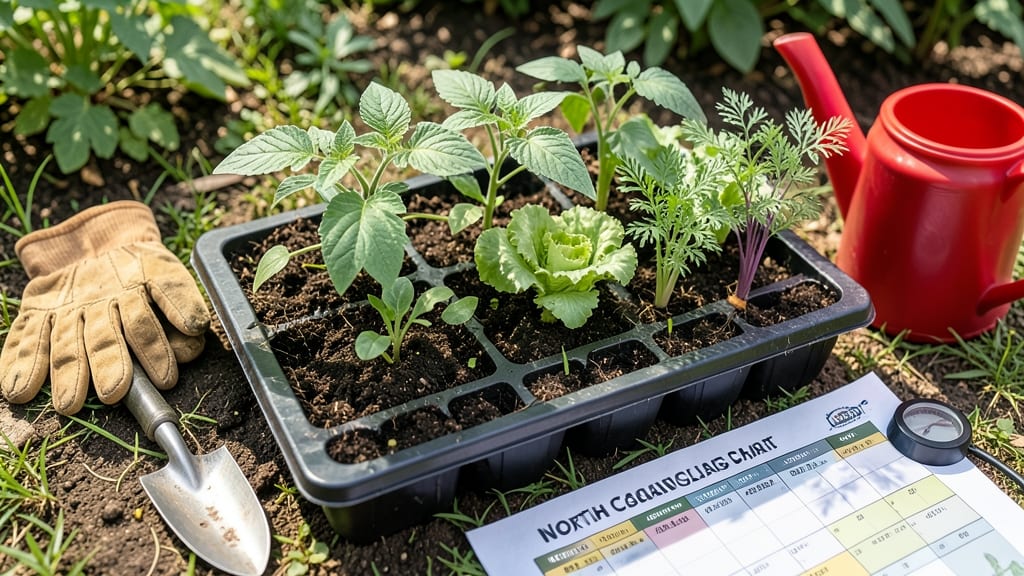
Planting a vegetable garden in North Carolina at the right time can mean the difference between a bountiful harvest and a frustrating loss.
North Carolina’s diverse climate—from coastal plains to mountain regions—means your vegetable garden’s success hinges on planting at the perfect time. Get the wrong timing, and you’ll battle pests, poor yields, or even lost crops.
Whether you’re in the humid lowlands of the coast or the cooler highlands of the Appalachians, knowing your USDA zone and frost dates is the key to a thriving garden.
Cool-season crops like lettuce and broccoli need an early start, while tomatoes and peppers thrive when planted after the last frost.
In this guide, I’ll break down the best planting windows for your region, plus pro tips to extend your growing season and maximize your harvest—no matter where in NC you’re gardening.
NC planting zones & best start dates by vegetable type
North Carolina spans USDA Zones 7b through 8a, meaning frost dates vary dramatically from the coastal plains (warmer) to the mountains (cooler). For example, Wilmington’s last frost is mid-March, while Asheville’s can linger until late April.
Timing your plantings to match these zones—and your microclimate—makes the difference between a bountiful harvest and a failed crop. Here’s how to nail it for both warm-season and cool-season vegetables.
Warm-season crops like tomatoes, peppers, and squash need soil temperatures above 60°F to thrive. In Zone 8a (e.g., Raleigh), this means waiting until mid-April to early May for direct sowing.
Meanwhile, cool-season crops like lettuce, broccoli, and spinach can handle light frosts and should be planted 4-6 weeks before your last frost date. For Zone 7b (e.g., Charlotte), that’s early February to March.
Here’s your zone-by-zone planting calendar for NC’s most popular vegetables, including heat-tolerant varieties for Zone 8a to avoid bolting or wilting in summer’s peak heat.
| Vegetable Type | Zone 7b (Charlotte) | Zone 8a (Raleigh) | Heat-Tolerant Varieties (Zone 8a) | Key Tip | ||||||||||||||||||
|---|---|---|---|---|---|---|---|---|---|---|---|---|---|---|---|---|---|---|---|---|---|---|
| Tomatoes | Mid-April (transplant) / Late May (direct sow) | Early April (transplant) / Early May (direct sow) | 'Celebrity', 'Solar Fire' | Use mulch to retain moisture | ||||||||||||||||||
| Peppers | Early April (transplant) / Late May (direct sow) | Mid-March (transplant) / Early April (direct sow) | 'Carolina Wonder', 'Jalapeño M' | Start indoors 8-10 weeks early | ||||||||||||||||||
| Lettuce | Early Feb - March / Aug-Sept (fall) | Late Jan - Feb / July-Aug (fall) | 'Black Seeded Simpson', 'Romaine' | Shade cloth in summer | ||||||||||||||||||
| Broccoli | Feb-March / Aug-Sept | Jan-Feb / July-Aug | 'De Cicco', 'Calabrese' | Harvest before heads flower | ||||||||||||||||||
| Green Beans | Mid-April / Late July |
How to adjust planting times for NC’s microclimates (coastal vs. Piedmont vs. mountains)North Carolina’s three distinct regions—coastal plains, Piedmont, and mountains—each demand unique planting strategies. The coastal area’s high humidity and milder winters let you start earlier, while the mountains’ shorter growing season requires careful timing. Even the Piedmont’s heat spikes can stress crops if planted too early. Let’s break down how to adapt your planting schedule for each zone. For coastal NC (Zone 8a), aim to plant cool-season crops like spinach and kale in late summer (August-September) to avoid summer heat. Warm-season crops such as tomatoes and peppers can go in as early as mid-March, thanks to the region’s delayed frost. In the Piedmont (Zone 7b), wait until mid-April for warm-season plants to dodge late frosts, while cool-season crops thrive with early spring or fall planting. The mountains (Zone 6b-7a) present the biggest challenge, with earlier frosts and cooler temperatures. Start cool-season crops like broccoli and carrots in late March and warm-season crops like beans and squash no earlier than mid-May. Succession planting is key here—sow every 2-3 weeks to stretch harvests through the shorter season. Here’s how to fine-tune your planting schedule for each NC microclimate:
In the coastal zone, use succession planting to keep harvests rolling year-round. For example, sow bush beans every 3 weeks from April through July. The Piedmont’s heat can stress crops like cucumbers, so opt for heat-tolerant varieties and provide afternoon shade with row covers. In the mountains, focus on fast-maturing varieties like bush peas (50 days) to beat the early frost. For all regions, soil temperature matters more than air temperature. Use a soil thermometer—warm-season crops need soil at 60°F+, while cool-season crops thrive at 50-60°F. In the coastal zone, you can push the envelope with early plantings of heat-loving crops like okra, but monitor for fungal diseases in the humidity. In the Piedmont, mulch heavily to retain moisture during summer heat waves. Pro tip: The mountains’ shorter season means prioritizing cold-hardy greens like kale and Swiss chard, which can survive light frosts. Pair them with fast-growing radishes (30 days) for early harvests. No matter your zone, keep a planting journal to track what works best in your microclimate—your future harvests will thank you! |