
Tools
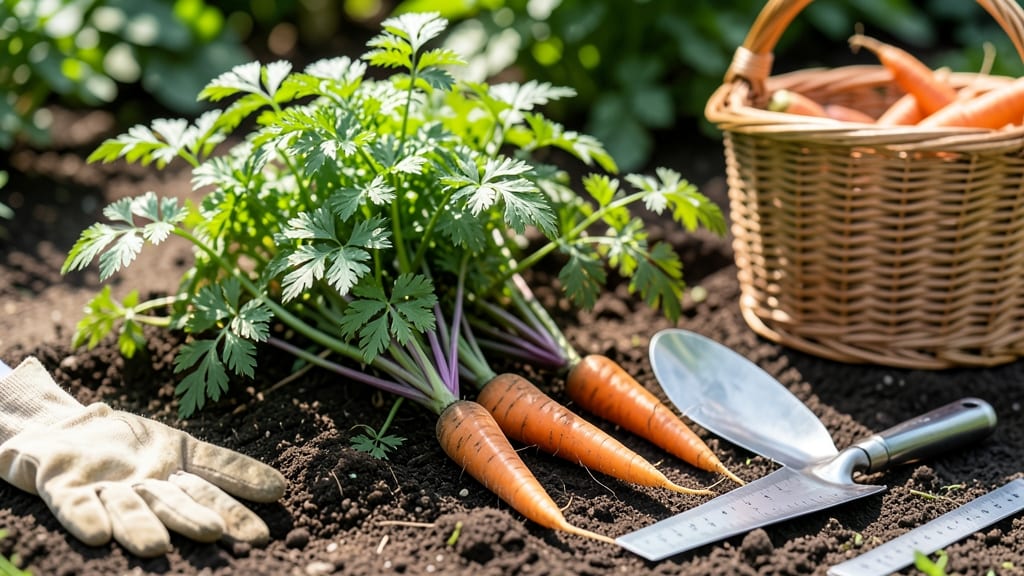
Know when to pull carrots from garden by checking for 4-6 inch tops and firm roots around 60-80 days after planting, harvesting before they split or turn woody for peak flavor.
Carrots develop best when you time your harvest just right—too early means underdeveloped roots, while waiting too long leads to tough, stringy textures. 🌱 The ideal moment comes when the green foliage reaches 4-6 inches and the soil feels loose enough to pull without resistance.
I've found that cooler spring or fall temperatures actually speed up maturation, so adjust your timeline if your growing season is unusually warm.
What's often overlooked is the root diameter—thicker carrots (about 1 inch) tend to have more concentrated sweetness, but they also need slightly more time to develop. For baby carrots, you can harvest as early as 50 days when they're pencil-thin, though they'll be milder in flavor.
The key is consistency: check a few test carrots from different planting rows to catch the perfect moment before they start splitting at the top.
💡 In This Article
- Carrot Growth Stages: How Size and Color Signal Harvest Readiness
- 3 Visual Cues to Check Before Pulling Carrots
Carrot growth stages: how size and color signal harvest readiness
Carrots grow through distinct stages where both their tops and roots undergo measurable changes. The foliage begins as tiny seedlings with just a few leaves, then develops into broader, more vibrant green leaves as the plant matures.
What's fascinating is how the root system mirrors this growth—starting as a tiny taproot that gradually thickens and lengthens as the plant diverts energy from leaf production to root development.
When the tops reach 4-6 inches, this signals that the root has typically grown to its ideal size, though varieties like 'Danvers' or 'Nantes' may develop differently.
The color transformation is equally telling. Young carrots often start with a pale, almost white hue, gradually deepening to their mature color—whether orange, purple, or yellow—as they accumulate sugars through photosynthesis. This color shift happens most rapidly when soil temperatures stay between 60-75°F.
Cooler weather slows growth but enhances sweetness, while hotter conditions can lead to faster maturation but potentially woody textures.
The root's firmness also changes: when you gently squeeze a carrot and feel resistance without it bending, that's your cue that the starches have converted to sugars, making it prime for harvest.
What most gardeners miss is how soil conditions affect this timeline. Sandy soils drain quickly, often producing smaller but sweeter carrots in 50-60 days, while clay-heavy soils can slow growth but yield larger roots.
Moisture plays a critical role too—consistent watering prevents splitting but must be balanced to avoid waterlogged roots that turn bitter. The key is watching for the shoulder of the carrot (the widest part) to emerge slightly above soil level, indicating the root has reached its full potential size.
Seasonal variations matter significantly. Spring-planted carrots often mature faster in cooler weather, while summer plantings may take longer due to heat stress. I've noticed that fall harvests tend to produce the sweetest carrots because the cooler nights trigger more sugar production—a process called vernalization.
This is why many gardeners plant successive crops: early plantings for baby carrots, mid-season for standard sizes, and late plantings for winter storage varieties.
Here's what's actually happening underground: The carrot's taproot grows downward while its lateral roots spread outward to anchor the plant. When the foliage reaches 4-6 inches, the plant has typically allocated enough energy to develop a root with the right balance of moisture and nutrients.
At this stage, the carrot's cell walls have thickened just enough to resist splitting but haven't become fibrous yet. 🌱 What's often overlooked is that the carrot's flavor profile peaks when its moisture content is around 88-90%—any lower, and it starts to dry out, becoming tough and less sweet.
Consider these botanical benchmarks when assessing readiness:
- Leaf maturity: Broad, dark green leaves with 6-8 secondary leaves indicate the plant has reached its growth peak
- Root diameter: 1-1.5 inches at the shoulder signals optimal sugar concentration
- Color intensity: Deep, even coloration (not patchy) means consistent ripening
- Soil resistance: Roots should pull easily when soil is moist but not waterlogged
The science behind this involves photosynthesis efficiency—when the foliage is large enough, it captures maximum sunlight to produce sugars that get transported to the root.
This is why harvesting too early means missing out on that sweetness, while waiting too long lets the plant divert energy to seed production, making the root woody and less palatable. The perfect harvest window is when the plant has balanced energy between its leaves and roots.