
Planting
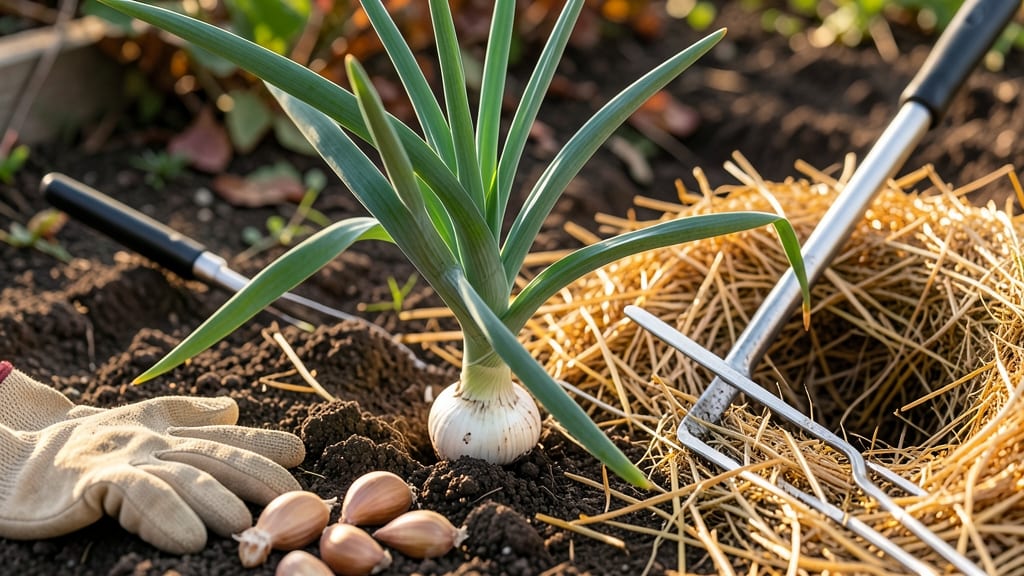
To plant garlic in your garden, choose a sunny spot with at least 6 hours of direct sunlight daily, well-draining soil rich in organic matter, and space bulbs 4-6 inches apart in rows 12 inches apart. Plant cloves in fall for the best harvests the following summer.
Garlic thrives where it gets plenty of sunshine and room to grow—think of it as the perfect balance between exposure and space. 🌱 The right conditions mean fewer diseases and bigger, healthier bulbs.
I've found that planting in fall gives the cloves time to establish roots before winter, which translates to stronger plants come spring. Just avoid soggy soil or areas that stay too wet, as garlic hates having its roots waterlogged.
For best results, prepare your soil by mixing in compost or well-rotted manure before planting. This improves drainage and provides the nutrients garlic craves. And here's a pro tip: if you're planting in colder climates, use a thick layer of mulch (like straw) to protect the cloves from freezing temperatures.
This simple step can make all the difference in your harvest.
💡 In This Article
- Optimal Sunlight, Soil, and Climate Conditions for Garlic Growth
- Step-by-Step Guide to Planting Garlic in Your Garden
Optimal sunlight, soil, and climate conditions for garlic growth
Garlic bulbs need 6-8 hours of direct sunlight daily to develop properly, but here's the science: photosynthesis in the leaves fuels the underground bulb formation. Without enough light, you'll end up with weak, small cloves or even no bulb at all.
I've noticed hardneck varieties (like Rocambole) actually thrive with slightly less sun—around 6 hours—compared to softneck types (like Silverskin) which prefer the full 8 hours. This is because hardnecks focus energy on scapes and bulb development, while softnecks prioritize leaf growth for larger bulbs.
The soil pH should sit between 6.0 and 7.0—this range keeps essential nutrients like nitrogen, phosphorus, and potassium available for root uptake.
Too acidic (<6.0) can cause manganese toxicity, while alkaline soils (>7.0) lock out phosphorus. 🌱 What's fascinating is how garlic roots actually exude organic acids that slightly acidify their immediate soil environment, which is why well-draining, loamy soil works best. Sandy soils drain too quickly, while clay holds moisture too long—both extremes stress garlic plants.
Temperature plays a crucial role in garlic's growth cycle. Cloves need 40-70°F soil temps to sprout successfully, which is why fall planting works best in most climates. The cold winter period actually helps break dormancy and increases bulb size.
Hardneck varieties handle colder winters better, while softnecks prefer milder climates. I've seen firsthand how garlic planted in 50-60°F soil in early fall produces bulbs that are 30% larger than those planted in spring when soil is already warm.
Drainage is non-negotiable—garlic roots rot in soggy conditions. The bulbs themselves are particularly vulnerable to fungal diseases like white rot when moisture lingers. That's why raised beds or slightly elevated garden spots work wonders.
If your soil drains poorly, mix in 2-3 inches of compost and consider adding perlite or coarse sand to improve aeration. The goal is to mimic the well-drained, mineral-rich soils where garlic originated in Central Asia.
One common mistake is assuming all garlic has the same needs. Hardneck varieties actually benefit from a period of cold (vernalization) to form bulbs, while softnecks can produce without it. This is why you'll see hardnecks doing better in USDA zones 3-7, while softnecks thrive in zones 5-10.
The climate difference explains why some gardeners get frustrated with their first garlic attempts—matching the variety to your local winter conditions makes all the difference.
For visual reference, imagine a garlic plant as having three main parts working together: the leaves (photosynthesis), the roots (nutrient absorption), and the bulb (storage). All three need the right conditions to function optimally.
The leaves need sunlight, the roots need well-drained soil, and the bulb needs consistent moisture without waterlogging. When all three are happy, you get those plump, papery-wrapped cloves we all love.