
Planting
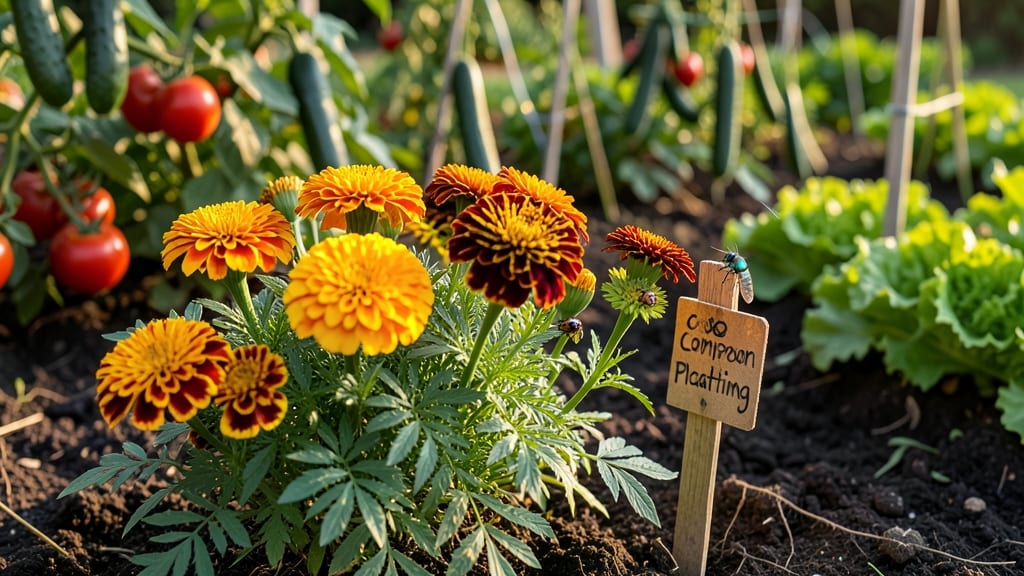
People plant marigolds in their gardens because these vibrant flowers act as natural pest deterrents, keeping away unwanted insects like nematodes, aphids, and mosquitoes while drawing in helpful predators such as ladybugs and hoverflies. Their striking appearance also discourages larger pests like deer and rabbits, making them a multifunctional garden staple.
Marigolds work their magic through natural chemical compounds like limonene and alpha-terthienyl, which disrupt pests' life cycles and mask the scent of vulnerable plants. 🌼 This dual defense system makes them especially valuable for organic gardeners looking to reduce chemical use.
The flowers' bright colors aren't just for show—they create visual barriers that confuse and deter larger animals too, while their nectar attracts beneficial insects that prey on common garden pests.
What makes marigolds particularly special is their versatility. Different varieties target specific problems—French marigolds excel against nematodes in the soil, while African marigolds repel mosquitoes effectively. Their hardy nature means they thrive in most climates, providing year-round protection when planted correctly.
I've found that interplanting them with tomatoes or peppers creates a protective zone that significantly reduces pest damage without harsh chemicals.
💡 In This Article
- Marigolds’ Natural Pest-Repelling Chemistry
- Best Marigold Varieties for Pest Control
Marigolds’ natural pest-repelling chemistry
Marigolds produce a complex cocktail of natural compounds that act like a chemical defense system against pests. The most powerful of these is alpha-terthienyl, a sulfur-containing compound found in their roots and leaves that disrupts the feeding habits of nematodes—microscopic worms that devastate plant roots.
When nematodes encounter these compounds, their digestive systems essentially shut down, preventing them from consuming plant nutrients. 🔥 This is why marigolds are often called the "nematode nemesis" in organic gardening circles.
The flowers also emit volatile oils like limonene and ocimene, which create a scent barrier that masks the natural odors of vulnerable plants. Many pests, including aphids and whiteflies, rely on these scents to locate their hosts.
Studies show that marigolds can reduce aphid populations by up to 70% when planted nearby, as their strong fragrance confuses the insects' navigation systems. Mosquitoes, too, find the scent unappealing, making marigolds a natural alternative to chemical repellents.
What's fascinating is how marigolds work at a biological level. Their bright yellow and orange hues contain pigments called carotenoids, which some research suggests may have mild insecticidal properties when exposed to sunlight.
When you crush marigold leaves, the released oils create a sticky residue that traps small insects, similar to how sticky traps work but with a natural, plant-based mechanism. 🌼 This dual approach—chemical disruption and physical trapping—makes marigolds one of the most effective natural pest control tools available.
The real magic happens underground. French marigolds, in particular, release compounds that persist in the soil for weeks after the plant dies, continuing to protect new crops.
This residual effect is why many gardeners practice a technique called "marigold mulching"—planting them in the fall, letting them die back, and then planting vegetables in the same spot the following spring. The soil remains protected even after the flowers are gone.
For mosquito control, the key compound is pyrethrin, a natural insecticide found in marigold petals. While not as potent as synthetic pyrethroids, it works effectively against flying insects when the flowers are in full bloom.
The scent alone can create a 10-foot radius of mosquito-free space around the plant, making them ideal for patios and garden edges. 💫 This is why you'll often see marigolds planted in containers near outdoor seating areas.
One important note: marigolds' effectiveness depends on proper planting techniques. For maximum pest control, aim for a density of 1 plant per 2 square feet in garden beds. The closer they are, the stronger the scent barrier becomes.
However, overcrowding can reduce their ability to photosynthesize efficiently, so finding that sweet spot is crucial for both pest control and plant health.