
Vegetables
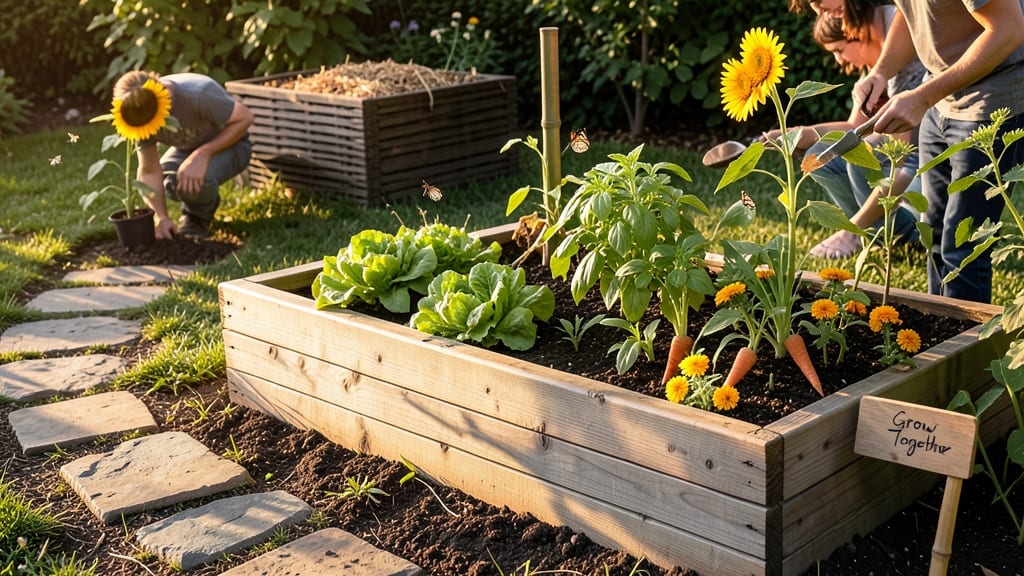
Purpose gardens work by intentionally combining plants that serve specific roles—such as nitrogen-fixing legumes, pollinator magnets, and mulch-providing ground covers—to create self-regulating ecosystems that enhance yields and soil vitality. Unlike traditional ornamental gardens, they focus on functional biodiversity that reduces maintenance while increasing harvests.
These functional landscapes mimic natural ecosystems, where each plant contributes to the whole. 🌱 For example, comfrey's deep roots aerate compacted soil while its leaves become nutrient-rich mulch, while marigolds deter pests naturally.
The result? Gardens that thrive with less watering, fewer chemicals, and more consistent production—ideal for both urban homesteaders and large-scale farmers seeking sustainable solutions.
What sets purpose gardens apart is their adaptive design. Instead of arranging plants by color or height, you prioritize their ecological relationships. A classic trio might include tomatoes (high-value crop), basil (companion plant that repels pests), and clover (nitrogen-fixer that feeds the soil).
This approach turns gardening from a labor-intensive chore into a regenerative practice that actually improves with time.
💡 In This Article
- How Purpose Gardens Enhance Soil Fertility Naturally
- Designing High-Yield Purpose Gardens for Small Spaces
How purpose gardens enhance soil fertility naturally
The magic of purpose gardens lies in their ability to replicate natural nutrient cycles. Plants like clover and alfalfa form symbiotic relationships with soil bacteria, converting atmospheric nitrogen into forms usable by other plants.
A single clover plant can fix up to 150 pounds of nitrogen per acre annually, eliminating the need for synthetic fertilizers. This process doesn't just feed your crops—it rebuilds soil organic matter over time, creating a sponge-like structure that retains 30-50% more moisture than depleted soil.
Deep-rooted perennials like comfrey and dandelions play a crucial role by breaking up compacted layers up to 6 feet deep, while their leaf litter provides slow-release nutrients.
The decomposition process releases enzymes that improve soil structure, making it easier for roots to penetrate. 🌱 What's fascinating is how these plants create underground "highways" through mycorrhizal networks—fungal threads that connect different plant species, allowing nutrients to be shared across the garden like a biological internet.
Shallow-rooted cover crops such as buckwheat and phacelia prevent erosion by shielding the soil surface while their extensive root systems capture nutrients that would otherwise leach away. These plants also attract beneficial insects that prey on pests, creating a natural pest control system.
The result is a soil ecosystem that becomes increasingly fertile with each growing season, reducing the need for external inputs by up to 70% in just three years.
One often-overlooked mechanism is the role of mulch-producing plants. Species like strawberries and living mulches create their own ground cover, suppressing weeds while their decomposing leaves add organic matter. This layer insulates the soil, maintaining even temperatures and preventing moisture loss—critical in both drought-prone and cold climates.
The texture of well-maintained mulch changes from coarse to fine over time, indicating the progression of soil improvement.
Consider the case of a 10x10-foot garden planted with this system: after one year, you might see a 25% increase in tomato yields due to improved nitrogen availability, while the soil's water retention doubles.
The key is selecting plants that complement each other's functions—like pairing carrots (which loosen soil) with beans (which feed it). This synergy transforms gardening from a resource-draining activity into a regenerative practice.
The most impressive aspect is how these gardens become self-sustaining. After establishing the initial plant communities, the system maintains its fertility through natural processes, requiring only minimal human intervention.
This is particularly valuable in urban areas where space is limited, as even small plots can produce significant yields while improving local biodiversity and air quality.