
Watering
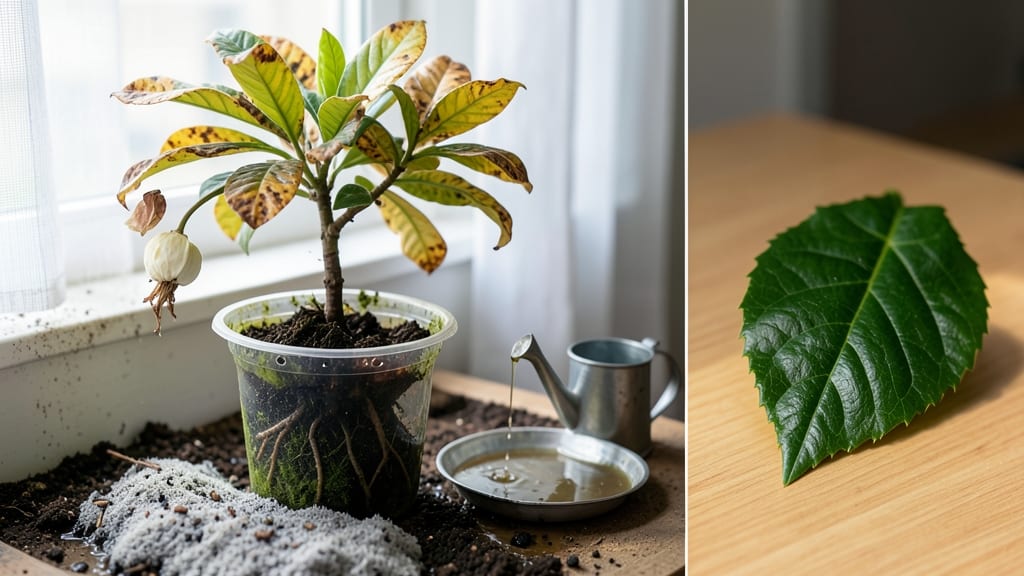
Yellow leaves on overwatered gardenias indicate root rot and nutrient depletion, demanding quick action: improve drainage, trim affected foliage, and apply a balanced fertilizer. Prevent future issues by avoiding waterlogged soil and enhancing airflow.
When gardenia leaves turn yellow from overwatering, it's often a sign of root suffocation where roots can't access oxygen. 🌱 This triggers anaerobic bacteria that release toxins, while excess moisture leaches essential nutrients from the soil.
The plant struggles to produce chlorophyll, causing those telltale yellow patches. I've seen this happen most often in heavy clay soils where water pools instead of draining properly.
To fix it, start by checking your soil's drainage—it should dry out about 1-2 inches between waterings. If your gardenia's pot lacks drainage holes, repot it immediately into a container with fresh, well-draining potting mix. For existing plants, gently loosen compacted soil around the roots to improve oxygen flow.
Once you've addressed the watering habits, focus on restoring the plant's health. Trim any yellow or brown leaves back to healthy green growth, as this helps the plant redirect its energy. Apply a balanced 10-10-10 fertilizer every 4-6 weeks during the growing season to replenish lost nutrients.
💡 In This Article
- How Overwatering Triggers Gardenia Leaf Yellowing
- Step-by-Step Recovery Plan for Yellow Gardenias
How overwatering triggers gardenia leaf yellowing
Overwatering creates a suffocating environment for gardenia roots by displacing oxygen in the soil. When roots sit in waterlogged conditions for extended periods, they can't absorb the oxygen they need to function. This triggers anaerobic bacteria in the soil, which release toxic byproducts like ethanol and hydrogen sulfide.
These compounds damage root cells, disrupting their ability to transport water and nutrients upward through the plant's vascular system.
The damage doesn't stop there—excess moisture also accelerates nutrient leaching. Essential minerals like nitrogen, phosphorus, and potassium dissolve and wash away through the soil profile. Gardenias, which thrive in slightly acidic soils (pH 5.0-6.5), become particularly vulnerable as these nutrients are flushed out faster than the plant can replenish them.
Without proper nutrient uptake, chlorophyll production in the leaves slows dramatically, causing that familiar yellowing pattern starting from the older leaves.
You'll often notice this process begins with the lower leaves turning yellow while the upper leaves remain green. This happens because the plant prioritizes sending nutrients to new growth when older leaves start to suffer.
The yellowing typically appears as a pale, almost sickly yellow rather than the vibrant green of healthy foliage, and the leaves may feel soft or mushy when touched—a clear sign of cellular damage from both waterlogging and nutrient deficiency.
What makes this particularly insidious is how quickly the problem escalates. In just 3-5 days of consistent overwatering, you can go from slightly yellowing leaves to widespread decline.
The root system may develop a foul odor, and in severe cases, you might see blackened or mushy roots when you inspect the soil. This is your plant's SOS signal—it's literally drowning at the root level while the leaves just show the symptoms.
Interestingly, gardenias are particularly sensitive to this because they naturally prefer a consistent moisture level without waterlogging. Unlike drought-tolerant plants that can recover quickly from dry spells, gardenias have delicate root structures that can't handle prolonged saturation.
The combination of oxygen deprivation and nutrient loss creates a double whammy that explains why yellowing happens so rapidly in these plants compared to others.
Here's what's happening at the cellular level: Without oxygen, root cells switch to anaerobic respiration, producing far less energy. This forces the plant to break down its own tissues for fuel, accelerating the decline.
Meanwhile, the excess water dilutes the soil's nutrient concentration, making it harder for roots to absorb what's available. It's like trying to drink through a straw that keeps getting clogged—eventually, you just can't get enough to sustain yourself.