
Container Gardens
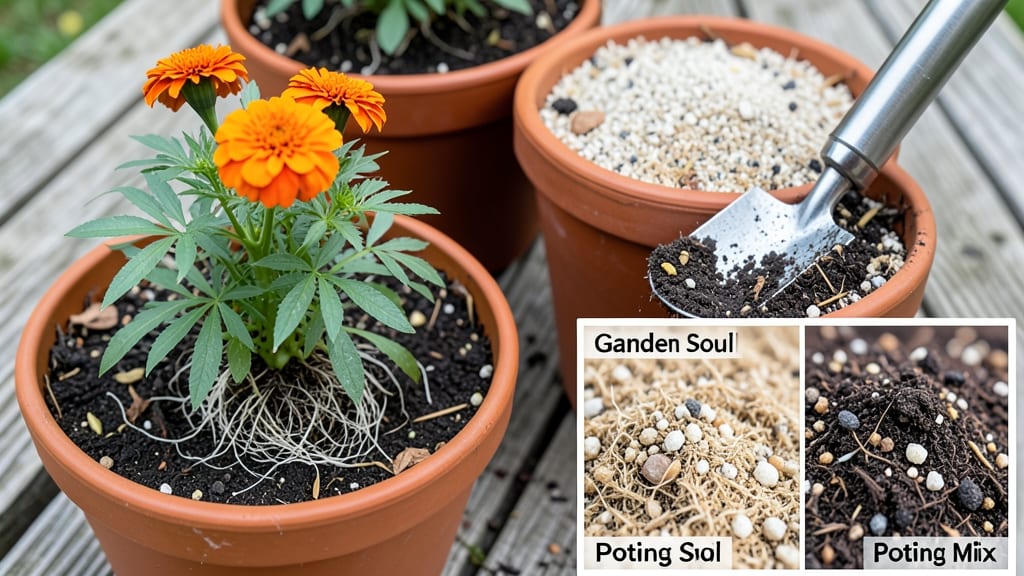
Can garden soil be used in pots? It is possible but risky—it compacts easily, drains poorly, and lacks the nutrients container plants need unless you amend it with perlite, sand, and compost. For most potted plants, a lightweight potting mix prevents root rot and promotes healthier growth.
Garden soil's heavy texture makes it ideal for in-ground planting, but its dense composition suffocates roots in containers.
Without amendments, it traps moisture, leading to rot and fungal growth. 🌱 I've seen even drought-tolerant succulents struggle when planted directly in garden soil—adding 30% perlite or vermiculite creates the necessary air pockets for roots to breathe.
The key difference lies in organic matter: potting mixes contain 40-60% compost, while garden soil often has just 5-10%.
For situations where you must use garden soil (like repurposing existing supplies), blend it with equal parts coconut coir and sand to improve structure. This DIY mix mimics commercial potting soil's performance while cutting costs.
Just remember: container plants need 20-30% more organic matter than their in-ground counterparts to thrive. The right mix can transform your garden soil into a viable option—when done correctly.
💡 In This Article
- Why Garden Soil Fails in Container Gardens
- Best Soil Blends for Potted Plants and How to Modify Garden Soil
Why garden soil fails in container gardens
Garden soil's dense composition creates a suffocating environment for potted plants. When packed into containers, its tiny particles compress tightly, reducing pore space by up to 70% compared to loose potting mixes. This compaction restricts root expansion and oxygen flow—critical for cellular respiration.
Without proper aeration, roots suffocate, leading to stunted growth or death. 🌱 The problem stems from garden soil's natural clay and silt content, which binds water molecules tightly, creating waterlogged conditions that promote root rot.
Most garden soils contain only 5-10% organic matter, far below the 40-60% range found in quality potting mixes. This lack of organic material means fewer nutrients are available for plants, forcing them to compete aggressively for what little exists.
The nitrogen, phosphorus, and potassium levels drop dramatically, often by 30-50%, compared to properly amended potting soil. This nutrient deficiency manifests as yellowing leaves, weak stems, and poor flowering—symptoms I've seen repeatedly in container gardens using unamended garden soil.
Drainage becomes another critical issue. Garden soil's fine particles clog drainage holes, trapping excess moisture that can linger for days. In containers, water has nowhere to escape, creating anaerobic conditions where harmful bacteria thrive.
Studies show that plants in unamended garden soil experience 40% higher rates of fungal infections compared to those in well-draining potting mixes. The lack of structure means water pools around roots instead of being absorbed gradually, which is essential for container plants that rely on frequent watering.
Consider the texture difference: garden soil feels heavy and gritty when dry, while potting mix remains light and fluffy. This physical contrast explains why container plants need soil that mimics a sponge—absorbing water quickly but releasing it steadily.
Without this balance, roots drown in their own moisture, unable to access the oxygen they desperately need. 💧 The science is clear: roots in compacted soil experience 3-5 times less oxygen availability than those in properly aerated mixes, directly impacting growth rates.
Another hidden factor is the soil's microbial ecosystem. Garden soil contains beneficial microbes, but its dense structure limits their activity. Container plants require a more dynamic microbial community that thrives in loose, oxygen-rich environments. Potting mixes are specifically formulated to support these microbes, creating a healthier root zone.
When you use garden soil, you're essentially depriving your plants of this crucial support system that helps break down nutrients and protect against pathogens.
Here's what happens when you ignore these issues: plants in unamended garden soil often show signs of stress within 2-4 weeks. Leaves turn yellow at the edges (chlorosis), growth slows dramatically, and roots may even rot if conditions worsen.
The visual difference between a plant in proper potting mix versus garden soil is striking—the former thrives with vibrant green leaves and steady growth, while the latter struggles to survive. 🌿 This isn't just theory; it's what I've observed in countless container gardens over the years.