
Landscaping
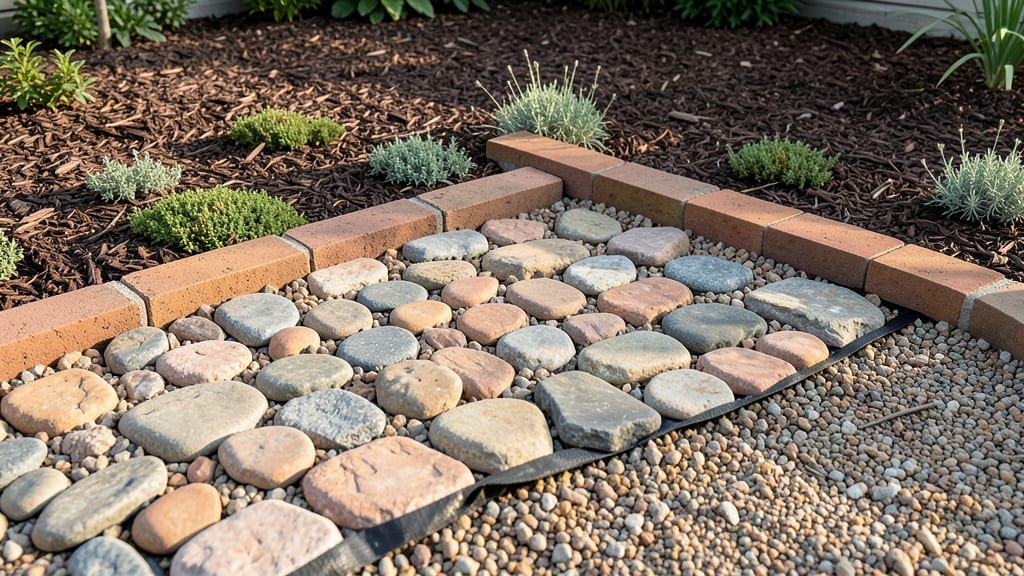
Cobble garden edging creates a timeless, rustic border that prevents soil erosion while adding natural beauty to your landscape. Use irregularly shaped stones like granite, limestone, or slate for a sturdy yet charming look, selecting flat, durable pieces with rough edges for stability and weed control.
Cobble edging isn't just about looks—it's a functional solution that lasts for years.
The rough edges of natural stones interlock better than smooth pavers, creating a self-supporting border that resists shifting from seasonal soil movement. 💫 For best results, I always recommend using a gravel base (2-3 inches deep) before laying stones, which improves drainage and prevents weed growth between gaps.
This method works especially well for sloped areas where erosion is a concern.
What sets cobble edging apart is its versatility—you can arrange stones in random patterns for organic charm or create a more structured look with uniform spacing.
The key is choosing stones with a hardness rating of 6 or higher (like granite) for heavy foot traffic areas, while softer options like limestone work beautifully in decorative garden borders where durability is less critical.
💡 In This Article
- Best Cobble Materials for Garden Edging and Their Durability
- Installing Cobble Edging: Step-by-Step Layout and Tips
Best cobble materials for garden edging and their durability
When selecting cobble stones for garden edging, the material's hardness and porosity are critical factors.
Granite, with a Mohs hardness of 6-7, is the most durable option—its crystalline structure resists chipping and weathering, making it ideal for high-traffic areas or regions with freeze-thaw cycles. 🔥 Limestone, at 3-4 on the Mohs scale, offers a softer, more decorative look but requires protection from acidic soils (pH below 6.5) to prevent chemical erosion over time.
Slate, another excellent choice, scores 3-6 on the hardness scale but excels in moisture resistance due to its fine-grained, layered structure that repels water.
For coastal gardens, slate's natural resistance to salt spray makes it a smart pick, though its flat cleavage planes mean it may require additional securing in sloped installations.
Fieldstone, often sourced locally, varies widely in composition but typically ranges from 4-6 in hardness—perfect for rustic, organic designs where uniformity isn't the priority.
The porosity of each material affects how it interacts with soil and moisture. Granite's low porosity (0.1-0.5%) means it stays dry and stable, while limestone's higher porosity (1-5%) can absorb water, leading to potential freeze damage in cold climates unless properly sealed.
Slate's intermediate porosity (0.5-2%) offers a balance, but its layered structure means it should be laid with the flat sides up to prevent water infiltration between layers.
Consider your climate when choosing materials. In regions with heavy rainfall, granite or slate with sealed joints will prevent water from seeping into the soil behind the edging, which can cause shifting.
For desert landscapes, limestone's lighter weight makes it easier to work with, though its lower durability means it may need occasional replenishment in high-activity areas. The rough edges of these stones aren't just for aesthetics—they interlock mechanically, creating a self-supporting structure that resists erosion from both water and foot traffic.
For a long-lasting installation, I recommend pairing your chosen material with a 2-3 inch gravel base (1/2 inch minus gravel works best) to ensure proper drainage. This layer prevents soil from pushing up against the stones during freeze-thaw cycles, which is particularly important for limestone installations.
The gravel also creates space for weed roots to be exposed to sunlight, naturally suppressing growth between the stones.
One often-overlooked factor is the stone's color stability. Granite's speckled patterns may fade slightly under UV exposure, while limestone's creamy hues can darken with age. Slate offers the most consistent color retention, making it ideal for formal garden designs where uniformity matters.
For maximum longevity, always source stones from reputable suppliers who can verify their geological origin and treatment history.
Remember that the rough texture of cobble stones serves a dual purpose: it provides grip for foot traffic while creating micro-environments that support beneficial insects like ground beetles and spiders.
This natural ecosystem integration is one of the many reasons cobble edging remains a favorite among both traditional and modern gardeners. 💫