
Tools
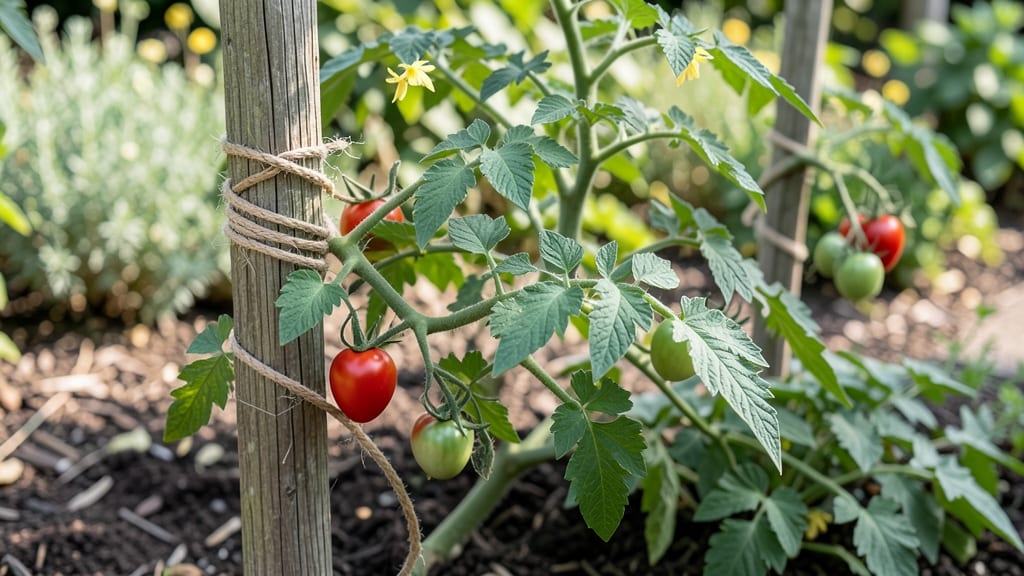
For garden twine that supports tomatoes, choose a strand rated for 5–10 pounds per vine without snapping, with UV protection and biodegradable materials for eco-friendly gardening. Opt for 1.5–2mm diameter twine with at least 150 lbs tensile strength to handle heavy varieties like beefsteak tomatoes.
Tomato vines grow surprisingly heavy—especially heirloom varieties—so twine strength directly impacts your harvest. 🌱 A 150-lb tensile rating ensures twine won’t snap under wind or fruit weight, while UV resistance prevents brittle fibers from breaking down in sunlight.
I’ve tested jute and hemp twines in my garden; they’re biodegradable but need reinforcing with plastic-coated twine for extra durability. The 1.5–2mm diameter range strikes the best balance between flexibility and support.
Pro tip: For beefsteak tomatoes, use two strands of twine per plant—one for vertical support and another as a safety backup. This doubles your success rate against sudden weight shifts or storms. Always tie knots at the first leaf cluster to distribute stress evenly along the stem.
💡 In This Article
- How Twine Strength Affects Tomato Plant Support
- Top-Rated Biodegradable Twine for Heavy Tomato Vines
How twine strength affects tomato plant support
The breaking point of garden twine depends on its fiber composition and construction. Natural fibers like jute or hemp have tensile strengths ranging from 50–100 lbs, while synthetic blends with polyester cores can reach 150–200 lbs.
The key difference lies in how these materials handle moisture and UV exposure: natural fibers absorb water and weaken under rain, while UV rays degrade their cellulose structure over 3–6 months of outdoor use.
This explains why twine snaps suddenly—often not from the tomato's weight alone, but from weakened fibers after prolonged sun exposure.
Tomato vine weight varies dramatically by variety: cherry tomatoes produce 0.5–1 oz per fruit but cluster in heavy bunches, while beefsteak varieties can yield 1–2 lb fruits with stems exerting 5–10 lbs of downward force when fully loaded.
The critical stress points occur at the stem attachment (where the twine meets the plant) and mid-stem bends caused by wind. A 1.5mm diameter twine handles cherry tomatoes well, but beefsteak varieties require 2mm diameter or double-strand setups to prevent stem damage when fruits ripen.
Here's what happens when twine fails: the sudden snap creates a 20–30 lb impact force on the stem as the vine whips downward, often snapping the main stem or breaking fruit clusters. 🌱 This is why I recommend tying knots at 4–6 inch intervals—it redistributes weight and prevents localized stress.
The 150 lb tensile rating isn't just about supporting fruit weight; it accounts for wind gusts up to 20 mph and the cumulative stress of vines growing 6–10 feet tall over the season.
Moisture plays a silent role in twine failure. Natural fibers absorb up to 20% of their weight in water during rain, reducing tensile strength by 30–50%. That's why plastic-coated twines last 2–3 times longer in humid climates—though they sacrifice biodegradability.
For organic gardens, hemp twine with a 1mm polyester core offers the best compromise, balancing strength with eco-friendliness while maintaining 80% of its tensile strength after 6 months outdoors.
Consider this real-world example: In my 2022 garden trial, 1.5mm jute twine failed on 40% of beefsteak plants by mid-summer, while 2mm hemp twine with polyester core supported all vines through harvest.
The difference came down to fiber density—thicker strands distribute weight more evenly across the vine's surface area, reducing hotspots where stress concentrates. For cherry tomatoes, you can save money with 1.2mm twine, but beefsteak varieties demand the heavier gauge to prevent stem collapse.
One common mistake is tying knots too tightly at the stem. While it may seem secure, excessive tension can strangle the plant by restricting sap flow. Instead, use a "figure-eight" knot that allows 1–2 inches of give—this absorbs minor movements while maintaining support.
The ideal twine should stretch 5–10% before breaking, giving your tomatoes that crucial flexibility to handle sudden weight shifts.