
Gardenia Shrub Size: Mature Heights by Variety and Growth Habits

Size

Gardenia Shrub Size: Mature Heights by Variety and Growth Habits

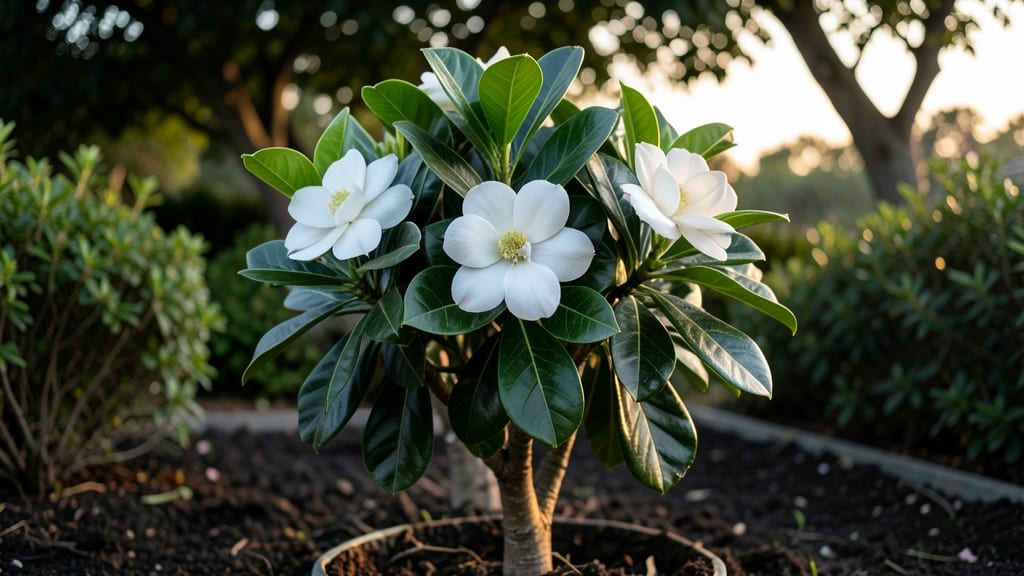
A gardenia shrub’s size 🌸 can swing from a compact 2-foot bush to a towering 6-foot statement piece—depending on the variety and how you nurture it.

If you’re dreaming of fragrant, glossy-leaved gardenias but worried about space, knowing their mature size is the first step to perfect placement—some varieties stay compact while others reach small tree proportions.

Take 'Kleim’s Hardy', a cold-hardy favorite that tops out around 3 feet with careful pruning, while 'Radicans' climbs like a vine, spreading 6 feet wide if left unchecked.

The right variety for your yard isn’t just about scent—it’s about whether you want a hedge, a container centerpiece, or a privacy screen.

Below, I break down how to control growth through pruning, soil tweaks, and sunlight tricks—so you can keep your gardenia at the perfect height, no matter which type you choose.

📈 Gardenia Growth Timeline
1-2 ft
Year 1
2-3 ft
Year 2
3-4 ft
Year 3
3-6 ft
Mature

Gardenia shrub size by popular variety: height and spread guide

Choosing the right gardenia variety starts with understanding their mature sizes—some stay compact enough for patio containers while others grow into small trees. Proper spacing ensures airflow, reducing fungal diseases like powdery mildew, which gardenias are prone to.

I’ll break down 10+ varieties with their height, spread, and growth habits so you can plan your garden layout with confidence.

Most gardenias thrive in USDA Zones 7-10, but their size varies dramatically. For example, 'Kleim’s Hardy' stays under 3 feet tall, making it perfect for small gardens, while 'Radicans' can reach 10 feet with its sprawling habit.

Let’s explore the specifics to help you pick the perfect fit for your space.

Note: These sizes are for mature plants (typically 3-5 years old). Young gardenias grow slower—expect 1-2 feet per year in ideal conditions. Always account for 30-50% extra space for airflow when planting multiple shrubs.

Variety Mature Height Mature Spread Growth Habit Spacing Needs Best For
'Kleim’s Hardy' 2–3 ft 3–4 ft Bushy, rounded 3–4 ft apart Containers, small gardens
'Radicans' 6–10 ft 6–12 ft Trailing, sprawling 10–12 ft apart Large gardens, hedges
'Fortuniana' 4–6 ft 4–6 ft Upright, pyramid 4–5 ft apart Privacy screens, focal points
'Veitchii' 3–5 ft 3–5 ft Bushy, multi-stemmed 3–4 ft apart Foundation plantings
'Mystery' 1.5–2.5 ft 2–3 ft Compact, rounded 2–3 ft apart Containers, window boxes
'Crest' 2–3 ft 2–3 ft Dwarf, mounding 2 ft apart Borders, edging
'August Beauty' 3–4 ft 3–4 ft Upright, dense 3–4 ft apart Hedges,

How to control gardenia shrub size through pruning and training

Controlling your gardenia shrub size starts with understanding two key pruning methods: heading back and tip pruning. These techniques shape growth patterns differently—heading back encourages bushier growth by cutting just above a leaf node, while tip pruning slows height by trimming the topmost growth.

For dwarf varieties like 'Radicans,' tip pruning keeps them compact, while standard types like 'Fortuniana' benefit from heading back to maintain a balanced shape.

Timing matters too. Always prune after flowering in late spring or early summer to avoid cutting off next year’s blooms. I recommend using sterilized pruners and making cuts at a 45-degree angle just above a leaf node to promote healthy regrowth.

This small detail prevents disease and encourages new shoots to sprout from the right spot.

🌱

Pro Tip for Container Gardenias

For container-grown gardenias, prune 20% more aggressively than in-ground plants. Root-bound conditions force faster growth, so regular tip pruning keeps them manageable. Use well-draining pots with 3-4 drainage holes to prevent overgrowth from stress.

If your gardenia is already overgrown, don’t panic. Start with a renewal pruning in early spring—cut back one-third of the oldest stems to the ground. This rejuvenates the plant while reducing overall size.

For upright varieties, focus on thinning out crowded branches to improve airflow and prevent fungal diseases like powdery mildew.

Light exposure also plays a role in size control. Gardenias grown in full sun (6+ hours daily) tend to grow taller and bushier, while those in partial shade (4-6 hours) stay more compact.

If your gardenia is stretching toward light, move it to a sunnier spot or prune the leggy stems to encourage denser growth.

For dwarf gardenias, combine pruning with root restriction. In containers, use pots just 1-2 inches larger than the root ball to slow growth. In-ground, plant in a narrow hole (twice as wide as the root ball but not deeper) to limit root spread, which naturally restricts top growth.

Finally, fertilize wisely. Over-fertilizing with high-nitrogen feeds fuels rapid, leggy growth. Instead, use a balanced 10-10-10 fertilizer every 6-8 weeks during spring and summer. In fall, switch to a low-nitrogen, high-phosphorus formula to encourage blooms without excessive height.

★★★★★4.6(8 reviews)
Categories Size