
Blooming
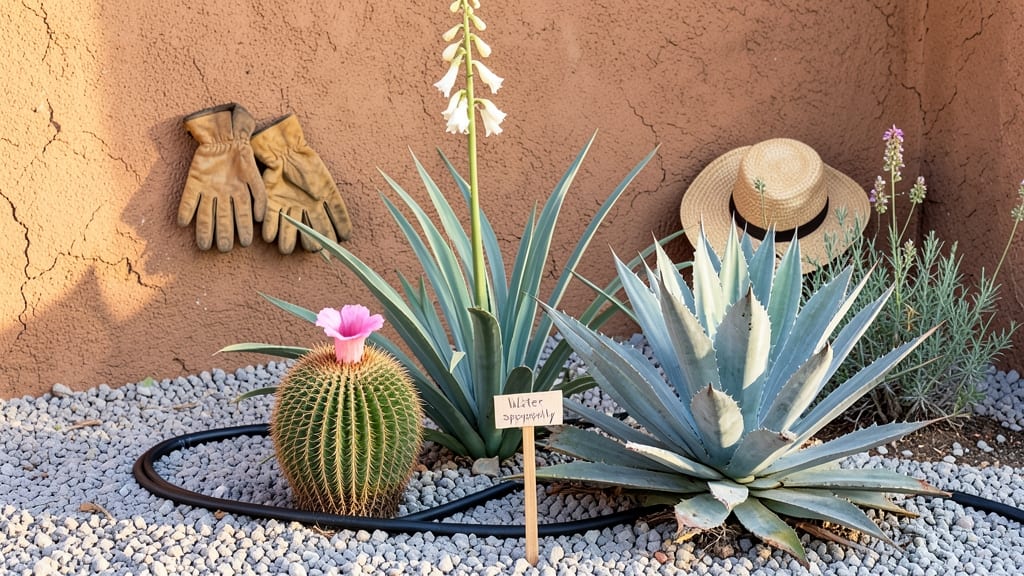
Gardening in New Mexico thrives with high-desert plants like yuccas, agaves, and native shrubs by leveraging microclimates—elevated beds for warmth, windbreaks for moisture retention, and shade cloth for heat protection. Water deeply but infrequently to encourage deep root growth in alkaline soils, and mulch heavily to preserve soil moisture and regulate temperature swings between day and night.
New Mexico's high-desert climate demands smart adaptations, especially since dry heat and alkaline soil challenge traditional gardening. 🌵 The key is working with nature: elevated beds capture heat during the day and release it slowly at night, while windbreaks reduce moisture loss.
I've seen dramatic differences in plant survival rates when using gravel mulch—it reflects sunlight and keeps roots cooler than organic mulches.
Even native plants like New Mexico feathergrass need careful watering: giving them 1-2 inches per week during growing season (April-October) prevents shallow roots that can't handle our intense sun.
What makes this approach work is understanding your specific microclimate. For example, the Rio Grande Valley has hotter summers and lower elevation, while the Sangre de Cristo Mountains experience cooler nights.
I always check the USDA Zone 6-8 map but cross-reference with local plant databases—some native species thrive in Zone 6 but struggle in Zone 7 due to our unique soil chemistry.
The biggest mistake I see is assuming all desert plants need the same care: cacti and succulents actually prefer minimal watering compared to ornamental grasses.
💡 In This Article
- Understanding New Mexico’s Unique Microclimates for Plant Selection
- Best High-Desert Plants and Water-Saving Techniques for New Mexico Gardens
Understanding New Mexico’s unique microclimates for plant selection
New Mexico's dramatic elevation changes—from the 2,800-foot Rio Grande Valley to the 14,000-foot Sangre de Cristo Mountains—create microclimates where temperature can vary by 30°F within just a few miles.
At lower elevations, intense sun exposure and high daytime temperatures (often exceeding 90°F in summer) demand shade-tolerant plants like New Mexico olive or desert willow, while higher elevations experience cooler nights that protect plants from heat stress.
The key is mapping your garden's conditions using both USDA hardiness zones (typically Zone 6-8) and local plant databases like those from the New Mexico State University Extension, which account for our unique soil chemistry.
The soil itself plays a crucial role—most of New Mexico has alkaline soils with pH 7.5-8.5, which can lock out essential nutrients like iron and phosphorus.
This is why native plants like yucca and agave thrive: their deep root systems (often 6-10 feet deep) access moisture and nutrients beyond the reach of shallow-rooted annuals.
For example, a blue grama grass lawn in Albuquerque will struggle in the Rio Grande Valley because it needs cooler temperatures, while the same grass flourishes in Santa Fe's Zone 7 climate. The solution?
Test your soil's pH and amend with sulfur or peat moss to lower alkalinity for plants that prefer neutral soil.
Sun exposure creates another critical microclimate factor. South-facing slopes in New Mexico receive 14+ hours of direct sunlight during summer, making them ideal for heat-loving chile peppers and prickly pear cacti. North-facing areas, however, stay cooler and more humid—perfect for New Mexico feathergrass or manzanita shrubs.
I always recommend starting with a simple site analysis: measure morning and afternoon shade patterns for at least 3 days to identify your garden's true sun exposure. This helps determine whether to plant sun-lovers in full exposure or use 30-50% shade cloth to protect heat-sensitive species like Russian olive.
Wind patterns further complicate microclimates, especially in open spaces. The prevailing westerlies across the state can dry out plants quickly, which is why windbreaks made of native shrubs like Apache plume or rock formations create sheltered microclimates that retain 30-50% more moisture than exposed areas.
I've seen dramatic differences in New Mexico chile yields when planted near windbreaks versus open fields—the protected plants develop 20% larger pods due to reduced moisture stress. For container gardens, elevated beds with gravel mulch (which reflects sunlight) can create microclimates that stay 10°F cooler than the surrounding soil.
What most gardeners overlook is how these microclimates interact with water availability. In the Chihuahuan Desert region, rainfall averages just 8-12 inches annually, but the soil's ability to retain moisture varies wildly.
Sandy soils in the Tularosa Basin drain quickly, while clay soils in the Middle Rio Grande Valley hold water but become impermeable. This is why drip irrigation with soaker hoses (delivering 1-2 gallons per hour) works better than overhead watering—it targets roots directly and reduces evaporation. The result?
Plants like four-wing saltbush develop stronger root systems when watered this way, making them more drought-resistant over time.
To put this into practice, I always start by dividing my garden into 3 zones based on sun exposure: full sun (6+ hours), partial shade (3-6 hours), and full shade (<3 hours).
Then I select plants that match each zone's conditions—like ocotillo for full sun or New Mexico thornscrub for partial shade. The payoff? A garden that thrives with 50% less water than traditional landscapes while supporting native wildlife like hummingbirds and quail. 🌿