
Tools
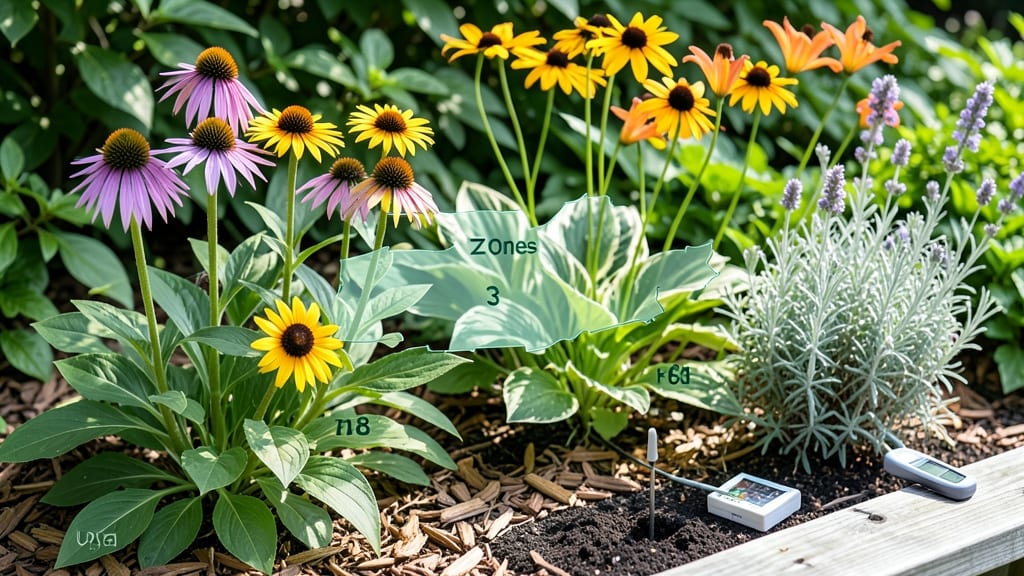
Gardening zones 3 to 8 determine frost-free dates ranging from mid-April in Zone 8 to late June in Zone 3, which directly impacts when you can safely plant cool-season vegetables, warm-season crops, and flowering annuals. Always verify your exact USDA zone for accurate planting windows.
Understanding these zones helps you avoid late frosts that can devastate young plants. 🌱 For example, Zone 3 gardeners need to wait until after the last frost date—often mid-June—to plant tomatoes, while Zone 8 gardeners can start as early as April 15th.
The key difference lies in how quickly spring warms up: northern zones have shorter growing seasons, while southern zones enjoy longer summers. Using a frost clock or checking local agricultural extension services can refine these estimates further.
Microclimates also play a role—urban areas may experience heat islands that delay frost, while high elevations can push frost dates weeks later. I always recommend planting cool-season crops like spinach 2-3 weeks before the last frost, while warm-season plants like peppers need soil temperatures above 60°F to thrive.
Adjusting for these factors ensures your garden thrives regardless of your specific zone.
💡 In This Article
- How USDA Zones 3 to 8 Affect Planting Timelines
- Zone-Specific Planting Calendars for Key Crops
How USDA zones 3 to 8 affect planting timelines
The USDA zone system measures average annual minimum temperatures, but what really matters for gardeners is how these zones influence frost-free dates.
In Zone 3, where winters can drop to -40°F, the last spring frost typically occurs around late May to early June, leaving only about 120 frost-free days for growing. Meanwhile, Zone 8's milder winters (20-30°F lows) allow planting as early as mid-April, with a 240-day growing season.
This 3-month difference in frost-free windows explains why Zone 3 gardeners must rush to plant quick-maturing crops like radishes (25 days to harvest), while Zone 8 gardeners can grow slower varieties like sweet potatoes (90-120 days).
The science behind these variations lies in solar angle and atmospheric circulation. Northern zones receive less direct sunlight during winter, creating slower soil warming.
For example, in Zone 5, soil temperatures at 4 inches deep (critical for seed germination) may only reach 50°F by early May, while Zone 7 soils hit 60°F by mid-April.
This temperature lag is why cool-season crops like broccoli can be planted in Zone 3 as early as late April (when soil is 40°F), but in Zone 8, gardeners must wait until early March to avoid bolting from summer heat. 🌱
Microclimates add another layer of complexity. Urban areas with concrete and asphalt can experience heat islands that delay frost by 1-2 weeks, while high elevations may push frost dates back 3-4 weeks.
I once saw a Zone 6 garden in Denver with frost until June 10th due to its 5,280-foot elevation, while a similar zone in Kansas City (1,000 feet elevation) had frost-free soil by May 15th.
These variations mean gardeners should observe their own microclimate for 3-5 years to refine planting dates.
For perennials, zone differences affect dormancy cycles. A Zone 4 shrub like butterfly bush may need winter protection in Zone 3, while a Zone 7 hydrangea can thrive unprotected in Zone 8.
The rule of thumb is to plant perennials one zone harder than your local zone—so Zone 5 gardeners might choose Zone 4 perennials for reliability. This buffer accounts for the 10°F temperature swings that can occur between zones. 🌿
Seasonal transitions also vary dramatically. In Zone 3, the growing season shrinks to 100-120 days, demanding fast-maturing varieties, while Zone 8's 240-day season allows for double cropping.
For instance, you could plant lettuce in Zone 8 in early March, harvest by May, then replant with beans for a July harvest—something impossible in Zone 3's shorter window.
This temporal flexibility explains why southern zones can grow tropical plants like eggplant (which needs 80°F+ soil) while northern zones must stick to cold-hardy varieties.
To navigate these differences, I recommend using a frost clock (which tracks local frost patterns) alongside USDA zone maps. Local agricultural extension offices often provide zone-specific planting calendars that account for regional microclimates.
For example, the University of Minnesota Extension might suggest planting peas in Zone 3 by May 1st, while University of Georgia Extension would recommend March 1st for the same crop in Zone 8. These resources turn abstract zone numbers into actionable planting dates. ✨