
Planting
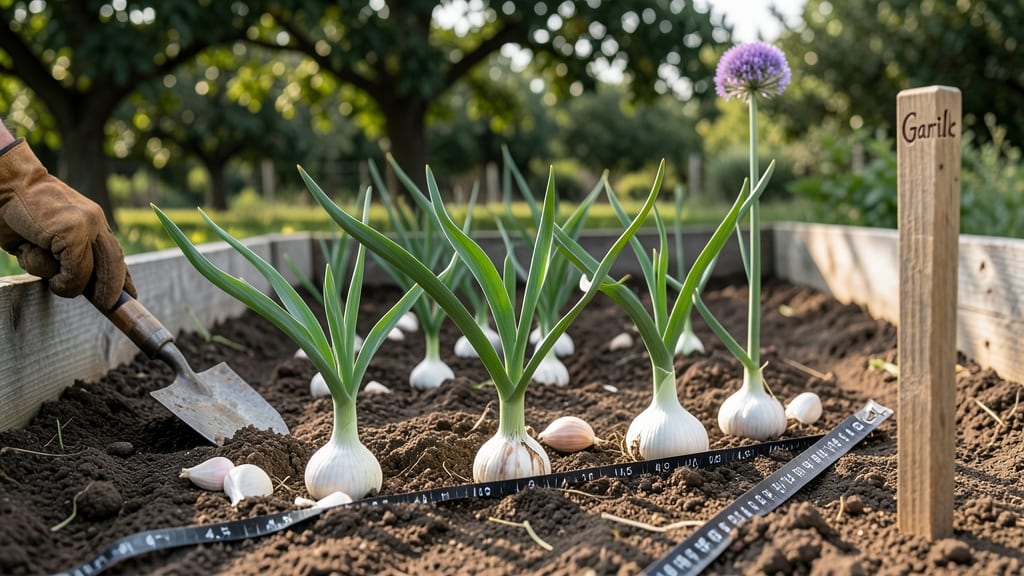
Proper garlic spacing in your garden determines whether you’ll harvest plump bulbs or puny cloves—it’s the difference between restaurant-quality garlic and what you’d find at a grocery store.
Picture this: You’ve prepped the soil, planted your cloves, and waited months, only to pull up garlic the size of a marble. The culprit? Crowding. Too close, and the bulbs compete for nutrients and air, stunting growth.
Too far, and you waste space. But here’s the good news: getting the math right is simpler than you think.
In this guide, I’ll break down the exact spacing rules for hardneck and softneck varieties, how to adjust for your soil type, and why 4-6 inches between cloves** is the sweet spot for most gardeners in Zone 6a. Spoiler: It’s not just about inches—it’s about airflow, bulb development, and even flavor.
You’ll also learn how to spot overcrowding early, fix common mistakes without losing your crop, and maximize your harvest with companion plants that boost growth. Let’s dig in!
Optimal garlic spacing by variety: hardneck vs softneck guidelines
Garlic spacing isn’t just about fitting more cloves into your garden bed—it’s the difference between peanut-sized bulbs and plump, flavorful harvests. Hardneck and softneck varieties need different spacing because their growth habits vary.
Hardnecks grow taller with flower stalks (scapes), while softnecks stay compact. Get this wrong, and you’ll end up with stunted bulbs or disease-prone plants from poor airflow.
I’ve planted garlic for over a decade, and the biggest mistake I see? Overcrowding cloves to save space. But garlic needs room to breathe—literally. Each clove should have enough space to develop a full bulb without competing for nutrients.
Even organic gardeners sometimes skimp on spacing, thinking it’s just about soil health. Spacing is 50% of your yield, and the wrong math means smaller bulbs every time.
Here’s the golden rule: Hardneck garlic needs 4-6 inches between cloves in rows spaced 12-18 inches apart. Softneck garlic, which grows in clusters, can handle 5-7 inches between cloves with rows 12-24 inches apart.
The extra space for softnecks prevents bulb rot and ensures each clove in the bulb matures properly.
Why does variety matter? Hardneck garlic sends up a scape (flower stalk) that steals energy if not removed.
Proper spacing gives the bulb enough resources to plump up before the plant diverts energy upward. Softneck garlic, on the other hand, stores energy in multiple smaller bulbs per plant, so wider spacing helps each bulb grow larger.
Now, let’s talk clove depth. Plant cloves 2 inches deep, pointy end up, regardless of variety. This ensures roots establish before shoots emerge. Deeper planting in heavy clay soils can prevent rot, while shallower planting in sandy soils helps with moisture retention.
Always adjust depth based on your soil type—consistency is key.
Organic gardeners often ask if they should adjust spacing when using compost or mulch. The answer? Yes, but carefully. Rich organic matter speeds up growth, so you might need to widen spacing by 1-2 inches to prevent overcrowding.
If your soil is already nutrient-dense, stick to the standard guidelines. Mulch helps retain moisture, but it doesn’t replace proper spacing—think of it as a supplement, not a substitute.
One mistake I see often is planting cloves too close in rows to save space. But garlic bulbs need room to expand horizontally. If you’re short on garden space, consider interplanting with shallow-rooted crops like lettuce or radishes.
These can grow between garlic rows until the garlic foliage fills in. Vertical space is your friend—use trellises for scapes if you’re growing hardnecks to free up ground space for other plants.
For container gardening, reduce clove spacing to 3-4 inches but limit each pot to 3-5 cloves max. Containers dry out faster, so water consistently and use a well-draining mix.
If you’re growing in raised beds, you can space cloves slightly closer (3-5 inches) because raised beds warm up faster and drain better. Just monitor for overcrowding signs like yellowing leaves or stunted growth.
Finally, harvest timing is tied to spacing. Properly spaced garlic will show brown lower leaves and a shrinking neck when ready. If you’ve overcrowded, bulbs may split or rot before maturing. Harvest early if you see signs of disease—smaller bulbs are better than none.
And always cure harvested garlic in a dry, shaded area for 2-4 weeks to preserve quality.
Remember: Garlic spacing is an investment. A little extra room now means bigger bulbs, fewer diseases, and
How to adjust garlic spacing for soil type and climate zones
Your garlic’s final size isn’t just about sunlight or soil nutrients—it’s also about giving each clove the right amount of elbow room. In clay-heavy soils, roots struggle to spread, so you’ll need to widen spacing by 25-50% to prevent competition.
Meanwhile, drought-prone zones (like Zone 7) demand tighter spacing to conserve moisture, while humid climates (Zone 8+) require extra airflow to fight fungal diseases. Let’s break down how to tweak your spacing like a pro.
Start by testing your soil’s drainage. If water pools after 6 hours, you’re dealing with clay. For these conditions, increase clove spacing from 4” to 6-8” and row spacing from 12” to 18-24”.
In sandy soils, you can stick to the standard 4-6” spacing, but add organic matter to prevent bulbs from drying out. The key is balancing root expansion with moisture retention—too tight, and bulbs stay small; too wide, and you waste garden space.
| Soil Type | Climate Zone | Clove Spacing | Row Spacing | Adjustment Reason |
|---|---|---|---|---|
| Clay | Zone 3-5 | 6-8" | 18-24" | Poor drainage |
| Sandy | Zone 6-7 | 4-6" | 12-16" | Fast drainage |
| Loamy | Zone 8-9 | 5-7" | 16-20" | Humidity control |
| Any | Zone 10+ | 7-9" | 24" | Heat stress |
Climate zones also play a surprising role. In cold climates like Zone 3, garlic needs tighter spacing (4-5”) to conserve heat and moisture during slow springs. But in warmer zones like Zone 7, where growth is rapid, stretch spacing to 6-8” to prevent bulbs from fusing together.
Think of it as a spacing calculator: colder = closer, warmer = wider. For example, my Zone 5 garden uses 5” spacing for hardneck varieties, while my friend in Zone 9 spaces hers at 7” to avoid bulb rot.
Don’t forget about humidity’s sneaky impact. In muggy zones (like the Southeast), increase row spacing to 20-24” to improve airflow and reduce Botrytis fungus risk. Conversely, in arid zones (like the Southwest), you can afford closer rows (12-16”) because garlic’s shallow roots won’t compete as fiercely.
Pro tip: If your area gets consistent afternoon humidity, mulch with straw to create a dry microclimate at soil level.
For a quick DIY spacing calculator, multiply your standard 4” spacing by this zone multiplier:
- Zone 3-4: ×1.0 (4”)
- Zone 5-6: ×1.25 (5”)
- Zone 7-8: ×1.5 (6”)
- Zone 9-10: ×1.75 (7”)
Finally, observe your garlic’s leaf growth patterns mid-season. If leaves are yellowing at the tips by May, you’ve likely overcrowded—thin to 6-8” spacing immediately. If bulbs are poking above soil by June, they’re ready for harvest, but only if spaced properly earlier.
The right spacing isn’t just about numbers; it’s about giving each plant the chance to breathe, expand, and thrive—no matter where you garden.