
Planting
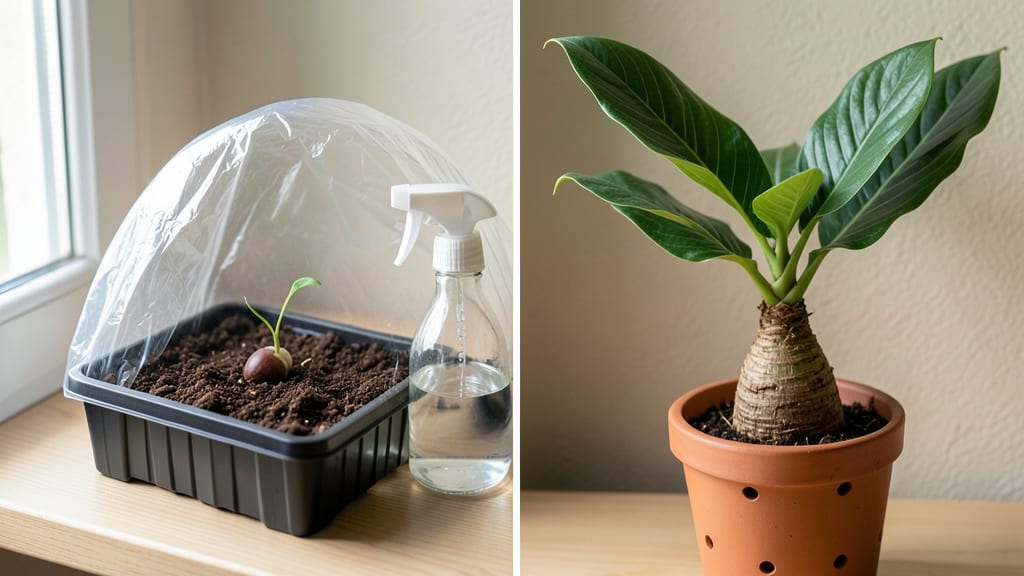
Growing a garden banana seed 🍌 into a fruiting plant is one of those satisfying long-term projects that rewards patience with a harvest of your own tropical treats.
Picture this: you’ve just cracked open a banana seed—maybe from that last one in the bunch you saved—and now you’re staring at a tiny, unassuming speck of potential. Most people toss it, but you know better.
This little seed has the power to grow into a 10-foot-tall plant that could produce real bananas in just two years.
Here’s the catch: garden bananas (Musa spp.) aren’t your grocery-store variety—they’re hardier but slower to fruit, and they demand the right conditions from day one. Too much moisture?
Rot. Not enough light? Stunted growth. We’ve made every mistake so you don’t have to, from soil prep to sunlight tricks that speed up germination.
By the end of this guide, you’ll know exactly how to turn that seed into a thriving banana plant—step by step, with troubleshooting for the tricky parts. Ready to grow something extraordinary?


How to germinate garden banana seeds for maximum success
Garden banana seeds (Musa spp.) are notoriously tricky to germinate, but with the right approach, you can coax them into sprouting within 4–8 weeks. The key lies in mimicking their tropical habitat—warmth, humidity, and consistent moisture.
Unlike commercial bananas, these seeds are non-viable if dried out, so act fast once you source fresh seeds from a ripe fruit. I’ve found that pre-soaking and using a heat mat cuts germination time nearly in half.
Start by selecting a well-draining seed-starting mix with 50% perlite or vermiculite to prevent rot. Avoid garden soil—it’s too dense and can suffocate delicate roots. Sterilize your containers with a 10% bleach solution to kill pathogens.
Pro tip: Use small plastic pots or seed trays with drainage holes, as banana seedlings hate soggy roots. I’ve had the most success with biodegradable peat pots that transplant easily.
- ✅ Remove seeds from ripe banana fruit and rinse in lukewarm water
- ✅ Soak seeds in room-temperature water for 24 hours to soften hard outer shells
- ✅ Check for firm seeds—squishy ones are rotten and should be discarded
- ✅ Fill containers with moist, sterile seed mix (60% peat, 30% perlite, 10% compost)
- ✅ Plant seeds ½ inch deep, 2 seeds per pot for backup
- ✅ Cover with plastic wrap or humidity dome to retain moisture
- ✅ Place in 75–85°F environment (use heat mat if needed)
- ✅ Provide bright indirect light (no direct sun yet)
- ✅ Ventilate daily for 5–10 minutes to prevent mold
- ✅ Keep soil consistently moist (not soggy)—water from bottom
- ✅ Expect sprouts in 4–8 weeks; patience is key!
- ⚠️ Black mold? Reduce humidity and improve airflow
- ⚠️ Seed rotting? Sterilize soil and replant fresh seeds
- ✅ Once 2–3 leaves appear, harden off for 1 week
- ✅ Move to larger pots (5+ gallons) with rich, organic soil
- ✅ Provide full sun gradually to avoid shock
Germination timing varies wildly—some seeds sprout in 3 weeks, while others take 3 months. If your seeds haven’t sprouted after 12 weeks, they may be non-viable. I’ve learned to double my seed count because not all will germinate.
Once sprouts appear, resist the urge to overwater; banana seedlings are sensitive to root rot. Use a spray bottle for gentle hydration until they’re established.
Common pitfalls include overwatering (which causes rot) and insufficient warmth (slowing growth). I’ve seen seeds germinate in as little as 2 weeks when using a seedling heat mat set to 80°F.
If your home is cool, place the tray on top of a refrigerator or in a sunny windowsill with a clear plastic bag to trap heat. Just remember: consistency is more important than perfection.
Once your seedlings reach 6 inches tall, they’re ready for their next phase: seedling care under full sun. But don’t rush—banana plants grown from seed take 2–3 years to fruit, so every step counts.
The reward? Homegrown bananas with unique flavors and the satisfaction of growing something truly tropical from scratch. 🍌
Pro tip: Label your seeds by planting date to track germination progress. I keep a simple garden journal noting soil temps, moisture levels, and sprout dates—it’s saved me from frustration when seeds take longer than expected.
With these steps, you’ll be well on your way to growing a thriving banana plant that could bear fruit in just a few years. 🌱
Banana seedling care: light, water, and soil requirements for fast growth
Once your garden banana seed finally sprouts, the real work begins—nurturing that delicate seedling into a sturdy plant ready for transplant. This stage is where most gardeners trip up, either by overwatering (which causes rot) or underestimating sunlight needs (leading to leggy, weak growth).
The good news? With the right balance of light, water, and soil, your banana seedling can grow 2–3 inches per week under ideal conditions.
Banana seedlings thrive in warmth and humidity, mimicking their tropical origins. But here’s the catch: they’re not frost-tolerant and despise soggy soil. Whether you’re growing indoors near a window or outdoors in a frost-free zone (USDA 10–12), the care principles stay the same—just the timing and setup differ.
Let’s break down the critical requirements for each stage, from tiny sprout to transplant-ready plant.
Your seedling’s light requirements are non-negotiable—banana plants crave 6+ hours of direct sunlight daily. Indoors, place seedlings near a south-facing window and supplement with a LED grow light (12–14 hours/day) to prevent leggy growth.
Outdoors, choose a spot with morning sun exposure to avoid scorching leaves in peak afternoon heat. If your seedlings start stretching toward the light, it’s time to increase light intensity or rotate pots daily for even growth.
The watering schedule is where many gardeners make mistakes. Banana seedlings need consistent moisture but hate soggy roots. Water when the top inch of soil feels dry—usually every 1–2 days indoors and 2–3 days outdoors. Use a moisture meter or stick your finger in the soil to check.
Overwatering leads to root rot, while underwatering causes yellowing leaves. Mulch around outdoor seedlings with straw or wood chips to lock in moisture and keep roots cool.
Soil pH and nutrients are often overlooked, but they’re critical for fast growth. Banana seedlings thrive in slightly acidic to neutral soil (pH 5.5–7.0). Test your soil with a digital pH meter and amend with lime (to raise pH) or sulfur (to lower pH) if needed.
Feed seedlings with a balanced fertilizer (5-5-5 or 6-6-6) every 4–6 weeks, but dilute it to half-strength to avoid burning tender roots. Organic options like compost tea or fish emulsion work wonders too.
Knowing when to transition seedlings outdoors is the final hurdle. Harden off seedlings by placing them outside for 2–3 hours daily, gradually increasing time over 7–10 days. Watch for yellowing leaves or wilting—signs they’re not ready.
Outdoor seedlings are transplant-ready when their pseudostem (false stem) reaches 1–2 feet tall and soil temperatures stay above 60°F. Plant in a permanent spot with well-draining soil and stake for support early, as banana plants grow tall and top-heavy.
With these care tips