
Fertilization
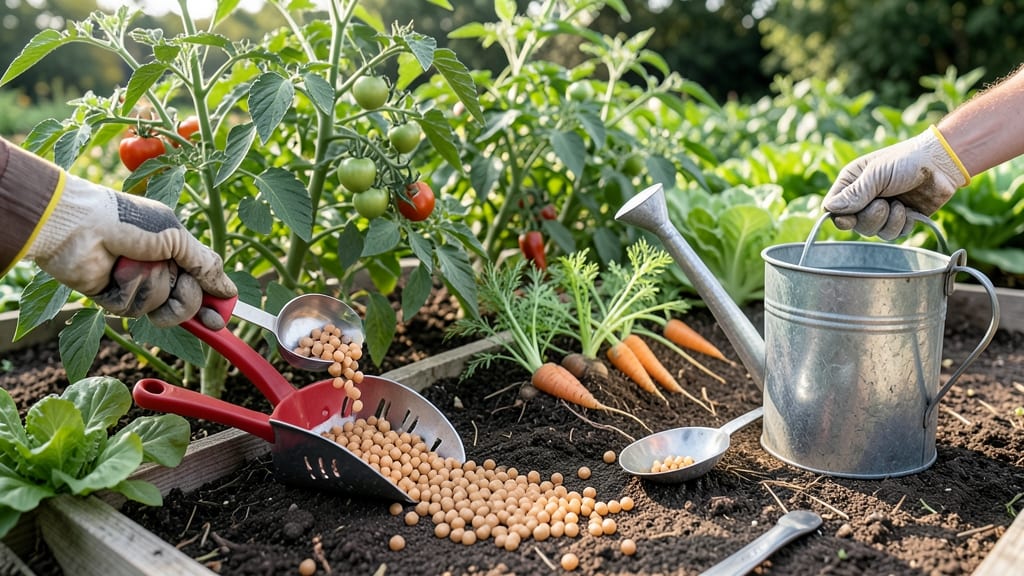
How much fertilizer for garden depends on soil test results and plant type: use 1 pound of nitrogen per 100 square feet for lawns, 0.5–1 pound for vegetables, and follow label rates for flowers/shrubs—always apply evenly and water thoroughly after spreading.
Soil tests reveal exactly what your garden needs—most home tests measure nitrogen (N), phosphorus (P), and potassium (K) levels, with ideal ranges around 100–150 ppm for nitrogen. 🌱 For example, if your test shows low phosphorus, you’ll need a fertilizer with higher P numbers (like 5-10-5) for root development, while nitrogen-heavy formulas (like 20-5-5) work best for leafy greens.
Over-fertilizing can burn plants, so always match the product’s N-P-K ratios to your soil’s deficiencies.
Vegetables like tomatoes and peppers thrive with 0.5–1 pound of nitrogen per 100 sq ft, but fruit trees need 0.25–0.5 pounds of nitrogen spread in early spring. Flowers and shrubs often require precisely labeled rates—never guess!
Slow-release fertilizers (like organic compost or granular blends) feed plants steadily, while liquid fertilizers offer quick nutrient boosts. I recommend testing soil every 2–3 years to adjust applications and avoid nutrient buildup.
💡 In This Article
- Interpreting Soil Test Results for Fertilizer Needs
- Plant-Specific Fertilizer Application Rates and Schedules
Interpreting soil test results for fertilizer needs
Soil tests don't just give numbers—they tell a story about your garden's health. The three critical N-P-K values (nitrogen, phosphorus, potassium) appear in parts per million (ppm), but their balance matters more than individual values.
For example, a reading of 80 ppm nitrogen might seem low, but if phosphorus is 40 ppm (below the ideal 30-60 ppm range), plants will struggle to develop strong roots even with extra nitrogen. 🌱 The test also measures pH (ideal 6.0–7.0 for most plants), where acidic soil (pH 5.0) locks out nutrients like phosphorus.
Understanding these numbers means adjusting fertilizer ratios precisely. If your test shows high potassium but low nitrogen, choose a 20-5-5 blend rather than a balanced 10-10-10**.
The lab report often includes recommendations like "Apply 1 lb of nitrogen per 100 sq ft," but this assumes your soil is deficient—never exceed these amounts unless the test specifically says "excess capacity."
Organic matter percentage (aim for 5%+) also affects nutrient retention; sandy soils release nutrients faster, requiring more frequent but lighter applications.
Over-fertilizing isn't just wasteful—it's harmful. Excess nitrogen burns roots (visible as yellowed leaves), while too much phosphorus creates hardpan soil that repels water. The test's "buffer pH" reading tells you how much lime (to raise pH) or sulfur (to lower it) you need before applying fertilizer.
For instance, if your buffer pH is 5.2, you might need 5 lbs of lime per 100 sq ft before testing again in 3 months. This step prevents fertilizer from becoming useless in acidic soil.
Seasonal timing matters too. Spring tests reveal winter nutrient depletion, while fall tests show how summer plants consumed resources.
For example, tomatoes deplete soil nitrogen by 0.75 lbs per 100 sq ft per month—so if your spring test showed 120 ppm nitrogen, a mid-summer test might drop to 80 ppm, signaling it's time to reapply.
The test's "organic matter" percentage (typically 1-5%) also affects how long nutrients last; compost-rich soil (5%+) holds nutrients longer than bare mineral soil.
Don't ignore micronutrients either. While N-P-K get all the attention, soil tests often include levels of calcium, magnesium, and sulfur—deficiencies show up as leaf discoloration (purple stems for phosphorus, yellow between veins for nitrogen).
For example, if your test shows low magnesium (<10 ppm), Epsom salt (magnesium sulfate) becomes your best friend. The key is treating symptoms with targeted amendments rather than blanket fertilizer applications.
Professional labs provide "recommended rates" based on your test, but always verify these against the fertilizer's label.
For instance, a lab might suggest 1 lb of nitrogen per 100 sq ft, but a 20-5-5 fertilizer delivers only 0.2 lbs nitrogen per pound—so you'd need 5 lbs of product to meet the recommendation. This math prevents costly mistakes.