
Light Requirements
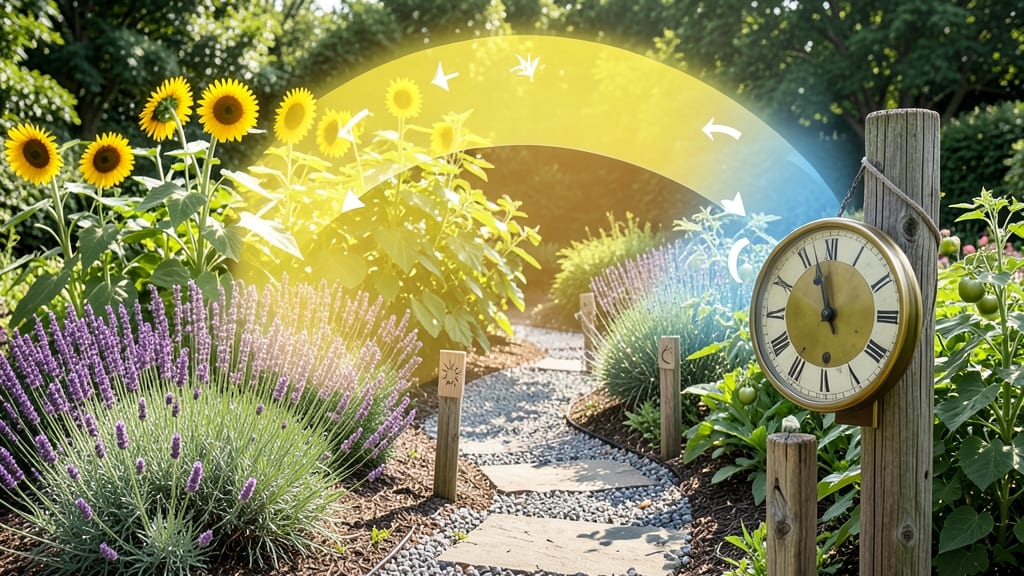
To determine how much sun a garden needs, aim for 4 to 8 hours of sunlight daily, with full-sun plants requiring 6+ hours, partial shade plants thriving in 3-6 hours, and shade-loving varieties needing under 3 hours. Adjust seasonal exposure: summer's intense rays demand afternoon shade, while winter's weaker light may require extended exposure for the same effect.
A garden's sunlight needs aren't one-size-fits-all—they depend on what you're growing. 🌱 Full-sun plants like tomatoes and marigolds crave direct rays, while partial-shade varieties such as impatiens or hostas do best with filtered light.
Shade-loving plants, like ferns or caladiums, often thrive under trees or in north-facing spots where sunlight is gentler. The key is matching your plants' natural habitats to their light requirements, whether that's a sunny windowsill or a dappled forest floor.
Seasonal shifts complicate things further. Summer's harsh afternoon sun can scorch delicate leaves, so I always recommend moving tender plants to partial shade during peak heat.
In winter, when days are shorter and sunlight weaker, you might need to extend exposure by 1-2 hours or supplement with grow lights for light-sensitive varieties. A simple sun calculator or chalk marks on stakes can help track exactly how much light your garden gets throughout the day.
💡 In This Article
- Sunlight Requirements by Plant Type: Full Sun vs Partial Shade vs Shade Gardens
- Seasonal Sunlight Adjustments: Winter vs Summer Lighting Strategies for Gardens
Sunlight requirements by plant type: full sun vs partial shade vs shade gardens
Sunlight drives photosynthesis—the process where plants convert light energy into sugars for growth. Full-sun plants like tomatoes and peppers need 6+ hours of direct sunlight to produce energy efficiently. Their leaves are often waxy or hairy to reflect excess heat, while their roots grow deep to access water.
Without enough light, they become leggy and produce fewer fruits. In contrast, shade-loving plants like ferns or hostas have thinner leaves that absorb lower light levels more effectively, avoiding the risk of leaf scorch from intense rays.
Partial-shade plants fall in the middle, requiring 3-6 hours of sunlight with protection from midday heat. These plants often grow in understory environments where sunlight is filtered through trees. For example, impatiens thrive in morning sun and afternoon shade, while coleus can handle bright indirect light all day.
The key difference? Full-sun plants need direct rays to develop their structural strength, while shade plants prioritize moisture retention over energy production. 🌿
Leaf structure reveals a plant's sunlight needs. Broad, thin leaves (like those on sunflowers) maximize light absorption, while thick, leathery leaves (like on succulents) conserve water in hot conditions.
Even the color matters: deep green leaves indicate high chlorophyll for photosynthesis, while variegated leaves often belong to shade plants that can't handle intense light. This is why a tomato plant wilts in shade—its leaves lack the protective adaptations of shade-loving species.
Location matters just as much as duration. A south-facing window provides stronger, more consistent light than a north-facing one, especially in the Northern Hemisphere. East-facing spots get gentle morning sun, while west-facing areas receive harsh afternoon rays.
I've seen beginners overestimate sunlight by placing plants in spots that seem sunny but aren't—like under a sheer curtain that blocks 30-40% of UV rays. Always test your garden's light with a simple chalk mark on a stake every few hours.
Seasonal light intensity adds another layer. Summer sunlight is 20-30% more intense than in winter due to the sun's higher angle in the sky.
This means a full-sun plant might get enough light in summer with 5 hours of exposure, but the same plant would need 7+ hours in winter to thrive. Understanding these variations helps explain why some plants thrive in one season but struggle in another.
Consider this rule of thumb: If a plant's leaves turn yellow in low light, it's light-starved. If they crisp or brown, it's getting too much sun. The goal is to match your plants' natural growing conditions—whether that's a sunbaked meadow or a forest floor—to create a thriving garden ecosystem. 🌱