
Light Requirements
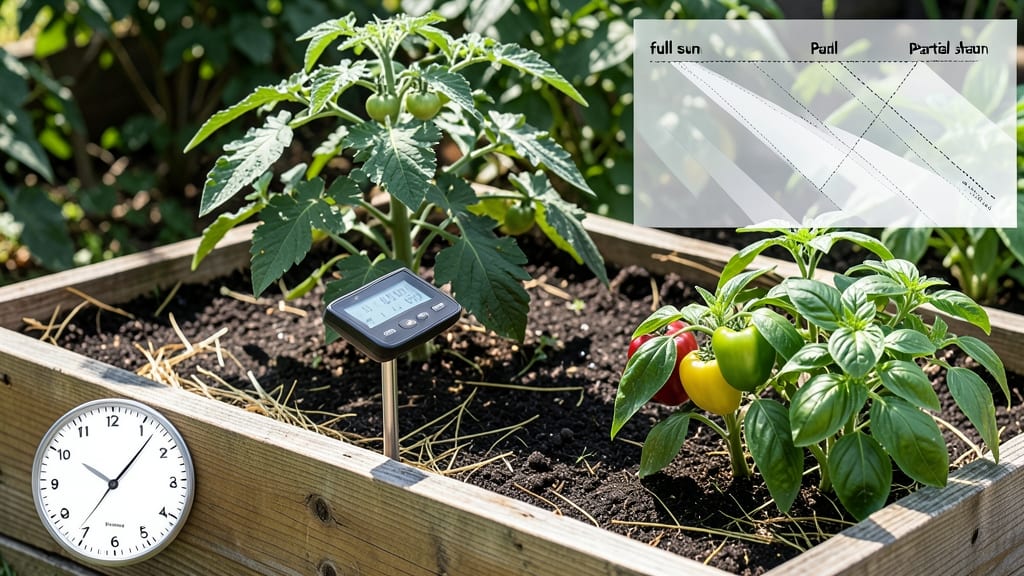
A vegetable garden needs how much sun does a vegetable garden need at least 6 hours of sunlight daily—but some plants crave 8+ hours while others thrive in just a few hours of morning light. 🥬
Struggling to decide where to plant your tomatoes, lettuce, or peppers? Sunlight needs vary wildly among vegetables—and getting it wrong can mean the difference between a thriving harvest and wasted effort.
Too little sun and your peppers turn bitter, your basil bolts to seed, or your zucchini flowers fail to set fruit. Too much, and leafy greens scorch or become tough.
The key is matching each plant’s needs to your garden’s light conditions, whether that’s a raised bed, container, or in-ground plot.
This guide breaks down exactly how much sun each crop craves, plus practical ways to adjust your garden layout for maximum yield—no guesswork required.

Sunlight requirements by vegetable type: full sun vs. partial shade explained
Understanding sunlight requirements for your vegetables is the first step to a productive garden. Most plants fall into three categories: full-sun lovers (6+ hours), partial-sun adaptors (3–6 hours), or shade-tolerant varieties (<3 hours).
Getting this right means the difference between bountiful harvests and struggling plants. Let’s break down the specifics so you can organize your garden like a pro.
Vegetables like tomatoes, peppers, and corn demand 8+ hours of direct sunlight to produce their best yields. These full-sun champions thrive when placed in the sunniest spots, often near the south-facing fence or raised beds.
Meanwhile, leafy greens like spinach and lettuce prefer 3–4 hours of morning sun and can even tolerate light shade, making them perfect for container gardens or partial-shade areas.
Here’s a quick visual guide to help you group compatible crops efficiently. Use this sunlight summary table to plan your garden layout and avoid common mistakes like overcrowding or misplacing light-sensitive plants.
Grouping plants by their sunlight needs isn’t just about avoiding shade issues—it’s also about maximizing space and reducing competition. For example, tomatoes and peppers (both Solanaceae family) thrive together in full sun, while leafy greens like spinach and kale can share a partial-shade spot without fighting for light.
This strategy also helps prevent pests and diseases that spread within plant families.
If your garden has limited sunlight, focus on shade-tolerant varieties like radishes or green onions, which mature quickly and don’t require intense light. For container gardens, choose compact partial-sun plants like basil or carrots to ensure they get enough light without taking up too much space.
Rotate containers throughout the day to expose all sides to sunlight evenly.
Don’t forget about seasonal sun shifts. In summer, the sun arcs higher, while in winter, it sits lower, casting longer shadows. Adjust your planting plan quarterly to account for these changes.
For instance, a tomato plant that gets 6 hours of sun in June might only receive 4 hours in December—so plan accordingly or use reflective surfaces (like white mulch or mirrors) to bounce extra light onto your crops.
Pro tip: Use a sunlight tracker for a week to map out your garden’s light patterns. Place a stake or flag in potential planting spots and mark the hours of direct sunlight each day.
This simple step will reveal microclimates in your garden—some areas might get more sun than others due to fences, trees, or buildings. Armed with this data, you can strategically place high-light plants where they’ll thrive.
One common mistake is assuming all herbs need full sun. While basil and oregano love
How to measure and adjust sunlight in your garden for maximum yield
Before you can adjust your garden’s sunlight, you need to measure what you’ve got. Most gardens aren’t uniform—one corner might get full sun all day, while another stays in partial shade due to a fence or tree.
Start by tracking sunlight for a full week using a sunlight journal or app like SunCalc. Mark the hours your garden receives direct light, noting any shadows cast by structures or plants.
Use a shadow tracking method for accuracy: Place a stake in your garden at dawn and measure its shadow every hour. The shortest shadow indicates peak sunlight. Repeat this in multiple spots to identify microclimates—small areas with unique light conditions.
This helps you match the right plants to the right spots, avoiding wasted space or struggling crops.
- 🌱 Rotate crops annually to balance sunlight exposure. Heavy feeders like tomatoes deplete nutrients and may alter soil conditions, affecting nearby plants’ access to light.
- 🪴 Use reflective surfaces like white gravel or mirrors to redirect sunlight to shady spots. Place them near partial-shade plants like lettuce or spinach to boost their light intake.
- ✂️ Prune nearby trees or shrubs to increase sunlight. Focus on branches that cast long shadows over your garden. Just be mindful of root competition—some trees will still outcompete vegetables.
- 🌿 Adjust planting dates to align with seasonal sun shifts. Early spring or late summer might offer gentler morning light, perfect for shade-loving crops like Swiss chard or kale.
- 🌳 Install shade cloth for heat-sensitive plants like peas or radishes. Use 30-50% shade cloth to filter intense midday sun while still allowing enough light for growth.
Once you’ve mapped your garden’s light, group plants by their needs. Place full-sun lovers like peppers and cucumbers in the brightest spots, while partial-shade plants such as bush beans or carrots can thrive in areas with 3-6 hours of light.
This simple layout trick maximizes space and reduces the need for constant adjustments.
Don’t overlook seasonal changes—what’s full sun in summer might be partial shade in winter. Use seasonal planting guides to adjust your layout as the sun shifts.
For example, plant winter squash in early summer when it needs full sun, then move shade-tolerant greens into that spot as the days shorten.
For containers or small spaces, choose dwarf varieties of sun-loving plants like bush tomatoes or compact peppers. These thrive in limited light and make the most of every square foot. Pair them with vertical growers like pole beans or cucumbers to utilize space without blocking sunlight for other plants.
Finally, monitor and tweak throughout the growing season. If you notice yellowing leaves or stunted growth, your plant might need more light. Conversely, scorched or wilted foliage signals too much sun.
Adjust with shade cloth, mulch, or even a temporary move to a sunnier spot until you find the perfect balance.