
Watering
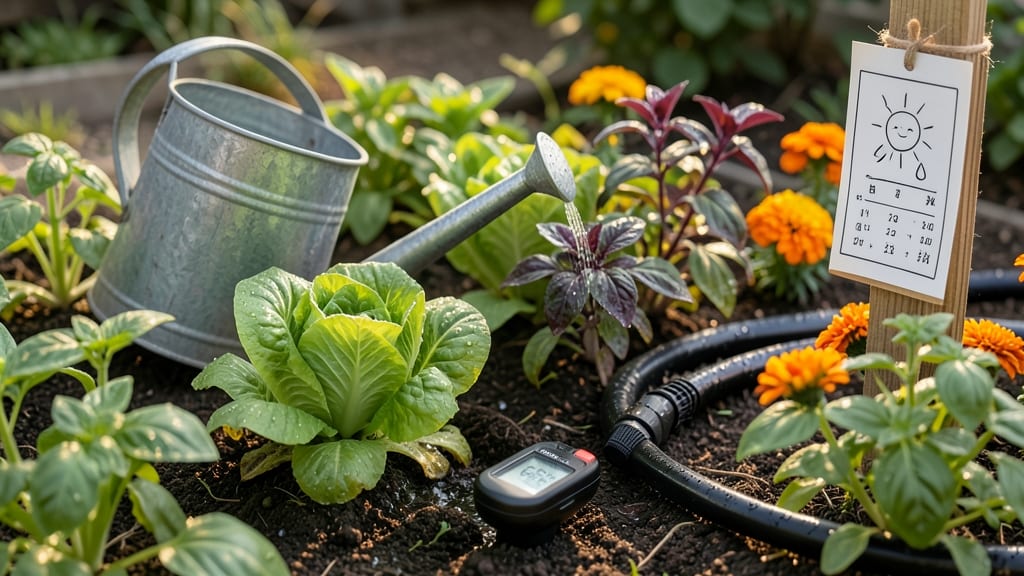
Watering your garden the right amount is the key to keeping plants thriving, not just surviving—because overwatering or underwatering can stifle growth faster than pests or poor soil.
Most gardeners guess their watering needs instead of measuring them, which leads to wasted water, soggy roots, or plants that wilt despite daily drinks. The soil check method reveals the exact moisture your 🌱 General Garden truly needs, saving time and resources while boosting growth.
This approach goes beyond the "once a week" rule—it accounts for your USDA Zone 6a climate, soil type, and even the plant’s stage of life.
Whether you’re nurturing seedlings in spring or established perennials in summer, you’ll learn how to water deeply and efficiently without drowning roots or leaving plants parched.
Below, I’ll walk you through the simple steps to check soil moisture, adjust for seasonal shifts, and recognize the subtle signs that your watering is perfect—or off-target. No more guesswork, just results.


The 3-Step soil check method to determine perfect watering amounts
Most gardeners water based on guesswork—like "every other day" or "when the soil looks dry." But plants need consistent moisture at the right depth, not just at the surface.
My 3-step soil check method reveals exactly how much water your garden truly needs, saving you time and preventing root rot or wilting. This technique works for vegetables, flowers, shrubs, and even trees, adapting to their unique thirst levels.
Start by testing three critical soil depths: the surface (0-½ inch), the root zone (1-2 inches), and deeper roots (3-4 inches). Each layer tells a different story—surface moisture might be gone, but deeper soil could still hold enough water for your tomatoes or basil.
Ignoring these layers is like giving a plant a sip when it needs a drink. Let’s break it down step by step.
Press your finger into the top layer. If it feels dry and crumbly, your plants need water immediately—especially for annuals like marigolds or leafy greens. If it’s still damp, wait 1-2 days before checking deeper.
Dig deeper with your finger or a trowel. Drought-tolerant plants (lavender, succulents) thrive when this layer is slightly dry, but thirsty plants (peppers, cucumbers) need it moist but not soggy. A clump that holds shape = water soon; loose = wait.
For perennials, shrubs, and trees, this is the gold standard. If this layer is dry, your plant is crying out for a deep watering. Use a screwdriver or probe to check—if it resists, you’ve hit dry soil. Water until moisture reaches this depth.
Now, here’s how to translate your findings into action. If the surface is dry but deeper layers are moist, your plants are fine—just water lightly to refresh the top.
But if all three layers are dry, it’s time for a deep soak (1-2 inches of water), especially for root crops like carrots or potatoes. For container plants, they’ll dry out faster, so check daily in summer.
Season and plant type completely change the game.
In summer heat, I water my tomato plants every 2-3 days, but in fall, I stretch it to once a week. Drought-resistant plants (rosemary, yucca) might only need water every 10-14 days, while water-loving plants (hostas, ferns) need consistent moisture. Always adjust based on your soil check results.
Pro tip: Mulch retains moisture and reduces how often you need to check. A 2-3 inch layer of straw or wood chips keeps the surface damp longer, cutting your watering time by 30-50%.
Pair this with my soil check method, and you’ll have a thriving garden with minimal effort. Overwatering is just as deadly as underwatering—your soil check keeps both at bay.
Finally, watch for visual cues that confirm your soil checks. Wilting leaves often mean underwatering, but yellowing leaves or mold signal overwatering. By combining these cues with your soil tests, you’ll master the art of perfect watering.
Your plants will thank you with vibrant blooms, lush foliage, and bountiful harvests.
Start today: Grab a trowel, dig in, and let your soil tell you exactly what your garden needs. No more guesswork—just healthy, happy plants that grow with precision. 🌱
Watering requirements by plant type: how often and how deep
Not all plants thirst the same way—vegetables like tomatoes need 1-2 inches of water weekly, while succulents survive on once-a-month soakings. Understanding these differences prevents both root rot and wilting stress.
Seasonal shifts also change needs: summer heat demands deeper watering, while fall rains may reduce your handiwork entirely.
Container plants dry out 3x faster than in-ground varieties, requiring daily checks in hot climates. Meanwhile, deep-rooted trees benefit from slow, deep watering every 7-10 days. The key? Soil texture (sandy vs. clay) and plant maturity dictate frequency—new seedlings need frequent misting, while established perennials thrive on consistency.
Spring is all about establishing roots—water deeply 2-3 times weekly for new transplants, even if rain falls. Summer’s intense heat demands early-morning watering to prevent evaporation, while fall’s cooler temps let soil retain moisture longer.
Always adjust for container size: a 5-gallon pot may need daily watering in July.
Watch for yellowing leaves (overwatering) or crispy edges (underwatering)—both signal your routine needs tweaking. Mulch (2-3 inches) locks in moisture, while drip irrigation delivers precise amounts. For drought-tolerant plants like lavender, let soil dry completely between waterings—their resilience shines in low-maintenance gardens.
Pro tip: Use a soil probe or finger test (stick your finger 2 inches deep)—if dry, water until moisture reaches 6 inches down. This method works for every plant type, from water-loving hostas to desert cacti. Consistency beats guesswork every time. 🌱